The 2026 Centennial Medalists
Harvard Griffin GSAS presents highest honor to four alumni

On May 27, 2026, the Harvard Kenneth C. Griffin Graduate School of Arts and Sciences (GSAS) will present the Centennial Medal to four distinguished alumni. First awarded in 1989, the Centennial Medal is the highest honor that the Harvard Griffin GSAS bestows; it recognizes those who have made fundamental and lasting contributions to knowledge, their disciplines, their colleagues, and society.
The 2026 Centennial Medal recipients are:
Frank Bidart, AM ’67, English and American Literature and Language
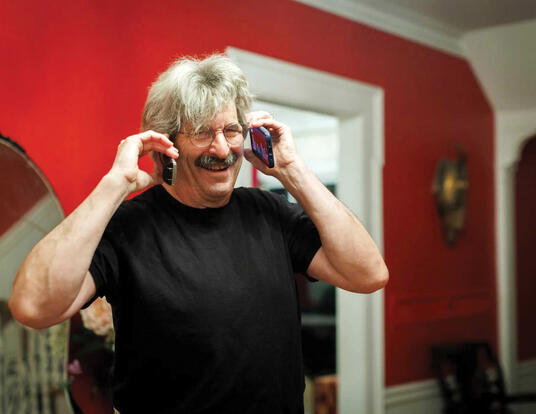
William Butler Yeats once said that we make rhetoric out of our quarrels with others; out of our quarrels with ourselves, we make poetry. Through a lifetime of wrestling with some of the deepest and keenest aspects of human experience, Frank Bidart has created poetry that speaks to us with singular energy and urgency.
Born in Bakersfield, California, Bidart is the author of eleven celebrated books of poetry, including Golden State in 1973, Desire in 1997, Star Dust in 2005, Metaphysical Dog in 2013, and Half-Light: Collected Poems, 1965–2016, which won the Pulitzer Prize and the National Book Award. His latest collection, Against Silence, was published in 2021.
For more than 45 years, Bidart taught poetry workshops and courses as a professor at Wellesley College. The poet Dan Chiasson, PhD ’02, a professor of English at Wellesley, says, “I’ve always looked forward to the latest Bidart book as a kind of clarification of life: what Matthew Arnold says poetry should be. You’re just waiting for that deep insight, that powerful sense of beauty, and the dignity that he brings to people in love, people in grief.”
Anjana Rao, PhD ’78, Biophysics
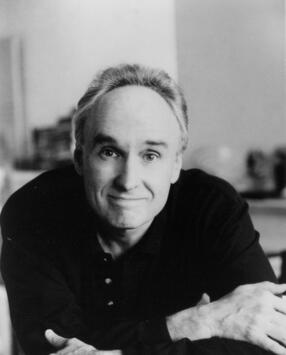
To confront some of the most daunting and prevalent problems in human health—from neurodegenerative disease to immune disorders to cancer—we need to map out the complex, invisible mechanisms that govern how our cells and genes actually work. Fortunately for us, Anjana Rao has been adeptly solving these mysteries for decades, unlocking vast new knowledge in human cell biology and opening doors to potentially transformative therapies.
Rao was a member of the Harvard Medical School for 30 years before joining the La Jolla Institute for Immunology, where she established the Division of Signaling and Gene Expression in 2010. Over time, she has achieved numerous field-opening breakthroughs—again and again—across cell biology, immunology, and epigenetics.
In the words of Arlene Sharpe, Kolokotrones University Professor and chair of the Department of Immunology at Harvard Medical School, “Anjana is a wonderfully rigorous scientist, committed to answering fundamental scientific questions at a deep level—and she has been an incredible mentor who has trained a huge cohort of highly successful scientists in academia and industry.”
Cristián Samper, PhD ’92, Organismic and Evolutionary Biology
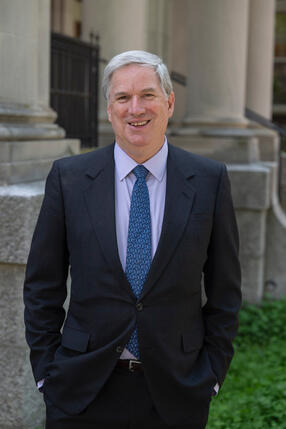
A renowned conservation biologist, a pioneer in some of the earliest efforts to address climate change on a global scale, and an innovative director of world-leading institutions like the Smithsonian Museum of Natural History and the Wildlife Conservation Society, Cristián Samper has been extraordinarily effective in bringing people together to serve the best interests of our planet.
Samper grew up in Colombia, studied at the Universidad de los Andes, and first came to Harvard as a visiting undergraduate, taking biology classes with the legendary Stephen Jay Gould and E. O. Wilson; he went on to complete his PhD dissertation on tropical forest ecology. Today, Samper is managing director and leader for nature solutions at the Bezos Earth Fund, where he helps direct the impact of the largest-ever philanthropic commitment to fight climate change and protect and restore the natural world.
“Cristián has promoted biodiversity and conservation in each of his leadership positions,” observes Don Pfister, Asa Gray Research Professor of Systematic Botany and former director of the Harvard University Herbaria. “His goal has been to make the world a safer place for organisms, and he’s done that quite well. He has always been a great proponent of natural history collections, of nature, and of conservation.”
Londa Schiebinger, PhD ’84, History
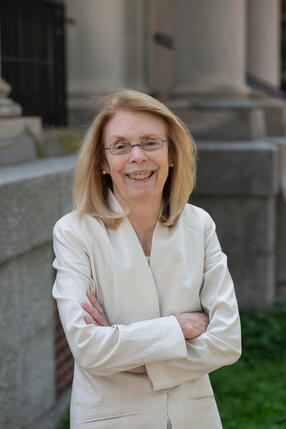
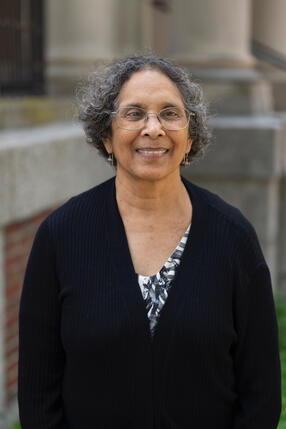
As the world’s leading authority on sex and gender in the history of science, Londa Schiebinger not only pioneered the study of women in science in the eighteenth century but also created an international platform that helps modern-day scientists use insights and methodologies from the humanities to innovate and improve the practice of scientific discovery today.
Schiebinger’s John L. Hinds Professor of History of Science at Stanford University and director of Gendered Innovations in Science, Health & Medicine, Engineering, and Environment, which has brought over 225 scientists, engineers, social scientists, and humanists together in a series of collaborative workshops to develop concrete methods and case studies that scientists can use directly in their work. She has been consulted as an expert multiple times by the United Nations, the European Commission, and the National Science Foundation.
“Londa is the leading scholar on women and gender in the history of science, and she has built a truly global conversation around gender bias in scientific knowledge that has driven policy change,” says Sarah Richardson, Aramont Professor of the History of Science & Studies of Women, Gender, and Sexuality. “She unites the humanities, social sciences, and sciences through a truly unique skill set that she developed through iteration, trial and error, and experimentation. And she does it with aplomb.”