Between Slavery and Liberty
America’s founders and earliest citizens struggled to put revolutionary ideas of freedom and democracy into practice. What can this teach us 250 years later?

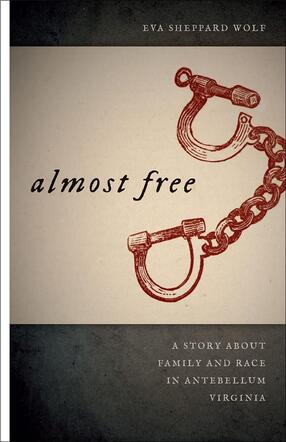
As a formerly enslaved Black man in early 19th-century Virginia, Samuel Johnson lived a contradictory life. Despite earning his own freedom, Johnson was denied essential liberties like the ability to testify in court against whites, the right to bear arms without a special license, and legal recognition of his marriage to his enslaved wife.
At the same time, friendships with influential local whites enabled him to live a much freer life than the law prescribed. Starting in 1806, formerly enslaved people were barred from permanently living in Virginia, for example, but Johnson successfully petitioned the state legislature for a rare exception. He put down roots in the town of Warrenton and lived, both literally and figuratively, as a neighbor among white Americans.
“He could buy property and he could have a job. That seemed to be a livable life,” explained historian Eva Sheppard Wolf, PhD ’00, who chronicled Johnson’s life in her book Almost Free. “But he couldn't ever be fully equal. That was just beyond what was imaginable or possible.”
Johnson’s intermediate status exemplifies the tensions between race and liberty that Wolf, a history professor at San Francisco State University, explores in her acclaimed research on early American life. From stories of everyday people like Samuel Johnson to those of famous leaders like Thomas Jefferson, Wolf’s historical investigations reveal how individual Americans constantly grappled and negotiated with the ideal of freedom and their obligations across the color line. In a time of political dissatisfaction and cynicism, her work offers a powerful reminder that change is possible.

I found the idea of community to be important [in how laws were enacted and experienced]. Are you part of a religious group like the Methodists, who were very anti-slavery in the early 1780s? Who are your friends? What’s your station?
—Eva Sheppard Wolf
Power Beyond the Law
Research on race relations in early America often focuses on formal policies and laws that restricted Black Americans’ freedoms. In contrast, Wolf examines local and individual variation in how these laws were enacted and experienced. Her book Race and Liberty in the New Nation traces how everyday white Virginians formed their attitudes about slavery and emancipation.
“I found the idea of community to be important,” Wolf explained. “Are you part of a religious group like the Methodists, who were very anti-slavery in the early 1780s? Who are your friends? What’s your station? What's your individual experience?”
Consequently, not every white American agreed with the laws that stripped Black Americans of their civil liberties. This created considerable variation in how people of color experienced freedom in the new nation, enabling some—like Samuel Johnson—to build friendships across the color line and circumvent legal restrictions. Even so, very few white Americans hoped for full equality.
“The sad thing is that almost nobody could imagine a society in which all people of African descent were free and living side by side with white people in Virginia with equal rights,” Wolf says. “White people just assumed that they were and should be dominant—even if they had great affection for individual people of color.”
Wolf argues that these historical blind spots also apply to Thomas Jefferson, who was born into a wealthy slaveholding family in Virginia more than 280 years ago.
“It's really a cliche to say that Thomas Jefferson was complicated, but he was,” she says. “Equality and liberty and all these things that he wrote so beautifully about during the Revolution were in certain ways inconceivable in his youth and childhood.”
Revolutionary Ideas
But times were changing. As America inched towards revolution, Jefferson—a successful politician who largely served his elite peers—began to think more critically about the relationship between the people and their government.
“He had this idea that everybody who had never been given 50 acres of land should be given 50 acres of land so that they would have a stake in society. That's a radical idea, especially for somebody who had his position in society,” Wolf says. “Jefferson's thoughts really did transform as a consequence of the revolution, but there were limits on that.”
The two major limitations on Jefferson’s egalitarian thinking were race and gender. While he took intellectual steps towards racial equity, such as drafting a plan for the abolition of slavery, he did little to advance these ideas in practice. Similarly, equality for women largely did not figure into his philosophy of liberty.
Wolf argues that these limitations shouldn’t prevent us from recognizing how Jefferson and other historical figures contributed to our modern understanding of freedom. The iconic assertion in the Declaration of Independence that “all men are created equal,” which Jefferson penned, offered a revolutionary vision of individual liberty and dignity that many of us take for granted today.
“There are things that people born in the 18th century just couldn't imagine, even if they gave us the language to be able to imagine it for ourselves,” Wolf says. “They were really messy humans, the same way we are, but the ideas that they celebrated are really worth holding onto.”
According to Andrew Burstein, professor emeritus at Louisiana State University who has written extensively about Thomas Jefferson, these psychological insights are a standout feature of Wolf’s research.
“We historians try to wrap our minds around such questions of past people's psychology, and few have addressed the challenge as well as Eva does,” he says. “She teases out nuggets of truth from the archive, helps us get inside the heads of people who lived 250 years ago. That’s a tremendous talent. It’s not just ideas and conditions that she writes about, but also human motivation.”
There are things that people born in the 18th century just couldn't imagine, even if they gave us the language to be able to imagine it for ourselves. They were really messy humans, the same way we are, but the ideas that they celebrated are really worth holding onto.
—Eva Sheppard Wolf
Norms Against Tyranny
Wolf’s focus on understanding the inner experiences of historical figures points toward another important feature of early American life—the influence of norms, not just laws, in shaping the nation’s trajectory. A chief example is George Washington’s decision to step down from the presidency after two terms, creating a precedent which lasted nearly 150 years and was later enshrined into the Constitution.
“Washington established norms that lasted for a very long time and could have gone a different direction,” Wolf says. “There are the written words of the Constitution, but what people think is acceptable behavior is tremendously important.”
Today, many longstanding political norms are rapidly changing as globalization and technological advancement create unprecedented challenges and shift power into new hands. Rice University’s William P. Hobby Professor of American History Randal Hall, whose edited volume Seeing Jefferson Anew contains one of Wolf’s most influential essays, says her work reminds us to pay close attention to these changes.
“In the United States today, many of our legal and political structures are under strain as political figures’ power grabs break down longstanding democratic customs,” Hall says. “Her deep scholarship on these issues is not exactly comforting about the outcomes, but we can hope that knowledge inspires action and resistance.”
Trading Cynicism for Hope
Wolf has witnessed her students’ skepticism about their collective power and worries these attitudes will prevent the next generation of leaders from stepping up to make change.
“I was encouraging them last fall to vote, and I said, ‘I know it’s easy to be cynical.’ And they kind of tittered, because don't feel very empowered, and they live in a world that makes it very easy to be cynical,” she says. “There wouldn't have been an American Revolution if people had been that cynical.”
Wolf acknowledges history teaches us that we might fall short of lofty new ideals. Despite the powerful principles of equality and unalienable rights upon which the United States was built, the nation’s founders failed to extend these principles to Black Americans, women, Native Americans, and other marginalized groups. The struggle for full inclusion continues today, demonstrating the difficulty of putting America’s revolutionary ideals into practice.
People can change their views and their behavior—usually not by themselves, but in community. Whether it's a small religious community or a nation undergoing revolution, we can move toward ideals and practices that allow for greater human liberty. If they did it, we can do it.|
—Eva Sheppard Wolf
“Various groups have been trying for 250 years,” Wolf says. “It was really hard then. It's still really hard.”
Additionally, while the past can provide hope, Wolf cautions against too rosy a view of history. Drawing inspiration and ideas from the Revolutionary Era does not mean that we should strive to return to it, she argues.
“Time moves in one direction. The past isn't helpful to us if we're trying to get back there, because we can never get back there—it's gone,” Wolf says. “I think there's an unhelpful way that we can celebrate the past as if it’s preferable to our own time, or they were somehow fundamentally different from us.”
But even if we don’t want to “bring back the 1770s,” as Wolf puts it, the ideas of great thinkers from the past can guide contemporary efforts to create a better nation.
“They were very attuned to the problem of tyranny and the way that power is a corrupting force,” she says. “I think we would do very well as a society to reread what they wrote about those issues and think hard about how power works and the ways in which power can corrupt.”
Above all else, Wolf maintains that the past can be a powerful source of optimism in an increasingly cynical world. The rapid changes in norms, laws, and ideals that inspired the Declaration of Independence and spurred the American Revolution demonstrate that societal change is possible.
“People can change their views and their behavior—usually not by themselves, but in community. Whether it's a small religious community or a nation undergoing revolution, we can move toward ideals and practices that allow for greater human liberty,” she says. “If they did it, we can do it."