Anjana Rao: 2026 Centennial Medal Citation
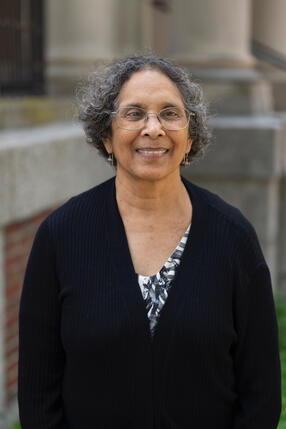
To confront some of the most daunting and prevalent problems in human health—from neurodegenerative disease to immune disorders to cancer—we need to map out the complex, invisible mechanisms that govern how our cells and genes actually work. Fortunately for us, Anjana Rao has been adeptly solving these mysteries for decades, unlocking vast new knowledge in human cell biology and opening doors to potentially transformative therapies.
Rao was born in Washington, D.C., and grew up in India, where she earned bachelor’s and master’s degrees at Osmania University. She completed her PhD in biophysics at Harvard in 1978 and postdoctoral fellowship in immunology at the Dana-Farber Cancer Institute in 1981 before becoming a professor of pathology at Harvard Medical School, where she was a member of the faculty for 30 years. In 2010, she joined the La Jolla Institute for Immunology to establish the Division of Signaling and Gene Expression. She also serves as an adjunct professor at the University of California, San Diego, and is an elected member of the American Academy of Arts and Sciences and the National Academy of Sciences.
Rao is astonishingly productive and influential in her work. She began her career by investigating how genes are turned on in T cells, a type of white blood cell that is crucial to the immune system. Over time, she has achieved numerous field-opening breakthroughs—again and again—across cell biology, immunology, and epigenetics. Multiple times, she has appeared on Clarivate’s Highly Cited Researchers list, which identifies scientists who produce multiple papers ranking in the top one percent by citations for their field and year of publication.
“Anjana is a brilliant and very deep thinker,” says Tim Springer, Latham Family Professor of Biological Chemistry and Molecular Pharmacology. “She often goes into new areas by taking a fresh approach, and she is drawn to very important fundamental questions. As a result, she has had impact in divergent areas, ranging from signaling pathways in T cells to epigenetic chromosome modifications to metabolic regulation. She knows the broad strokes of each field, but she is also very detail oriented.”
Arlene Sharpe, Kolokotrones University Professor and chair of the Department of Immunology at Harvard Medical School, was an undergraduate when she first met Rao. “Anjana’s fundamental work is so far-reaching, and her breakthrough discoveries have opened avenues for a variety of therapies,” says Sharpe. “Some of her most recent work has been on how cancer cells evade the immune system, and her work in that area has the potential to lead to new cancer immunotherapies.” Sharpe adds, “Anjana is a wonderfully rigorous scientist, committed to answering fundamental scientific questions at a deep level—and she has been an incredible mentor who has trained a huge cohort of highly successful scientists in academia and industry.”
One of those scientists is William Pastor, PhD ’11, a student co-author on one of Rao’s most highly cited papers in 2009, now a faculty member at McGill University. “It wasn’t until I completed my PhD that I realized how rare scientists like Anjana are,” Pastor says. “Most scientists try to become experts in a narrow field and confine their research to that area. Anjana just studied whatever she found interesting, using the best tools at her disposal. Her lab has an unusual record of making foundational discoveries in different areas. More than anything else, I think this is due to Anjana’s exceptional intellectual scope and curiosity.” Pastor adds, “Anjana was an inspiring mentor. She led by example. She worked harder than anyone else in her lab and motivated people by showing continued excitement for their projects—and a great deal of faith in her students.”
According to Mark Ansel, a former postdoc in Rao’s lab and now a professor at the University of California, San Francisco, “Anjana solves riddles: things that have puzzled scientists for a while. She has opened up whole new fields multiple times during her career, because she has the intuition to figure out these long-standing riddles. She can pull together the right teams to come up with the solutions, to understand how our bodies really work—and she has an experimental fearlessness. She always shares her ideas, always shares the latest data, and plows ahead, always for the betterment of science.”
Anjana Rao, for solving some of the most challenging, fundamental mysteries in human cell biology, and for opening new fields of inquiry—and new therapeutic pathways—in so many promising directions, we are proud to award you the 2026 Centennial Medal.