Frank Bidart: 2026 Centennial Medal Citation
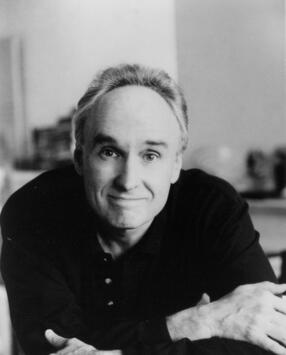
William Butler Yeats once said that we make rhetoric out of our quarrels with others; out of our quarrels with ourselves, we make poetry. Through a lifetime of wrestling with some of the deepest and keenest aspects of human experience, Frank Bidart has created poetry that speaks to us with singular energy and urgency. A great lover of art in all its forms, a towering intellect, a devoted teacher and mentor to his students, and a generous “guide on the path” for fellow poets, Bidart is an artist of rare insight, empathy, and eloquence.
Bidart was born in Bakersfield, California, the only child of parents who divorced when he was five. He studied poetry as an undergraduate at the University of California, Riverside, then came to Harvard, earning his master’s in English in 1967. One year earlier, he had met Robert Lowell, initially the subject of Bidart’s graduate research, ultimately a close friend and confidant, with Bidart advising Lowell on his last four books and editing Lowell’s Collected Poems. Bidart, himself, is the author of eleven celebrated books of poetry, including Golden State in 1973, Desire in 1997, Star Dust in 2005, Metaphysical Dog in 2013, and Half-Light: Collected Poems, 1965–2016, which won the Pulitzer Prize and the National Book Award. His latest collection, Against Silence, was published in 2021.
For more than 45 years, Bidart was a professor at Wellesley College, where he taught poetry workshops as well as courses on modern and contemporary poetry. The poet Dan Chiasson, PhD ’02, now a professor of English at Wellesley, audited Bidart’s classes as a graduate student and ended up exchanging work with him in what Chiasson describes as a “wonderful apprenticeship.” “I was impressed to meet a hero of mine; I was also impressed to see what a kind and compassionate teacher he was,” Chiasson says.
Reflecting on Bidart’s poetic legacy, Chiasson remarks, “Simply put, Frank changed the game. He started out as part of a generation of post-‘confessional’ poets, after Sylvia Plath, Anne Sexton, and Robert Lowell. In his early work, Frank set out to explore the limits and fringe of human psychology, which was shocking and startling and quite amazing to do. Then he began to write poetry that was exploring his own psyche, particularly questions around his coming out rather late in life. Those poems are very personal on the one hand, but also impressively philosophical and theoretical. He’s always been uncompromising—and unafraid in exploring the experience of having a body that has its own wishes and desires that you can’t entirely control. The outcome is a body of work unrivaled in the last fifty years, in terms of the variety and power of his short lyrics and the range and extension of his long poems.” Chiasson adds, “I’ve always looked forward to the latest Bidart book as a kind of clarification of life: what Matthew Arnold says poetry should be. You’re just waiting for that deep insight, that powerful sense of beauty, and the dignity that he brings to people in love, people in grief.”
Stephanie Burt, Donald P. and Katherine B. Loker Professor of English, praises the vivid distinctiveness of Bidart’s work, including, as Burt puts it, “disquisitions on the history of philosophy, in spiky free verse full of capital letters, italics, white space and unconventional punctuation.” “Bidart’s extreme typography helped him convey extreme states of mind,” Burt observes. “It also helped show how his lines ought to sound, read aloud. Bidart writes through passion, but also through subtraction, leaving out all but the statements that seem essential to the soul, the desire, the wisdom or the memory at hand. The results, however austere, can be revelations: his poems are doors best opened with cautious attention—behind them you might even see yourself.”
Peter Sacks, John P. Marquand Professor of English Emeritus, describes Bidart as “irresistible, charming, excruciated, and rightly beloved.” “So too his poems, which early to late have given uncanny embodiment to some of the most extreme yet somehow symptomatic and revelatory voices of our time,” Sacks says. “He is the extreme heir of the Modernist dramatic monologue, and surely one of the most daring and precisely agonized lyric poets of his generation. I doubt any poet has worked and reworked his lines as ferociously or beautifully—as fanatically, in the Yeatsian sense, as Frank.” Sacks adds, “Frank has also of course been a legendary teacher, mentor, and friend—no small radiance for someone who has also been a truly devoted recluse. I’d guess that Frank burned more spirit-fuel in an hour than most people ignite in a lifetime. For all the agony, he is a great poet of desire, of love—of gem-like, hard-wrought beauty.”
Frank Bidart, for giving voice to some of the deepest, most difficult aspects of what it means to be human through your arresting, awe-inspiring poetry, and for the generous and generative support that you have provided to so many students and poets, we are proud to award you the 2026 Centennial Medal.