Colloquy Podcast: Gordon Wood on the Radicalism of the American Revolution
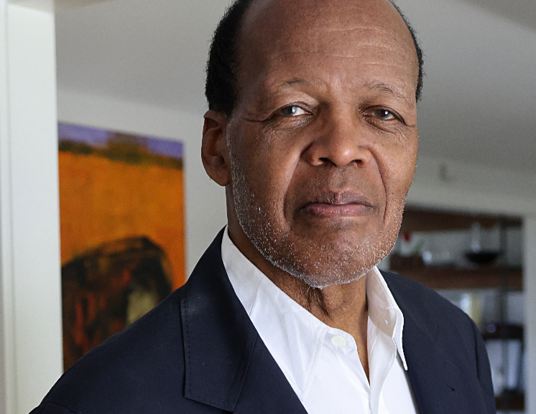
Before his death at age 92, the Brown University Professor Gordon Wood, PhD ’64, devoted his long career to making sure we remember the radicalism of the American Revolution. Often referred to as the “dean” of historians of the 18th-century United States, Wood argued that the country represented not only the most liberal and democratic regime in human history, but also a fundamental transformation of society and culture, one that continues to shape popular movements for freedom throughout the world. As the US approached its 250th anniversary, he spoke with Harvard Griffin GSAS about the creation of the American republic in one of the last interviews of his life.
Let’s start with the system that the colonists were rebelling against. Your work explores monarchy in terms of the social arrangements and the culture of the colonies before the Revolution. I wonder if you can talk about that and the notion of worlds of difference.
Yes. Well, monarchy is, of course, a king, but more than that, it implies a whole world of hierarchy and patronage, where authority flows from the top down. Not just the king but all of his underlings have their own hierarchy beneath them. So the whole world, ideally, is formed from a kind of hierarchical world, with everybody looking up and looking down. They don’t look alongside themselves. They focus on, Who’s my superior? Who do I owe deference to? The deference is not just because they feel inferior but because there’s real power above them. These people above them influence their jobs, their lives. There’s a whole high degree of unfreedom in secular society, not just in America with the slaves, but a whole host of people who are in various kinds of subservience to others, either tenures or five years, or they’re not free people.
So it’s a very different kind of world from one that’s created with the Republic. When you create a republic, then the whole thing is reversed. Power is supposed to flow from the people upward. It’s a totally different kind of society. So the transition from one to the other is quite dramatic. The implications are, of course, momentous. That’s what made the American Revolution so important: to have this huge continent of 13 states suddenly become republics.
The colonists considered themselves British citizens. So why were they so bent out of shape about representation? After all, it’s not like most folks back in Britain could vote for their member of Parliament in the 18th century.
The American notion of representation was so different. It developed in a short period of time, where in England, the representation went back centuries, and there were all kinds of anomalies. The town of Dunwich had long since slipped into the North Sea, but still sent two members of Parliament. England did not put much emphasis on how the MP, the representative, got to the House of Commons. They saw representation in very different terms.
We put a lot of emphasis on the electoral process. In America, the colonists could remember when a new town was created in Massachusetts, and suddenly they had two representatives sent to the General Court, or, in Virginia, they had two representatives sent to the House of Burgesses when a new county was created. That was within men’s memory. So they had a clear understanding of how representation should work, and the English, of course, had a very different history.
For the two different contrasting notions of representation, there’s a good defense of virtual representation by Burke in his speech to the electors of Bristol in 1774. He says, “Look, we’re not a bunch of ambassadors with hostile interests coming from various places. We’re all looking after the whole. We should be looking after the Commons, the House of Commons, and therefore it’s irrelevant where we came from and how many representatives we have.” We’re all supposed to—because this is an idealistic picture—but it’s very different from America, where, in fact, representatives do act like a bunch of ambassadors with sometimes hostile interests to one another.
So you’ve been talking about the difference in notions of representation. What was the British concept of virtual representation, and how did it intersect with the idea of legislators being disinterested parties?
Right. Well, we could start with Adam Smith’s notion that the landed aristocracy of England would represent the ideal political leadership because their income came without exertion. If you’re a moneymaking person, if you’re involved in the economy, in commerce, Smith argued, you could not possibly be a good politician, a good political leader, because your self-interest is too much up front. You’re too much absorbed in the making of money for yourself. That’s a quite legitimate activity, but it’s the exact opposite of what somebody should be for a political leader.
The fact that Manchester and Birmingham, these burgeoning industrial cities [in England], had no members of Parliament was irrelevant because the people who were looking after the commons would look after their interests as well, because it was all part of a general public good of the whole society.
That became the ideal, and someone like Washington took that seriously. That’s why he tried to serve as commander in chief without pay, and he tried to serve as president without pay. Virtual representation was arguing that it didn’t matter how the representative got to the House of Commons. That was really irrelevant. Once there, he was supposed to look after the commons. The fact that Manchester and Birmingham, these burgeoning industrial cities, had no members of Parliament was irrelevant because the people who were looking after the commons would look after their interests as well, because it was all part of a general public good of the whole society.
In your 1969 book, The Creation of the American Republic, you argued that the American Revolution was a radically new vision of popular sovereignty. What was this vision, and why was it so radical?
One of the issues that broke the empire is this doctrine of sovereignty, which is something that had been created in the course of the 18th century and became fundamental to British thinking. There must be, it was said, in every state, one final, superior, supreme lawmaking authority. In England, that was Parliament: king and Parliament.
That was the issue that broke the empire because we were trying to divide power. We’re saying, “Well, yes, Parliament can make laws for our navigation system, for trade, but it can’t tax us.” They kept coming back. A very important pamphlet in 1769 by William Knox, who was an undersecretary to Lord North, said, “Look, if you accept Parliament’s authority in one iota—one iota of Parliament’s authority—then you have to accept all. And if you deny Parliament authority in any area, then you have to deny it all.” They thought that clarifying that would solve the problem for the Americans, because who would not want to be under Parliament’s authority? Parliament, of course, is the bastion of liberty. It’s the source of all of the great libertarian documents from the Glorious Revolution: the Bill of Rights, the Petition of Right, everything about habeas corpus. All of the great things protecting people’s liberties came from Parliament.
Parliament is the source of liberty and the bulwark of liberty against the tyranny of the Crown. Of course, the Americans didn’t buy into that because they saw Parliament as a source of tyranny. When confronted with that choice, they said, “All right, we’re not tied at all to Parliament.” By 1774, every American intellectual who wrote, from Jefferson to Franklin to James Wilson to Adams, all said, “We’re tied only to the king. We’re not under Parliament’s authority,” sort of anticipating the modern Commonwealth, which was created in 1931 in the Statute of Westminster. It’s a real anticipation of that view that, today, Australia, Canada, and New Zealand are all under the monarch. They all have the common monarch but are not under Parliament’s authority. That was the American position, which was intolerable to the British.
So sovereignty became an issue. In a sense, the Americans accepted the notion of sovereignty. That is to say, that’s what it is, and we’re outside of Parliament. When it came to 1787 and the debate, the Anti-Federalists said, “We’re going to have a problem here because, because of the Supremacy Clause in the Constitution, the federal government will become sovereign over all the states, and the states will be reduced to measuring the height of fence posts and laying out roads. Everything important will be gone. And since there must be, in every state, one final supreme lawmaking authority, it’s going to end up being the Congress, the federal Congress.”
The Federalists had a problem with this—how to handle it. They kept saying, “No, no, we’re going to divide our state. You’re going to have some power, and the federal government is going to have some power.” No, no, the Anti-Federalists kept coming back to this issue, invoking Blackstone’s notion of sovereignty. Finally, James Wilson, in two speeches—one he gave in Philadelphia outdoors and one in the Philadelphia Ratifying Convention—came up with the solution. He says, “No, we agree that there must be in every state one final lawmaking authority. It’s going to be in the people themselves.”
Well, this is extraordinary. When Madison heard this, he said, “Oh my God, that’s great. That solves all our problems.” Locating this doctrine of sovereignty in the people suddenly made every elected official, in some ways, a representative of the people. They were doling out their pieces of power, you might say, always recallable to these representatives. And yet they remained viable and a final lawmaking authority.
That’s not the English position. In England, when they elect their Parliament, the people go out of existence. They’re extinguished until the next election. In America, there’s always that sense that the people can rise up and have a recall, for example, and suddenly they’re still there.
Locating [the] doctrine of sovereignty in the people suddenly made every [US] elected official, in some ways, a representative of the people. They were doling out their pieces of power, you might say, always recallable to these representatives. And yet they remained viable and a final lawmaking authority.
When some aspect of our system is criticized as undemocratic, you often hear it defended on the basis of our country being a republic, not a democracy. What was the 18th-century idea of republicanism? How and why did it take root in the colonies, and how was it an engine of the American Revolution?
Republic and democracy were two different things in the 18th century. A republic could be a mixed republic. You have a single leader, a president or a governor, and you have a House of a Senate. You didn’t call it the House of Lords. You could have a House of Representatives, but it could still be a republic if there were no hereditary offices, if everybody’s elected in one way or another, indirectly or directly.
A republic could be a mixed republic. Democracy was confined to—well, they thought the closest that existed in America were the town meetings of New England, where whole people gathered once a year to vote on things. By the time you get to the early 19th century, the Americans are beginning to argue that since everybody’s elected, their whole society is democratic. They talk about it as a democratic republic. Pretty soon, some people, the more progressives, would be, “No, we’re just a democracy.”
So the two words blended by the early 19th century. Today, people like to say, “Well, we’re a republic, not a democracy,” but that’s just no longer true. That transformation took place. That argument would have been correct in 1776, but it’s not correct today.
So, just to loop back to the end of my last question, how did this republicanism become the engine of the American Revolution?
Republicanism is to the 18th century what Marxism was to the 19th century, if you can take it in those terms. It’s cutting into monarchical values and eroding them without people quite realizing the implications. If you look at the 1780s, the French aristocracy are singing all kinds of praises to America. They’re going to watch The Marriage of Figaro, which mocks the aristocracy. They go to see David’s painting The Oath of the Horatii, which is a picture set in antiquity, with the Roman men going off to fight while the women are in the corner, weeping. I mean, these kinds of values—when you’re willing to fight for your country—those kinds of values are eroding monarchical views.
In that context, what did Jefferson mean when he wrote, “All men are created equal”?
Ultimately, the notion that all men are created equal is a transatlantic view, especially in the English-speaking world, meaning that heredity doesn’t matter. It’s based on a Lockean epistemology. We’re all born with the same blank slate, on which is etched, through experience, through the senses, our personalities, our characters. But we start, according to Locke, with the same blank status. The epistemology is Lockean.
People like Lord Chesterfield accepted that. He didn’t like to think that his position in society was due to the wealth of his ancestors. He’d like to think he was there because of his merit. So this is a widespread view that’s shared by many enlightened people. Jefferson is not making it up. He’s just drawing on that conventional wisdom, that all men are created equal. That’s what’s important about this, because suddenly environment is everything. It’s all nurture, no nature. The implications of that—who your father was, who your ancestors were—that really doesn’t matter anymore. That’s really radical.
Suddenly, you think anybody can, if you could change their circumstances, make it. That’s what makes education crucial. It also helps create a moral responsibility among the leaders because they say, “Look, the downtrodden, the society—if we change the circumstances of their lives, then they would have a different life.” Well, when you think about the whole total history of the West, nobody was thinking like that. Nobody cared about the downtrodden because they felt, well, that’s the way it is. Nature determined everything, and who your father was, who your ancestors were, that’s what you are going to be. It’s all nature, not nurture. Now, all of a sudden, it’s all nurture, not nature.
In your 1992 book, The Radicalism of the American Revolution, you argued that the country’s founding wasn’t just a change of government but a massive social revolution based on equality and commerce. How so? And how does your own state of Rhode Island exemplify that social transformation?
I think Rhode Island is interesting because it was the first state to openly declare independence, May 4. It’s a middle-class society already. The aristocracy doesn’t exist, really. There had been a few aristocrats in Newport, and they left, or they went quiet. It’s a thoroughly middle-class society. It’s electing all of its officers already. It’s well in advance. In other words, it’s precocious. It’s deeply involved in commerce. This is what middle-class people do. They’re the ones who want to make money.
It’s looked at with a kind of horror by many of the intellectuals or the so-called aristocrats. The American problem right from the outset was that we never had a real aristocracy. Washington, Jefferson, and the others are minor gentry by English standards. So we never had a real aristocracy, but they are an aristocracy. They looked down on moneymaking. Rhode Island is deeply involved in that. These are the people who are protesting against the federal Constitution.
The federal Constitution is created because, well, you have to start with the fact that democracy is a powerful force. We know that. Europeans know that. And dangerous as well. It needs careful handling by elites. This came home to Madison and many other elites in the middle of the 1780s, and they realized they had to bring this democracy, which is expressing itself in the states, particularly by the passage of paper money. The federal Constitution is the answer that Madison comes up with to these excesses of democracy.
When you think about the whole total history of the West, nobody . . . cared about the downtrodden because they felt, well, that’s the way it is. Nature determined everything, and who your father was, who your ancestors were, that’s what you are going to be. It’s all nature, not nurture. Now, all of a sudden, it’s all nurture, not nature.
Paper money, if you think of it—how did the aristocracy in America exist? They didn’t have tenants the way the English did because territory couldn’t work. There was some territory in New York, but the relationship between landlord and tenant was reversed. There’s nothing comparable to the English landed aristocracy, with people bringing in—Lord Grantham in Downton Abbey—bringing in rents that allow him not to have to exert himself in the making of money.
So what’s comparable? They talked about it very self-consciously. John Witherspoon, who became president of Princeton, or the College of New Jersey, said, “We have a different kind of land, different kind of stocks. Our aristocracy lives off of the interest paid on money lent out.” That’s true. Washington was involved in this, but all of the rest of the aristocrats—Hancock, every urban one, and John Adams make the same point—they’re living off of this money coming in to them. They’ve lent out to neighbors. In a sense, they’re bankers in a society that had no banks.
Of course, there’s a personal tie there. When the local guy, the neighbor, wants to buy some more stock or buy some more land, he comes hat in hand to the rich guy on the hill and asks for a loan, and he gets the loan and pays him back, like a mortgage. But when suddenly there’s a state issuing paper money, and you go to a bureaucrat and borrow the money, that tie is broken. And that’s how the Revolution was. As Emerson put it perfectly, we’re living in an era of severance. We’ve severed the ties that held people together. Now we’re all on our own. He celebrated that. Emerson’s greatness, his popularity, came from the fact that he was easing the anxieties of people who suddenly were cut loose. He’s telling them, “That’s good. Self-reliance. You’re on your own. Make it.”
It’s an extraordinary development that takes place. That fear of paper money is a real fear of cutting a patronage tie. So it’s understandable. Madison wanted the states to have this veto power. Suddenly, that’s just too impractical, and it gets put in Article I, Section 10: a series of prohibitions on what the states can do, one of which is, no, they can’t issue paper money.
If that had been rigidly enforced, it would have stifled the economy because the antebellum economy needed paper money—lots of it, millions of dollars. They needed it. They get around it by chartering banks, hundreds of banks, which issued their paper freely. You have, by the eve of the Civil War, I think the estimates say 10,000 different kinds of paper money circulating. To do business was very, very difficult.
Finally, people today are concerned about the tone of political rhetoric in this country. How does it compare to the first years of the Republic?
They were as vicious as anything, more vicious than anything we get today. Even Paine was attacking George Washington, of all things, which helped to destroy his reputation in America. They certainly were vicious. They didn’t have anything comparable to social media, of course, and that aggravates our problems. We have so many outlets and so many ways of expressing our opinions, and by anybody. That’s a very different world. But when they made newspapers, they were certainly quite vicious toward partisan feelings.
In the 19th century, states were redistricting all the time. That’s one of the advantages of history. It gives you a little perspective on things. We think that what we’re doing now in redistricting is unique. It’s not unique. It’s unique for the twentieth century but not for the earlier part of our history. It was very partisan and very vicious partisan fighting.
We did have a civil war. We’ve been a very violent people when you think about it: four assassinated presidents and other attempted assassinations. We fight a war about every twenty-five years. We’re an unruly and violent people. The culture is such that we shouldn’t be surprised by what’s going on in the present. Certainly, that is the advantage of history: that, if you know what went on in the past, you’re not quite so upset by the present.