


On this page:
- First-Generation Students
- International Students
- Historically Underrepresented in Academia
- LGBTQIA+ Students
- Veterans
- Students with Disabilities
- Students with Families
Students come to Harvard Griffin GSAS from every corner of the world; this global community represents many identities, interests, and backgrounds. Our student communities—a sample of which can be found below—represent Harvard’s excellence as an academic institution, and we strive to create an inclusive environment where all students can thrive and grow academically and personally.
The Office of Culture, Community, and Engagement (CCE) is a dedicated partner from the moment students consider Harvard Griffin GSAS through graduation and beyond, offering one-on-one support, resources, and programs that help every student feel included and heard. For more information, please contact the CCE office.
Our students are at the heart of Harvard’s excellence in research and education, studying with dedicated faculty and accessing exceptional research centers, scholarly collections, and museums as they seek to answer fundamental questions, advance new knowledge, and develop creative modes of thinking in an interdisciplinary environment.
– Dean Emma Dench
First-Generation Students
A first-generation college student is an individual whose parents or legal guardians did not complete a four-year college degree. Harvard Griffin GSAS aims to provide resources and guidance to help first-generation college students navigate the unique challenges that pursuing graduate education entails.
International Students
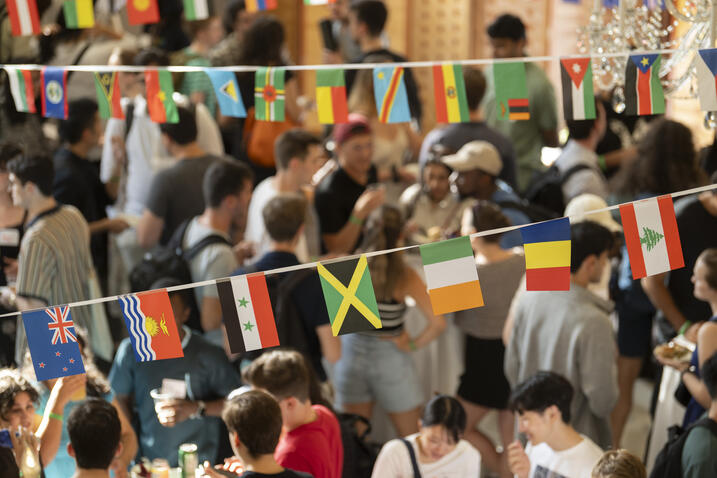
Harvard Griffin GSAS enrolls Harvard’s largest population of international students, who come from all over the world and make up 38 percent of the student body. Ours is a truly global community, and we offer a range of services and resources to help our international students make a smooth transition to Harvard.
Be sure to log in for pre-arrival webinar(s) over the summer and make plans to attend the International Student Orientation and Reception in August! Watch your inbox for details.
Pre-Arrival Resources for New International Students
Harvard International Office
The Harvard International Office provides information about services and support for international students, including visa and tax information as well as information on travel and life at Harvard.
Oral English Language Proficiency Requirement
Because graduate students need to communicate their ideas in multiple ways, the Harvard Kenneth C. Griffin Graduate School of Arts and Sciences (Harvard Griffin GSAS) requires that PhD students who are non-native English speakers and who received their undergraduate degree from a non-English speaking institution demonstrate a minimum level of oral English language proficiency. The English language proficiency policy can be found in the Academics and Enrollment section of the Handbook for Students. This proficiency standard is important for classwork, research, and teaching, and must be met before students are permitted to serve as teaching fellows. Students will be screened through an oral proficiency interview with the Bok Center prior to the start of their first term; if they do not meet the minimum required level, they will be advised to take classes in the Professional Communication Program for International Teachers and Scholars at the Bok Center. The Bok Center will reach out to eligible students prior to the start of the fall term to schedule assessments.
Students who have not met the requirement may be re-evaluated after taking an oral communication skills course or after waiting one year. Whether you have met the English language requirement or still need to develop your oral English proficiency, you may schedule a consultation with the Bok Center staff to discuss your English communication skills and get connected to available resources.
Harvard Griffin GSAS Residence Hall Programming
Harvard Griffin GSAS residence halls feature a large international student population and many resident advisors (RAs) who originate from outside the US. RAs plan ongoing and frequent activities for students in the residence halls, and many specifically reach out to international students. One RA directly serves international students by acting as a liaison to the international residential community. International students should consider applying for accommodation in our residence halls during their first year of study.
The Derek Bok Center for Teaching and Learning
The Bok Center’s Professional Communication Program for International Teachers and Scholars offers programs and resources on speaking and presentation skills, intercultural communication, and teaching in Harvard classrooms for international PhD students. Incoming students who need to meet the Harvard Griffin GSAS Oral English Proficiency Requirement, as well as any PhD student who would like to learn about speaking and communication resources, should schedule a communication consultation with Bok Center staff.
Historically Underrepresented in Academia
Students from groups that are historically underrepresented in academia will find a welcoming and inclusive community at Harvard Griffin GSAS. A number of student organizations such as the W.E.B. Du Bois Graduate Society of Harvard Griffin GSAS and Harvard Griffin GSAS Women in Science and Engineering Group (HGWISE) partner with us to help create community through social, professional development, and scholarly activities. Additional student groups can be found on the Engage platform.
LGBTQIA+ Students
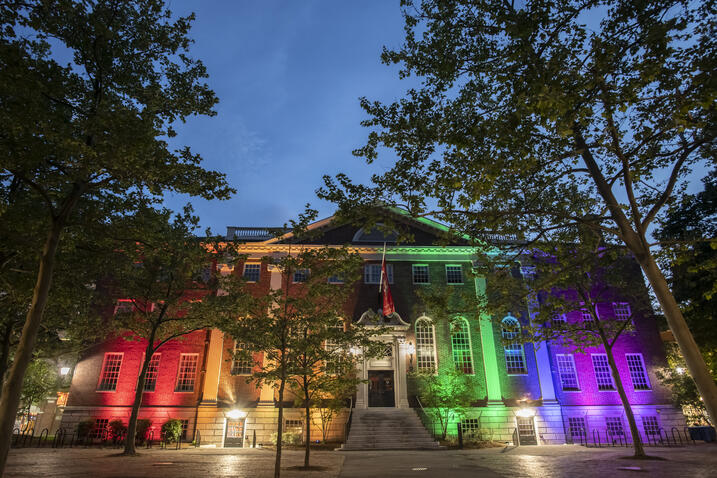
Harvard Griffin GSAS is dedicated to building an affirming environment for LGBTQIA+ students. Harvard has a broad and vibrant queer community across the University. The student group LGBTQ@GSAS provides a community and safe space for students who self-identify as lesbian, gay, bisexual, transgender, and queer graduate students or self-identify as an LGBTQ ally.
For more information about LGBTQ@GSAS and other student organizations, please visit the Engage platform. Additionally, you can contact the Office of Culture, Community, and Engagement with questions about resources and support available to our student communities.
Veterans
Harvard University extends a special welcome to all veterans and active military personnel (including their eligible dependents, if applicable). We understand that there are many different types of educational benefits potentially available to students in these categories. If you are eligible for veteran and military benefits and would like to utilize these benefits during your time enrolled at the Harvard Griffin GSAS, you should obtain a Certificate of Eligibility (COE) or other similar documentation for programs that do not have a COE from the US Department of Veterans Affairs (VA) or the active duty miliary branch in which you are affiliated. This information should then be submitted to the Office of Financial Aid, and our staff will work with you to activate your educational benefits. Should you have any questions about this process, please reach out to your Financial Aid Officer directly for assistance.
Students with Disabilities
Harvard University works to ensure an accessible and welcoming working and learning environment for individuals with disabilities while ensuring compliance with federal and state regulations. Through the Disability Access Office, Harvard University Disability Resources, and the Harvard Griffin GSAS Office of Student Success and Office of Student Services, you can access the help you need to make the most of your Harvard experience.
If you need to request services for a disability or health condition, apply for accommodations with the Disability Access Office.
Students with Families
While pursuing their Harvard education, graduate students live full personal lives, which often include relationships with and caregiving responsibilities for spouses, partners, elders, and children. Harvard Griffin GSAS provides support and access to resources that will help you balance your family’s needs with the demands of your graduate program.
Learn more about resources for families
