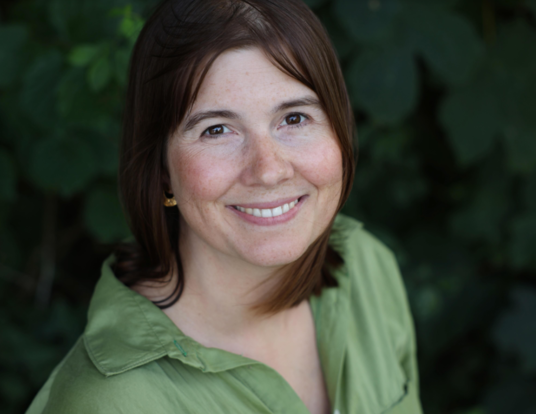
Daniel Evrard is a PhD student in sociology whose work explores the impact of decarbonization on fossil-fuel-producing communities. A six-year veteran of the US Air Force, he discusses his experience maintaining the workhorse C-130 cargo aircraft, how growing up in Springfield, Massachusetts, shaped both his life path and research focus, and how looking through the lens of deindustrialization can create new opportunities to support members of communities undergoing decarbonization.
Master of the Flightline
I enlisted in the US Air Force in the summer of 2009, and I completed technical school to become a C-130 crew chief the following spring. After I graduated, I was assigned to Davis-Monthan Air Force Base in Tucson, Arizona, where I stayed for the remainder of my military career. The C-130 is probably one of the older cargo aircraft in the US military, but it is also one of the most reliable and recognizable. If you look at videos from Vietnam, for instance, you’ll probably see C-130s conducting tactical airlifts. They have these massive tires and four engines with really big propellers that allow them to land on short dirt runways.
The C-130 is a customizable platform, and I worked on two of its variations. One was the EC-130 Compass Call. Instead of hauling cargo, it’s filled with stacks of top-secret computers. In Iraq and Afghanistan, the Compass Call would fly over convoys to monitor radio traffic for attacks, while also emitting electromagnetic pulses that could jam remote-controlled roadside bombs. The second variation I worked on was the HC-130J Combat King, which transports pararescuemen performing combat search-and-rescue operations. These aircraft also conduct in-flight refueling for helicopters.
Crew chiefs are the masters of the flightline. Our job was to oversee and manage the maintenance of the aircraft assigned to our unit. Our responsibilities included performing preflight and postflight inspections, as well as routine servicing, such as refueling. (A year and a half ago, I enrolled in a long-term VA study to better understand the health effects of chronic exposure to jet fuels.) If something goes beyond our specialty or expertise, we send the work to another shop. For example, if a hydraulic line needs to be repaired, we send the job to the hydraulic shop.
I have a lot of really complicated feelings about being part of the Global War on Terrorism, as do many vets. Sociologically, we can think about the military as the largest jobs program for working-class Americans, and I don’t think many of us fully understood what we were doing until later on. At the same time, I wouldn’t be who or where I am today without the military, and I’ve been trying to square that circle ever since I separated in 2015.
Crew chiefs are the masters of the flightline. Our job was to oversee and manage the maintenance of the aircraft assigned to our unit. Our responsibilities included performing preflight and postflight inspections, as well as routine servicing, such as refueling.
When Work Disappears
I was born and raised in Springfield, Massachusetts, one of the oldest and most influential industrial cities in the country. My dad immigrated to the US as a kid in the 1950s. He didn’t finish school, but that wasn’t unheard of. At the time, you could earn enough to support your family without a high school diploma by working for one of Springfield’s various manufacturing companies. By the late 1970s, however, those jobs started to disappear in Springfield and throughout the country.
I was born in 1990, and the community was still feeling the effects of what had unfolded over the previous two decades. Growing up in that kind of environment can really limit how you think about your own future, and I wasn’t an exception. I learned what hard work looked like from watching my parents, who are some of the hardest-working people that I know. But that didn’t translate into academic success. When I was interested and engaged in a subject, I would get A’s. But most of the time, I wasn’t focused or motivated the way I might have been in a different environment or with someone showing me how to be academically successful.
Fast-forward to my senior year in high school. I turned 18 at the start of the global financial crisis in September 2008. Almost immediately, I saw people losing their homes. There weren’t many well-paid jobs outside of the firearms industry for people without a college degree. Some of my classmates went to work in the Smith & Wesson factory in Springfield. I have family members who didn’t graduate from high school and are currently working in firearms manufacturing. Those were the types of opportunities available to me.
My best friend’s father was an aircraft mechanic in the Air Force Reserve, and my best friend planned to join the military after we graduated. I didn’t really know what I was going to do with my life, and everything was collapsing around me. The idea that I could travel and potentially use the GI Bill to go to college really appealed to me, even though I had no idea what I wanted to study or how to go about it. So, I graduated from high school in the spring of 2009 and shipped off to basic training in the Air Force.
New Insight
I spent six years in the military. When my enlistment ended, I moved back to Massachusetts because I was homesick. I was almost 25, living in my parents’ basement, and didn’t have much of a plan outside of taking some classes at Springfield Technical Community College (STCC). At STCC, I sat down with the counselor and tried to figure out which courses to take. He helped me set up a schedule that included Sociology 101. I had no idea what sociology was, but I said, “Sure, sign me up.” As it turned out, Josh Carreiro was a great professor who put together an engaging class. I can’t praise it enough. By the end of the semester, I ended up with a 102 out of 100 points or something like that, with extra credit added on. I was excited about the material. It was exactly what I had been looking for.
After that semester, I moved back to Arizona to be with my partner. I went back to school because the GI Bill would give me a modest living stipend if I enrolled as a full-time student, so I said, “Why not?” It wasn’t a lot, but it helped me get by. So, I ended up transferring from STCC to the local community college and, after a spring and summer term there, transferred to the University of Arizona.
In my first semester, I took a class with Professor Kathleen Schwartzman. One of the assigned readings in her class was When Work Disappears, a book by William Julius Wilson, who was a professor here at Harvard. There are different ways to read the book, but for me, it was the first time that I encountered scholarship about the effects of deindustrialization on the communities that had been left behind. When I read it, everything about where I came from started to make sense. It spoke to what I already knew but didn’t have the vocabulary to express.
Professor Schwartzman became my mentor and guided me throughout my time there. I ended up getting an A in all my sociology classes and graduated magna cum laude a year ahead of schedule. After graduating, I decided to pursue a PhD to help communities like the one I came from and chose Harvard because I thought it could best support that goal.
[William Julius Wilson’s book, When Work Disappears] was the first time that I encountered scholarship about the effects of deindustrialization on the communities that had been left behind. When I read it, everything about where I came from started to make sense. It spoke to what I already knew but didn’t have the vocabulary to express.
Sociology teaches us that deindustrialization is neither natural nor inevitable but is instead the byproduct of political and economic decisions. People in places like Springfield often dedicated their entire lives to difficult and even dangerous jobs producing goods that society has collectively benefited from. Yet communities like these have typically been left to navigate the fallout of deindustrialization on their own. For me, this raises complex philosophical questions about society’s obligations to communities like my own. In my work, I try to better understand how and why deindustrialization occurs so that we can figure out ways to mitigate its harms, even though we can’t always make things go back to the way they were.
Focus on Communities
It took me a while to identify my dissertation subject. When I first arrived at Harvard, my plan was to study deindustrialized communities. But then my advisor, Professor Jason Beckfield, and I discussed how the energy transition could be understood as another case of deindustrialization, and I was hooked. From there, we went on to co-author multiple case studies for the Roosevelt Project, a Harvard-MIT collaborative initiative looking at energy-transition policies, as well as an article in the Annual Review of Sociology on the social impacts of supply-side decarbonization.
I took two important lessons away from that work. While writing the Annual Review article, I realized that there were plenty of proposals about how best to support oil-producing communities. The problem is that most oil-producing communities aren’t moving away from production, so the proposals often lacked an empirical footing. Instead, researchers often drew on the lessons of deindustrialization, which had been studied for decades. But that literature has focused on manufacturing, so I couldn’t be certain which lessons traveled and which didn’t. These issues were at the front of my mind as I was preparing to draft my dissertation prospectus.
I thought that I could start to address them by studying decarbonization in fossil-fuel-producing communities through the lens of deindustrialization, but I needed a case. Then I came across a news article about the energy transition in California. Here was a state with some of the largest onshore oil fields in the country that was also actively pursuing decarbonization. I had to go there to understand what decarbonization meant for oil-producing communities.
I started by cold-emailing people. Then, when I entered the field in 2023, I just started showing up at community and industry events to listen and learn. Over time, I developed relationships with those on both sides of the debate over the oil industry. Some folks have health concerns about living near oil wells, but others are worried about what will happen to a community built around oil if the industry disappears. I finished my fieldwork this year with the generous support of the Salata Institute and the Stone Center.
I went to California’s oil country with strong beliefs about what should happen. That changed almost immediately. In oil-producing communities, decarbonization is an extremely polarizing subject. As I came to know the people who live there, I saw how their different relationships with the industry shaped how they experienced, interpreted, and navigated decline. I often found myself empathizing with people on both sides. Some worry about their kids getting sick because they live near oil production, while others fear losing their retirement savings that they’ve invested in mineral rights. I try to honor and respect both groups’ concerns and their right to have a say in the decisions that affect their lives.
Taking these concerns seriously has led me to think about how social networks can prevent collective problem-solving. Groups disagree about whether the problem is oil production or the lack thereof, but they generally agree that decarbonization will create problems for the region since it’s so dependent on oil. Research on deindustrialized cities has shown that communities often struggled to recover when they couldn’t overcome the patterns of social relations that developed around the outgoing industry. My goal is to produce research that can help these groups find ways to forge a path forward that gives each a meaningful say. It’s definitely a challenging problem, but I see opportunities if we can think creatively.
We know sociologically that losing a major industry can negatively affect what are called the “social determinants of health”—the aspects of the social and economic environment that shape people’s health. It’s therefore critical that, in addressing the climate crisis, we also ensure that fossil-fuel-producing communities are not left to bear the costs of decarbonization on their own.
Searching for a Path Forward
The big lesson from my research is that we need to think differently about energy transition. California’s oil country is in a unique position: it has some of the largest oil fields in the world and some of the largest solar fields. Are people from the oil and gas industry moving into these jobs? According to my data, the answer is no.
We talk about the energy transition, but “transition” implies movement from one state to the next, with something coming afterward. I understand the need for optimism and for a framework that gives people hope about decarbonization and the climate crisis, but that orientation can create resistance among fossil-fuel workers who know they are not moving into the new jobs, many of which are union jobs, and unions cannot always admit new members. They are being asked to shoulder whatever harms result from efforts to combat the climate crisis.
We need to think about the situation as deindustrialization rather than assuming something is coming next. That opens new policy opportunities to support communities facing this threat. We know sociologically that losing a major industry can negatively affect what are called the “social determinants of health”—the aspects of the social and economic environment that shape people’s health. It’s therefore critical that, in addressing the climate crisis, we also ensure that fossil-fuel-producing communities are not left to bear the costs of decarbonization on their own.
People often ask how I became so deeply embedded in the oil and gas industry. I think the explanation lies in my background. Folks were willing to welcome me into their lives because they understood themselves as belonging to a community undergoing deindustrialization. People do not feel loyal to the petroleum industry because they love oil as a mineral; time and again, they explained that their loyalty was to the people who constitute it. Of course, industrial activities affect communities unevenly, often reinforcing existing inequalities. But the question remains: What does it mean to decarbonize in a town that exists because of oil? How can we better understand what’s happening to find a more effective path forward?