Pandemic Prognosticator
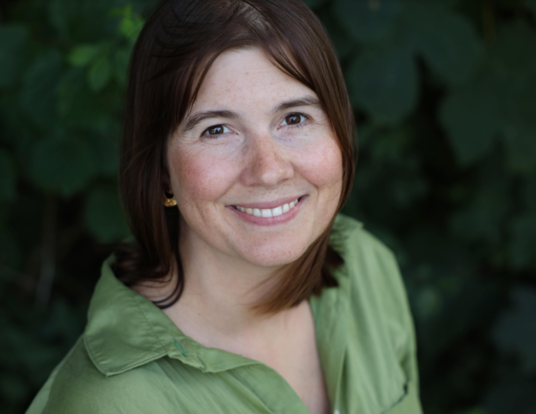
Dianzhuo (John) Wang, PhD Student

Dianzhuo (John) Wang is a PhD candidate in applied physics at Harvard’s Kenneth C. Griffin Graduate School of Arts and Sciences (Harvard Griffin GSAS) and the John A. Paulson School of Engineering and Applied Sciences (SEAS). His work focuses on developing tools to predict how viruses evolve—research that could one day help prevent the next global pandemic. Wang reflects on his journey to Cambridge, the impact of COVID-19 on his path as a scholar, and how studying at Harvard has expanded his perspective on science, policy, people, and beyond.
An Unexpected Catalyst
I began my PhD in September 2020, right in the middle of the pandemic shutdown. Everything was remote. I attended classes over Zoom, rotated through labs virtually, and tried to find my footing in a research environment I had never physically entered.
Before coming to Harvard, I had focused mostly on experimental physics. But with labs closed and access limited, I pivoted to theory and simulation. At the time, it felt like a compromise. In hindsight, it was a turning point. During the pandemic, I started asking new questions—like: What if we could anticipate novel viral strains like Omicron, not just react to them? What if we had tools to predict how pathogens change, before those changes catch us off guard?
Preventing the Next Pandemic
That’s what I work on now. My research focuses on how viral proteins—such as those in SARS-CoV-2—evolve under selective pressure. The central question is simple: Can we forecast what comes next?
Using models grounded in biophysics, protein evolution, and machine learning, I’m developing predictive systems that can inform the design of “robust therapeutics”—vaccines and treatments that work not just against current variants, but against those likely to arise in the future. Traditionally, vaccine updates chase variants of concern. My goal is to help us get ahead of them.
Our work has already led to two papers in Proceedings of the National Academy of Sciences (PNAS), with more on the way. These models give public health officials the ability to plan not just based on what the virus is doing today, but where it might go tomorrow. It’s a huge step forward from where we were in 2020, when none of that was in place.
The Freedom to Explore
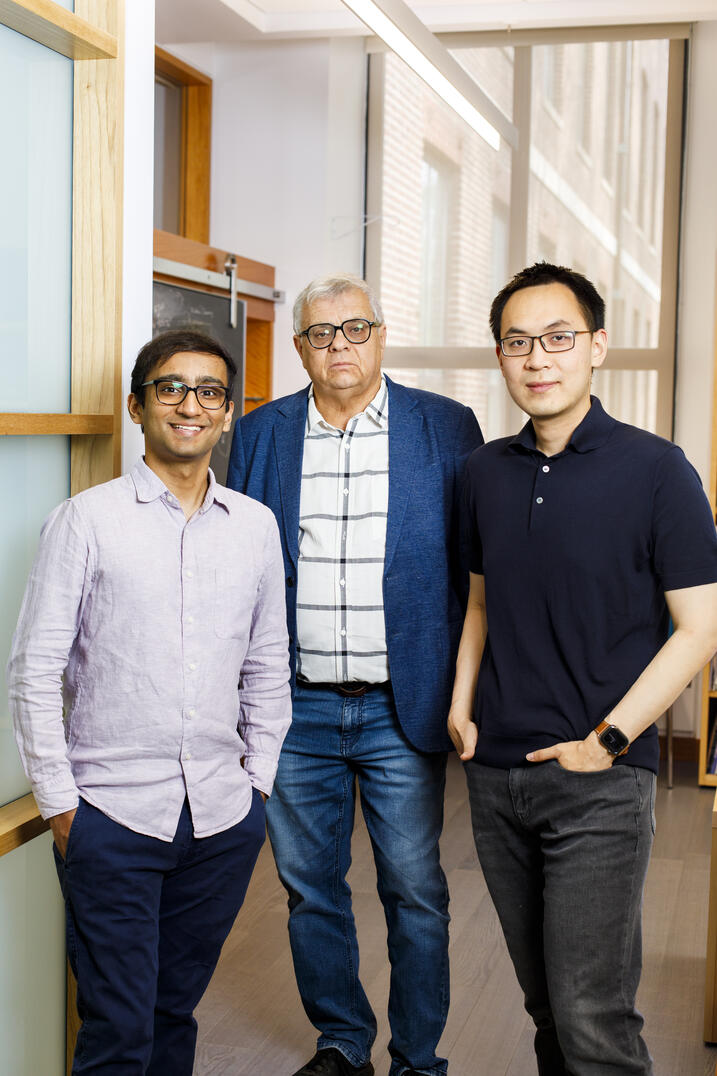
My advisor, Professor Eugene Shakhnovich, started his career in theoretical physics before transitioning into biology. From the beginning, he gave me room to explore, fail, and grow. We meet twice a week—once for a smaller check-in, once for a broader discussion—and he gives me the independence I need to pursue ideas while always being there with guidance. I spent nearly eight months chasing down ideas that didn’t lead to publishable results. But he was patient and encouraging. When things finally clicked, I wrote and submitted my first paper in just three months—a result built on all the earlier struggles.
That support system has made all the difference. I’ve tried to model it in my own mentoring. For the past few years, I’ve served as a tutor at the Dudley Community, which supports undergraduate students who live off campus or have nontraditional paths. I meet with them, talk through their academic and life questions, and offer guidance when I can. Watching them grow has been inspiring. They’re smart, driven, and full of energy. They give me hope for the future.
Another thing I’ve valued most at Harvard is the freedom to explore outside my discipline. I’ve taken classes in behavioral science at the Harvard Kennedy School and negotiation at Harvard Law School. These weren’t just interesting electives—they changed how I think.
Behavioral science taught me how small psychological nudges can shift behavior, especially in public health. Negotiation showed me that the goal isn’t compromise—it’s finding mutual gain. These lessons stay with me, not just in my academic work, but in how I engage with the world.
Toward a Pandemic-Free Future
I came to Harvard to study physics. I stayed to try to change how we respond to pandemics. What began as a forced shift—from experiments to simulations—has become a mission: to give scientists, doctors, and policymakers better tools to see what’s coming.
Along the way, I’ve found much more than I expected: lifelong mentors, collaborators, and a deeper understanding of what science can do when it’s paired with purpose. I’ve come to appreciate how much progress depends on international cooperation. Harvard brings together brilliant minds from around the world, and none of my work would be possible without that global community. My closest friend and collaborator is French, and every breakthrough we’ve made has grown out of that shared effort.
I look forward to a future where the world never again has to face a pandemic like the one we saw in 2020—where we have the foresight, tools, and global cooperation to stay ahead of fast-evolving biological threats.