Nutrition for Global Health
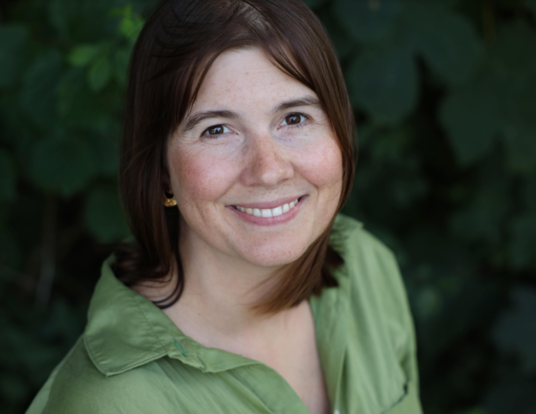
Roka Kakehi, PhD Student

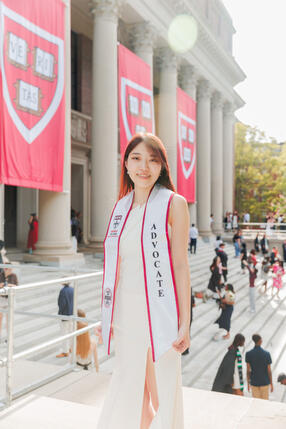
Roka Kakehi is an incoming PhD student in population health sciences. A native of Tokyo, Kakehi’s interest in food and public health has led her from Japan to Costa Rica, the University of Pennsylvania, and finally Harvard Griffin GSAS. She talks about how her encounter with a new food culture inspired her interest in nutrition research, her work on meat grown in a lab, and the association between yogurt consumption and lower risk of colorectal cancer.
A Bold Move
I grew up in Tokyo, Japan. My father works in a bank, and my mother teaches young children. Looking back, I never imagined myself pursuing a PhD, studying in the United States, or going to Harvard. In elementary school, I knew I liked science and chemistry and had an idea of studying those subjects in the future, but I didn't know where—certainly not in the US, because I had never lived outside Japan. When I was ten, though, I had the chance to visit the US and tour several universities, including Harvard. That was a very exciting opportunity, and I dreamed of studying in the United States one day.
I enjoy living in a big city like Tokyo, and I love Japan, Japanese food, and the environment. But because Japan is an island nation relatively isolated from other continents, I felt a lack of diversity. For instance, at my high school, almost everyone attended the same university to study the same subjects. I wanted to study abroad and immerse myself in a new environment.
When I was 16, I discovered a study abroad opportunity through United World Colleges (UWC), an international high school program with campuses around the world. Costa Rica was one of the options. I wanted to go somewhere far from Japan—somewhere I would not normally go for university and where I had never been before. Costa Rica was the farthest option available.
When I brought the idea to my parents, they were surprisingly supportive. Since I am an only child, I worried they might not let me go, but they understood the value of studying abroad. So, during my second year in high school, I left Japan and moved to Costa Rica for two years. Looking back, it was a bold decision because I did not know anyone there. But because I had never lived outside Japan, I had no fear and simply wanted to try something new.
Food for Thought
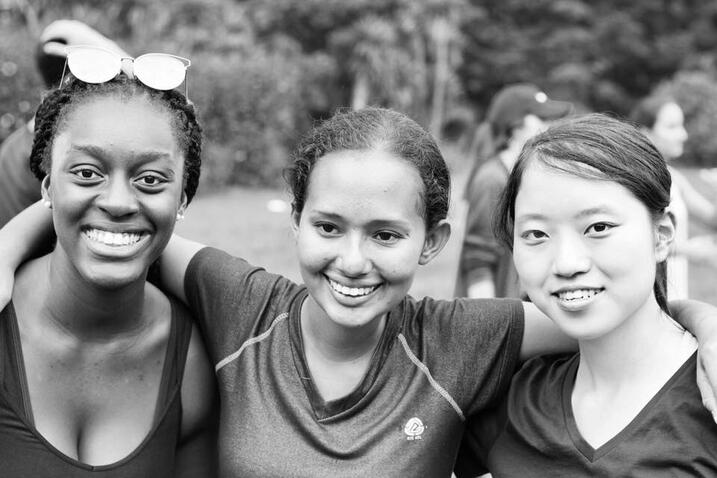
UWC was an international school with students from more than 70 countries. It was my first time living abroad and speaking English continuously. At first I missed my parents a lot and was very homesick. I occasionally questioned whether I had made the right decision to leave my family and friends behind. Over time, I made wonderful friends in Costa Rica. Everyone at the school experienced homesickness at some point, so we supported one another through those two years.
UWC was also my first exposure to public health concerns. I grew up eating traditional Japanese food, such as rice and fish, served in smaller portion sizes. In Japan, healthy food options are readily accessible, even in convenience stores. I enjoyed the food in Costa Rica, but compared to the Japanese diet, it contained significantly more carbohydrates and fried foods. I gained about ten kilograms—roughly twenty-two pounds—during my first year. I also found myself eating due to the stress of adapting to a new environment and diet. That experience made me realize that weight gain is complex and tied to environmental factors, not simply personal discipline. That insight drove my interest in nutrition research.
I wanted to continue studying in English after UWC. For my undergraduate degree, I attended the University of Pennsylvania (Penn). I chose Penn because they offer strong education in nutrition science through their School of Nursing, which is relatively rare at the undergraduate level in the US. My parents were sad to see me stay abroad—I have been away from Japan for eight years now—and they miss me, but they have always supported my desire to pursue field studies that were not available to me in Japan.
Meaty Subjects
The COVID-19 pandemic began during my first year at Penn. Students returned to their home countries, so I completed my second year online from Japan. Wanting to conduct hands-on research, I secured a position in a lab at the Institute of Advanced Biomedical Engineering and Science at Tokyo Women's Medical University. I ended up taking a one-year leave of absence to continue the work, spending two years on the project in total.
My research focused on cultured meat—specifically growing bovine cells and evaluating cell growth characteristics across multiple freeze-thaw cycles. Growing and harvesting meat in a lab rather than from living animals is still pretty new. Cultured meat is commercially available in Singapore, but at a very high price point. In many countries, including the US, regulatory and safety approvals are still pending. Significant hurdles remain before cultured meat can achieve parity with conventional meat.
The goal of my work was to optimize cell preservation methods to facilitate scaled production and distribution. We found that the cells maintained consistent growth rates long-term (within 1 year) or repeated (up to 3 times for 1 week each) at -80℃. This demonstrated that cells can be frozen and transported to secondary locations for cultured meat production without compromising viability.
The Pros of Probiotics
While my undergraduate research was fascinating, all of the focus was at the cellular level. For graduate school, I wanted to focus more on improving the health of populations in developing countries like Costa Rica. That led me to switch to nutritional epidemiology for my master's degree at the Harvard T.H. Chan School of Public Health. Professor Edward Giovannucci served as my principal investigator and continues in that role for my PhD.
My master's thesis was a systematic review and meta-analysis examining the association between yogurt consumption and colorectal cancer risk. Professor Giovannucci has expertise in calcium research, and we wanted to investigate whether the protective associations reported between yogurt intake and lower colorectal cancer risk were driven primarily by calcium content or by non-calcium components unique to yogurt, such as probiotics and live cultures.
We found that eating yogurt is associated with a lower risk of colorectal cancer, and this protective effect goes beyond just the calcium it contains. This suggests that yogurt's unique healthy bacteria or distinct nutritional properties might play an additional protective role in gut health. We also discovered that this risk reduction varies depending on the location of the cancer, showing some differences in protection between the right and left sections of the colon.
Feeding Hungry Children Sustainably
Last summer, I worked as a research assistant on a scoping analysis led by Professor Sheila Isanaka in the Chan School’s Department of Nutrition and Dr. Erin Boyd. The project examines the historical, operational, and systems-level barriers that have influenced the global scale-up of Ready-to-Use Therapeutic Foods (RUTF), a specialized therapeutic food used in the treatment of severe acute malnutrition in children.
As part of the project, I conducted a desk review examining the evolution of alternative formulations for RUTFs. I reviewed the published scientific and technical literature to compile and characterize formulations that have been developed and tested over the past two decades, documenting how researchers have sought to address challenges related to ingredient availability, cost, and local production. This work will contribute to a broader scoping analysis of barriers affecting the global scale-up of therapeutic foods.
As I begin my PhD work at Harvard Griffin GSAS and Harvard Chan, I am eager to pursue new research questions in food technology and nutrition. Because cultured meat evaluation is an emerging field, designing epidemiological and nutritional assessments presents unique challenges. I hope to leverage resources across Harvard and collaborate with specialized laboratories in the Boston area, including Tufts University, to conduct innovative research in this field. My overarching goal is to improve population nutrition globally, whether in Japan, Costa Rica, or the US.