Making Medicine More Precise
MD-PhD student Arya Rao is engineering new gene-control systems that could help bring personalized medicine closer to reality.

As a child, Arya Rao often awoke with her parents and accompanied them when they received a late-night call from the hospital in their hometown of Big Rapids, Michigan. She watched from her perch at the nurse’s station as her mother, a pediatrician, sat with a sick child on a ventilator or as her father, an orthopedic surgeon, was called in to perform an emergency procedure. She greeted Amish neighbors from their rural community who arrived by horse and buggy with wounds for her father to stitch and dress. Rao’s parents’ dedication to the well-being of their neighbors left a deep impression on their daughter
“My mother and father immigrated from India,” she says. “They ended up in a tiny farming town in northern Michigan. They were the only people of color trying to establish a medical practice. It was hard for them, but they focused on building a home, forming connections, and caring for families in a place that did not have—and still doesn’t have—much specialized medical care. They only planned to be there a few years, but it became home, and our family has now been part of that community for 30 years.”
As an MD-PhD student at Harvard Medical School, Harvard Griffin GSAS, and MIT, Arya Rao hopes to make a career of caring and healing as a practicing physician—and of improving the treatments and therapies available to patients. Conducting research at the Broad Institute of Harvard and MIT that is deeply integrated with the work she plans to do as a clinician, Rao draws inspiration from natural selection and leverages artificial intelligence (AI) to engineer new gene therapies that could make medicine more precise and personalized.
Tracking the Path of Natural Selection
Life on Earth ranges from bacteria that live at the bottom of the ocean and survive in subzero temperatures to organisms that dwell in volcanoes, with human beings somewhere in the middle. At the heart of this astonishing diversity are mathematics and code: the letters A, C, T, and G—which represent adenine, thymine, cytosine, and guanine—the four chemical building blocks of DNA. Arranged in base pairs, these four letters can be combined in an almost infinite number of ways, yet only a small fraction of those combinations account for the genetic code of all living organisms on Earth. This raises a question: If such diversity results from a relatively small amount of manipulation of that code, what else might be possible?
“That is the question I have wanted to answer in my PhD research,” says Rao, whose co-advisor is Harvard Professor of Organismic and Evolutionary Biology Pardis Sabeti. “There is so much more we could do in this space that evolution has not yet explored. But we can use the principles evolution has uncovered through thousands and thousands of years of experimentation to navigate that space in a more informed way.”
Traditionally, statistical methods have been used to identify genes under selection. But statistical approaches often can’t identify the specific mutation that gives a population a greater capacity to adapt to a cold climate or high altitude—outcomes that ultimately stem from a single molecular change. But using artificial intelligence, Rao can track where natural selection has taken place in the genome.
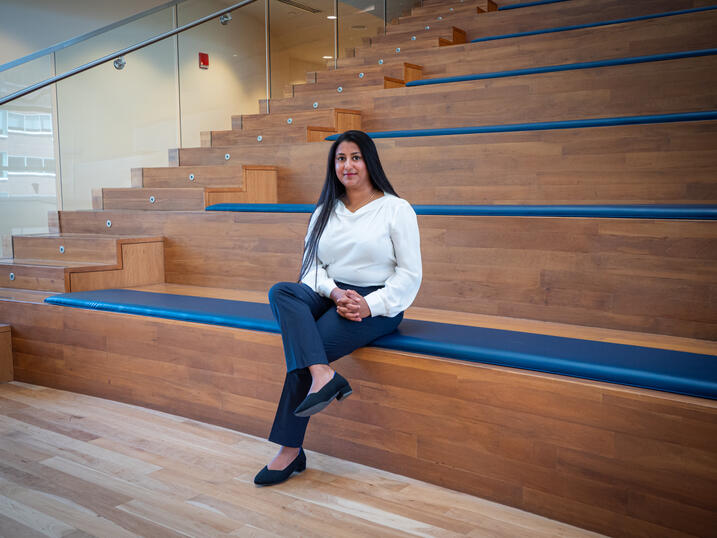
There is so much more we could do in this space that evolution has not yet explored. But we can use the principles evolution has uncovered through thousands and thousands of years of experimentation to navigate that space in a more informed way.
–Arya Rao
“We can train AI models to learn the genomic signatures of natural selection,” she says. “Our goal is to go beyond identifying where selection has occurred and predict which specific mutation actually drove that adaptation. That lets us ask what the variant does biologically and whether the mechanism it points to might be therapeutically useful.”
Rao and her other co-advisor, MIT Professor Sangeeta M. Bhatia, are putting these principles into practice studying host-directed prophylaxis against malaria, the infectious disease responsible for 610,000 deaths and 282 million cases in 2024. Scientists cannot test every possible human genetic variant in a wet lab to see how each affects susceptibility, she says, but using artificial intelligence and population genetics, they can access that experiment indirectly.
“Evolution has already conducted the experiment we care about on a vast scale,” she notes. “Identifying targets in this way could open up new therapeutic strategies. In malaria, we hope to pursue some of these targets using small interfering RNAs (siRNAs), which bind to messenger RNA to prevent the production of proteins that malaria exploits to enter cells or facilitate infection. The same target discovery approach could also point toward therapeutic opportunities in diseases beyond malaria.”
Sabeti says that Rao has “brought a powerful new generation of AI tools to bear” on a hard problem that scientists in population genetics have been thinking about for a long time. "What has always impressed me is the scope of Arya's thinking,” Sabeti says. “She’s interested not only in what these tools can teach us about human evolution, but in what human evolution can teach us about health and disease.”
Flipping the “Switch” for Precision Medicine
The second half of Rao’s dissertation research, part of the Ladders to Cures Scientific Accelerator at the Broad Institute of Harvard and MIT, looks to design the regulatory elements used in gene therapies. “A major challenge in gene therapy is controlling where in the body a therapeutic gene is active and how strongly it is expressed,” she says. “I’m developing synthetic regulatory DNA—short sequences that function like switches—to control gene activity in different cell types.”
Working with Sabeti and Bhatia at the Broad Institute of Harvard and MIT, Rao builds and trains machine-learning models using data from thousands of DNA sequences tested across a wide range of cell types, including skeletal muscle and cardiac cells.
“It’s become possible to test thousands of DNA sequences at once, but it’s impossible to generate that amount of data for every cell type in the body,” Rao says. “Our deep learning approach asks whether we can learn the underlying rules from the data we do have and use them to design sequences that work in new settings. Our models learn the DNA patterns that control gene activity in different cell types, then use those rules to generate new sequences designed to activate gene expression only in specific tissues.”
Controlling where and how strongly a gene is expressed could expand the possibilities for gene therapy, and Arya is already thinking creatively about what that could enable, including molecularly engineering tissue as part of surgery.
–MIT Professor Sangeeta M. Bhatia
Using these models, Rao’s group has been able to design genetic switches that are far more compact and targetable than anything used before, an important step toward making gene therapy more effective and viable. “If I have a gene therapy and want it expressed only in muscle or the liver, we can train an AI model to learn the optimal path toward that new synthetic function,” Rao says.
In the case of Duchenne muscular dystrophy, a key application of Rao’s work, the progressive muscular weakness seen in the children the disease most often affects results from a deficiency or malformation of the protein dystrophin. Gene therapy could be an effective treatment, but thus far clinical trials have not gone as hoped, largely due to off-target effects.
“The gene is too large to fit into a delivery vehicle such as an adeno-associated virus, so researchers use shortened versions known as microdystrophins,” Rao explains. “Gene therapies for Duchenne have also been associated with serious toxicities, including liver injury and inflammation of the heart. More compact and precise regulatory elements could help researchers better control where and how strongly a therapy is expressed while taking up less of the limited space available in the vector. The possibilities are extensive. This may be one puzzle piece in the design of gene therapies, but to me it points toward a new way of thinking about them.”
Bhatia says she's impressed by Rao's ability to see the larger prospects behind a technical problem. “Controlling where and how strongly a gene is expressed could expand the possibilities for gene therapy, and Arya is already thinking creatively about what that could enable,” she says, “including molecularly engineering tissue as part of surgery.”
No Career without Care
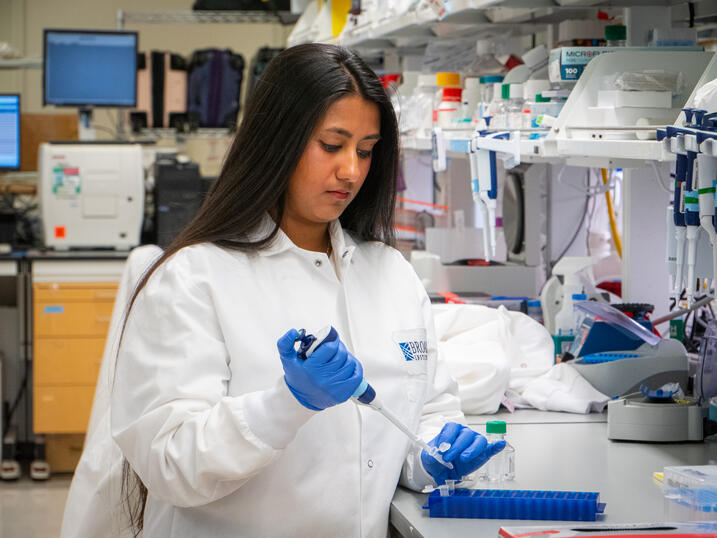
“My work in gene therapy and natural selection is part of a larger effort to enable more precise decisions about where and when disease occurs and how to target it,” Rao states. While one aspect of her endeavor is embodied by deep molecular research, another involves thinking about health systems, big data, and artificial intelligence.
To this end, Rao also works with Sabeti at Sentinel, a pandemic-prevention initiative that recently received a $100 million award from the MacArthur Foundation given only once every few years to an organization with the capacity to create real, lasting global change. “It will support Sentinel’s effort to strengthen outbreak detection and response in partner locations, including through new AI-enabled tools,” Rao says. “We work extensively with partners in Africa, and I think a lot about how new technologies actually reach the people and places that could benefit from them. There’s enormous interest right now in bringing AI and other technologies into these settings, and it’s important that the work is grounded in what our partners need and can use.”
If I have a gene therapy and want it expressed only in muscle or the liver, we can train an AI model to learn the optimal path toward that new synthetic function.
–Arya Rao
As she looks ahead, Rao hopes to become a reconstructive surgeon, caring for children with musculoskeletal disorders and practicing pediatric plastic surgery. “There are really interesting possibilities for making what we do for patients more precise,” she says. “Surgery isn’t very molecular right now. But what if, when we perform a tissue graft or transplant, we could modify that tissue with a molecular intervention before returning it to the patient?”
Rao’s career path connects research at the molecular level with making a difference one patient at a time.
“Patient care is what drives me,” she says. “I love the science, and I’m interested in how we can make interventions more precise at every scale. But at the end of the day, I want to be a physician who can bring that work back to the person in front of me.”