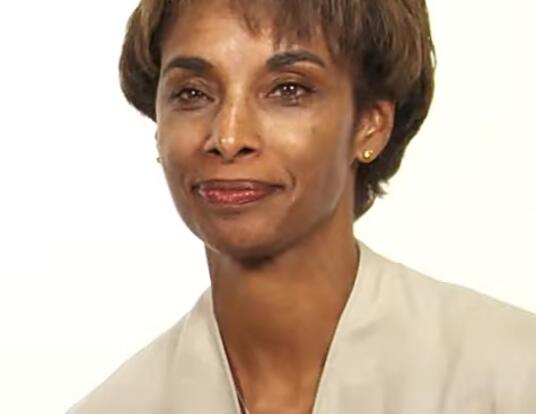
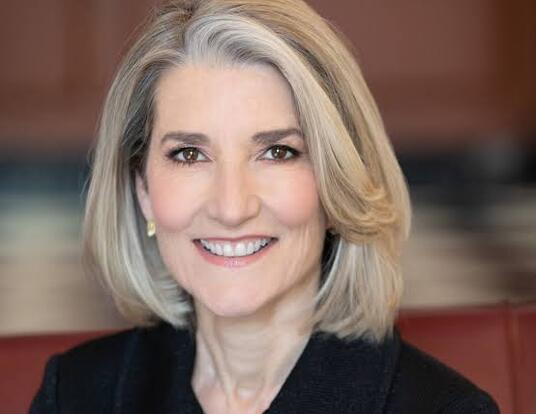
A Black American labor economist who tallies the impact of structural racism on inequality; a Chinese American organic chemist who explores how to create molecules faster and more efficiently; an Italian American theoretical physicist who constructs mathematical models of materials—the three Harvard Griffin GSAS alumni named 2026 MacArthur Foundation Fellows have very different backgrounds and areas of study. The trio shares one thing, though. All were shocked to the point of disbelief when notified of their award.
“When the MacArthur Foundation called, I thought it was one of my friends trying to play a prank on me,” says University of Chicago physicist Vincenzo Vitelli, PhD ’06, describing a common reaction among his cohort of alumni winners. “Maybe next they would say that I had been elected Mr. Universe, or something even more nonsensical.”
The call to Vitelli was indeed on the level. The same was true of the foundation’s calls to Princeton University economist Ellora Derenoncourt, PhD ’19, and Stanford University chemist Song Lin, PhD ’13. Each joined an elite group of scholars, scientists, artists, and writers whose members include psychologist Howard Gardner, PhD ’71; cultural critic Susan Sontag, AM ’57; physician and anthropologist Paul Farmer, PhD ’90; and economist Raj Chetty, PhD ’03.
First awarded in 1981, the MacArthur Fellowship aims to “identify extraordinarily creative individuals with a track record of excellence in a field of scholarship or area of practice, who demonstrate the ability to impact society in significant and beneficial ways through their pioneering work or the rigor of their contributions.” The foundation provides “no strings attached” grant support of $800,000, paid in installments over five years, “to foster and enable innovative, imaginative, and ground-breaking ideas, thinking, and strategies.”
As the news of their awards sinks in, each of this year’s alumni winners hopes to use the fellowship funding to create new knowledge, the benefits of which will reverberate well beyond the bounds of the academy.
A Fellowship That Cares
Weeks after she was notified by the MacArthur Foundation, Princeton’s Ellora Derenoncourt is still trying to wrap her head around what it means to be named a fellow.
“I had a scheduled call with someone involved in the foundation, but I didn’t know what it was about,” she says. “When I joined the call, it was explained to me that I had received the MacArthur Fellowship. Honestly, it took my brain so long to process the information that I was confused for most of the conversation. They were explaining what it meant, and I was hung up on, ‘I’m sorry, what? That’s not at all what I was expecting.’ I think I’m still processing it, to be honest.”
To me, this fellowship says that we still care about [racial and economic justice] as a society. I feel renewed energy to do whatever I can to keep these questions on the table as part of our vision for a just economy.
–Princeton University Professor Ellora Derenoncourt, PhD ’19
An economic historian as well as a labor economist, Derenoncourt’s American Economic Review paper, “Can You Move to Opportunity? Evidence from the Great Migration,” explores the period from 1915 to 1970 during which roughly six million Black Americans moved from the southern United States to the North, Midwest, and West looking for economic opportunity, social mobility, and a less rigid racial hierarchy. Her research shows that the cities where Black Americans most frequently landed became traps of social immobility and remain so to this day. The reasons, she says, have to do with how these communities—particularly white residents and the local governments that represented them—reacted to their changing racial identity.
“Cities like Detroit ceased to be beacons of opportunity just as conditions in the South improved economically and socially,” Derenoncourt says. “Black parents living in former Great Migration cities face a choice between raising their children where they’ll likely be exposed to violence and the criminal justice system and moving to suburban Atlanta, where jobs are better and housing is cheaper.”
More recently, Derenoncourt has focused on how the racial wealth gap has evolved and persisted since the abolition of slavery in 1865. In her 2023 paper, “The Wealth of Two Nations,” Derenoncourt and her coauthors charted the way the racial wealth gap narrowed, stalled, and started to widen again over the decades.
“In 1860, before the end of slavery in the United States, the gap was something like 60 to 1 for Black Americans, 90 percent of whom were enslaved,” she says. “The gap then falls to about 20 or 23 to 1 in 1870. That reduction continues for another few decades. By 1950, the gap reaches pretty much where it is today: about 6 to 1. So most of the convergence we’ve had in the racial wealth gap in the US happened during the first 50 years after emancipation.”
Derenoncourt and her collaborators conclude in “The Wealth of Two Nations” that “While policies that address racial gaps in savings and capital gains can be a complement, only the redistribution of large stocks of wealth, like reparations, can immediately reduce the racial wealth gap.”
“Financial literacy programs—encouraging people to invest money in the stock market or to save more—those are proposals that act on these parameters and try to close differences in savings rates and capital gains rates,” she explains. “But closing those differences sets us on a multicentury path to convergence. It doesn’t mean we converge. In terms of actually achieving parity, these tools that only act on differences in capital gains rates and savings rates are actually quite limited.”
Derenoncourt’s current project focuses on incarceration in the US, its historical development, and how it affected the lives of people who were incarcerated.
“The US has the largest prison population in the world, even though it is not the largest country, and the incarceration rate among wealthy industrialized countries is also by far the highest,” she says. “Men with an incarceration history are falling behind. They are less likely to be gainfully employed or to participate in the labor market, and they earn less if they are employed. They are also less likely to be the head of their own household or to be married. The criminal justice system is such an important factor in inequality. Moreover, it is a system that disproportionately affects Black men.”
For Derenoncourt, the MacArthur Fellowship is proof that racial and economic justice is still a priority for many leaders and their institutions.
“In recent years, it’s been harder to work on these topics,” she says. “To me, this fellowship says that we still care about the issue as a society. I feel renewed energy to do whatever I can to keep these questions on the table as part of our vision for a just economy.”
A Boost for Fundamental Research
When the MacArthur opportunity first knocked, Song Lin didn’t answer.
“I received a few phone calls that week from a Chicago number but didn't pick up because I thought they were spam,” he says. “Then I received an email from the MacArthur Foundation. When the foundation called again, I picked up the phone, and they told me the news. I was completely stunned.”
At Stanford, Lin leads efforts to make molecules more efficiently. “Many things in real life are made of organic molecules,” he explains. “Most FDA-approved drugs, for example, or polymers—the materials in the clothes we wear—are made of organic molecules. So are the fuels that burn in our cars.”
Developing new ways to manufacture these molecules quickly and with high precision is vital in the face of burgeoning health and energy crises. And while Lin’s group doesn’t make pharmaceuticals itself, it does provide tools for companies to make drugs faster and better.
Typically, chemists use heat to drive chemical reactions and make molecules. (Imagine an old Saturday morning cartoon in which a scientist mixes liquids of different colors in a flask, heats them up, and suddenly they transform into some potent concoction.) Lin’s group uses electricity instead.
“We put in a pair of electrodes and, almost literally, zap the molecule with an electric current,” he explains. “That triggers the chemicals to undergo changes and become the molecules we want. It’s a very different way of doing chemical reactions. Traditionally, if you mix chemicals A and B, they become C. With electrochemistry, they can skip state C and become D. If D is a new molecule that can be used as medicine, that can be a much faster way to get there.”
Sometimes the impact of fundamental research is not immediately clear to the public. Over 10 or 20 years, however, it can change society, the way we do things, and the way we live.
–Stanford University Professor Song Lin, PhD ’13
Lin’s group is currently involved in a number of collaborations, notably with the Chicago pharmaceutical firm AbbVie, to help speed drug development. “Basically, we’re trying to help them make the molecule faster,” Lin says. “Traditionally, the overall production yield is much lower and the process takes longer. We’re trying to shorten that process so that our colleagues can accumulate enough material for clinical studies. We’ve developed a chemical reaction that they now run internally at a scale of more than 100 kilograms. It’s a faster, cheaper, and cleaner way to make pharmaceuticals.”
While Lin hasn’t thought specifically about how he will use the grant money itself, he says that the MacArthur Fellowship recognizes the importance of fundamental research at a time when it is less appreciated by the broader public and by federal funding agencies.
“Many discoveries that matter today are the result of fundamental research,” he asserts. “But we’re talking about molecules, and people can’t see molecules or necessarily understand why making them is important. Sometimes the impact of fundamental research is not immediately clear to the public. Over 10 or 20 years, however, it can change society, the way we do things, and the way we live.”
A Certain Legitimacy
After Vincenzo Vitelli realized he wasn’t being pranked, he felt surprised and then deeply humbled to know he was a MacArthur Fellow. “I would leave the word ‘genius’ for Enrico Fermi or Albert Einstein,” he says, referring to the fellowship’s nickname, the “genius grant.” “But even by rescaling it to more modest standards, this is an incredible recognition, not just for me—research in science is always a collective endeavor with PhD students and postdocs—but also for an area of physics that is less easy to define than others. It gives it a certain legitimacy.”
That work centers on constructing mathematical theories of materials. Vitelli notes that the classical understanding of a material—condensed-matter theory—is that it is a collection of atoms, molecules, or electrons. One of the mathematical quandaries in the field is how to go from the properties of two particles—say, two interacting electrons—to the properties of a collection of those electrons.
“The idea is that, at the global level, properties can emerge that are not apparent from the interaction between two elementary building blocks,” Vitelli explains. “In short, the whole is greater than the sum of its parts, not only in a quantitative sense but in a qualitative sense. There could be properties such as the rigidity of materials or how they conduct electricity or heat that are really due to the interaction of many, many parts rather than being encapsulated in the properties of the building blocks.”
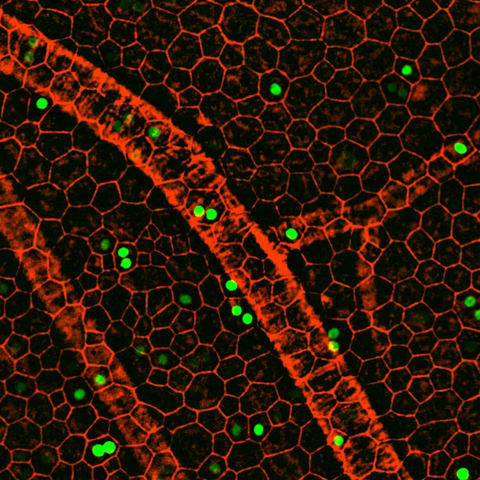
Vitelli operates within the domain of this classical understanding but then asks: What if the collective, or the material, were not built of interacting electrons or interacting masses connected by springs, but rather by robots that interact with each other, living cells, or information-processing units? “The classic question of how you go from microscopic interactions between these units to macroscopic properties remains the same at an abstract level,” he says. “But the nature of the building blocks—and, as a result, the nature of the collective, whether you could even call it a material, a biological system, a distributed robot, or a swarm of robots—is very different. That is the unusual aspect of the research.”
The evolution of Vitelli’s work leads to something he calls “agentic many-body theory”—a way of understanding the collective from individual agents, with potential applications ranging from more effective vehicles for disease therapies to a better understanding of the brain and artificial intelligence (AI).
We show how these ideas emerging from physics can be correlated with the presence of something as complicated as [mental illness]. I’m hoping that, with the MacArthur Fellowship, we’ll be able to move further into this terrain.”
–University of Chicago Physicist Vincenzo Vitelli
“When you move from the individual to the collective, the interaction between two agents is no longer an exchange of force but an exchange and processing of information,” Vitelli observes. “Imagine that these things were not even robots but bots. Could you understand the emergent cognitive ability of a group of bots—in the sense of AI agents, for example—starting from a description of what each one is doing, how it is interacting with one or two others, and what emerges at the collective level? Many things in nature are like that. These agents could be cells undergoing decisions in biological tissues; neurons, which are the quintessential information-processing units; or proteins that perform some elementary form of computation. Essentially, I’m moving from viewing these emergent materials as materials to viewing them increasingly as emergent brains or emergent computing machines.”
Vitelli says that the MacArthur Foundation’s support will allow him to take his work in more daring directions, collaborating with experts in biology, neuroscience, robotics, or AI. He cites his team’s work with the theoretical neuroscience department at the University of Chicago to study how human behavior and learning can be correlated with neural activity recorded inside the brain at rest, including in studies of mental illness. “For example, we show how these ideas emerging from physics can be correlated with the presence of something as complicated as early psychosis,” he says. “I’m hoping that, with the MacArthur Fellowship, we’ll be able to move further into this terrain.”
Even beyond the practical applications of his work, Vitelli looks forward to the exchange of ideas and knowledge that the MacArthur Fellowship will facilitate.
“The Fellowship gives those in the field a chance, even if they are not experts, to raise questions and say, ‘This may sound a little crazy, but it doesn’t have to be complete nonsense.’ That’s my number one hope: that it will stimulate conversations and interactions, allowing us to dig deeper into these things as a team.”