Studying How Black Media Shaped the Great Migration
Avinash Moorthy, PhD ’26

Avi Moorthy is a graduating PhD student in Public Policy at the Harvard Kenneth C. Griffin Graduate School of Arts and Sciences. An economist by training, his research sits at the intersection of history, information, and inequality. He reflects on his childhood in Toronto, his parents’ journey from India to North America, and his quest to understand how Black newspapers like the Chicago Defender enabled one of the largest mass migrations in American history.
The Press and the Porters
My dissertation grew out of a historical puzzle. Slavery ended in 1865, but the Great Migration—the mass movement of Black Southerners to the North—didn’t start in earnest for another 50 years. Moving is hard, and the North was a total mystery to many in the Jim Crow South. The white Southern community worked very hard to restrict the flow of information; they even put fines and arrests in place to stop Northern employers from hiring in the South.
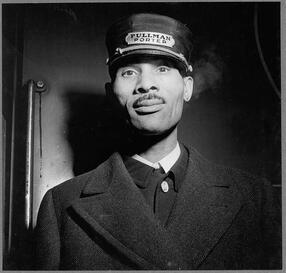
I became fascinated by the "information channel." How did people learn about the opportunities in the North? I stumbled upon the Chicago Defender, which was the most influential Black newspaper of the era. Because the paper was banned in many parts of the South, it had to be smuggled in. This is where the Pullman porters came in—the Black men who worked on the railroads. They would carry the Defender from Chicago. Once in the South, copies were shared and communally read in Black churches and barbershops, reaching hundreds of thousands of Black southerners.
In my research, I wanted to see if proximity to these porters actually changed migration patterns. I used census data to map where porters lived. I found that if you lived just a few households away from a porter, you were 33 percent more likely to migrate North than someone living only half a mile away. It was a stark difference based on a very small geographic distance.
I even found subscription records from the precursor to the FBI, revealing that the government was surveilling the Chicago Defender because they were worried it was "agitating" the Black population. For me, this research wasn't just about numbers; it was about the human element of moving. These migrants were moving for higher incomes—about 62 percent higher in the North—but also for the right to vote and to send their children to better schools.
Poor Economics
My path to economics wasn’t a straight line. In high school, I took an International Baccalaureate economics class, and I found the way it was taught to be a bit frustrating. You learn these "toy models" where everything is simplified, and you’re told that government intervention just causes "deadweight loss." It felt very detached from the real world.
That changed in undergrad when I took a development economics course. We read Poor Economics by Abhijit Banerjee and Esther Duflo. It was my first exposure to the idea that economics could go beyond the classroom and actually be used to answer policy questions and impact lives. As part of that class, I spent a few weeks in Dhaka, Bangladesh, where we met Muhammad Yunus, the Nobel Peace Prize winner who founded Grameen Bank.
Those experiences piqued my interest in research, but I wasn't ready to commit to a PhD just yet. I wanted to see if I actually liked the "grind" of it, so after graduating from Carleton College, I went to work at the Federal Reserve Bank of Chicago.
The “So What” Factor
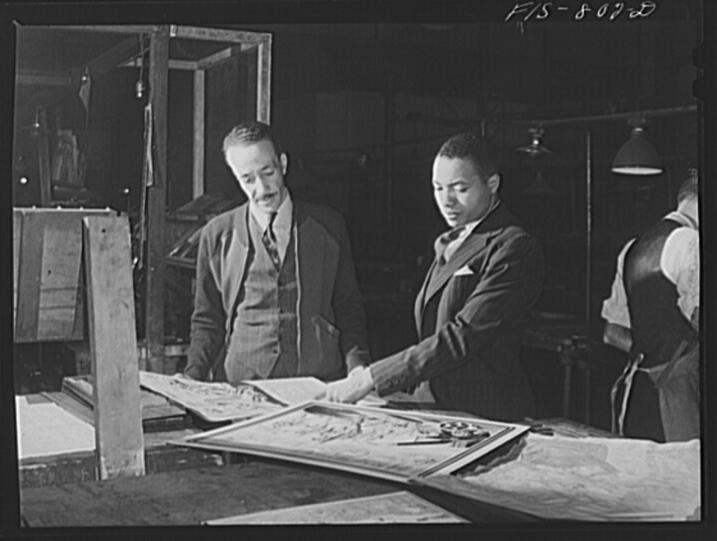
At the Chicago Fed, I worked with economists on historical projects studying inequality in the US. One project looked at the causal effects of the "redlining" maps from the 1930s. These maps were drawn by the Home Owners' Loan Corporation (HOLC), a now-defunct government agency, to measure loan repayment likelihoods, but race was a primary factor in the scores. Neighborhoods with large Black populations were given the lowest score and marked in red. As researchers, we were interested in whether these maps caused the decline of neighborhoods, or if they were just reflecting existing segregation. Working at the Fed showed me what I liked—and what I didn't like—about economics.
I realized that while economists’ focus is on proving "causality,” there is a "so what" factor that sometimes gets lost. I wanted to be the kind of researcher who used the tools of economics to answer the questions I truly cared about, even if they weren't part of the "standard" training. That’s what eventually brought me to the PhD Program in Public Policy at Harvard.
Minding the Gaps
I was born in Rochester, New York, but a year and a half later, my family made the trip across Lake Ontario to Toronto. Toronto was home. It’s where I grew up, and it’s the city I still identify with, even after years of living in the US. My father is a professor of marketing, and my mother was a high school teacher before my sister and I were born.
When I was in elementary school, we moved back to India for a year. I did fourth grade there, and it was a really unique experience to learn about where my family came from. Looking back, that was a pivotal year, not just because of the culture, but because it was the last year I spent with my mother. She passed away in a tragic fire during my fifth-grade year.
Losing her so young meant I was mostly raised by my father. That experience, as difficult as it was, really showed me the importance of family, connectedness, and resilience. It shaped my values and my priorities in a way that remains with me today. When you grow up in an upper-middle-class family in North America, you often get a pretty sheltered worldview. But spending that time in India as a child, and then grappling with personal loss, gave me a much more visceral understanding of the world.
These experiences were influential in shaping my interest in studying inequality and using my research to provide a voice to communities that are disadvantaged or underrepresented. I wanted to understand not just that these gaps existed, but why they persisted.
A Voice for Justice
Being at Harvard has been a transformative experience, largely because of the mentorship I found here. Professors like Desmond Ang at Harvard Kennedy School helped me see how history and race could be central to economic inquiry. Desmond’s work on the racist film, The Birth of a Nation, on racial violence inspired me to think deeply about how information and media shape our society.
As I prepare to graduate, I’m thinking a lot about the "so what." I’m headed back to Toronto to join the Analysis Group, where I’ll be working on economic consulting cases. I’m particularly excited about some of the work coming out of our Canadian offices that involves defending Indigenous communities. These communities are filing legal charges against the federal government for discrimination dating back to the 1980s, and economists are being brought in to analyze the data and make the economic argument for the impact of that discrimination. It feels like a full-circle moment.
Banner image courtesy of Harvard Kennedy School.