Making Graduate School a Family Affair
Student parents face unique challenges. Harvard Griffin GSAS offers resources that can help.

Jordan Vanderpool gathered his sleeping one-year-old daughter in the middle of the night. His wife was having a medical emergency and needed to get to the hospital. With no family close by to watch their child, she would have to come too. When the family arrived, Vanderpool stayed to make sure his wife was admitted and seen, but then had to bring the baby home “because you can’t have a one-year-old in a hospital all night.”
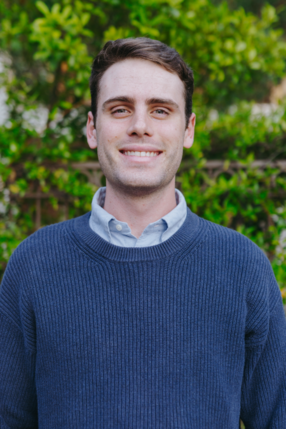
“My wife needed emergency surgery, so it was essentially, ‘I’ll see you in the morning. Good luck. I hope you’re okay,’” says Vanderpool, a fourth-year PhD student in romance languages and literatures at the Harvard Kenneth C. Griffin Graduate School of Arts and Sciences (Harvard Griffin GSAS). “Both our families are back in Texas, where we come from. You can call a friend in the middle of the night, but it’s difficult to work that out.”
All went well with Vanderpool’s wife, but his situation illustrates the demands that student parents have to manage, balancing childcare and other family responsibilities with research, writing, and teaching. While Harvard Griffin GSAS can’t send a sitter to watch an infant in the middle of the night, it does offer resources—from financial assistance and one-on-one counseling to outreach that supports developing scholars and scientists who are also new parents—to help mitigate the many pressures students with families face every day.
[Being a student parent] is very difficult, especially because my wife provides childcare, so our household essentially relies on my income. We don’t eat out or get coffee very often—those are things you generally don’t do as a parent with one income.
—Jordan Vanderpool
Time and Money
At first glance, graduate school may not seem like an auspicious time to start a family—particularly given the rigors of a PhD program. Some students, however, decide to have children during their years at Harvard Griffin GSAS because of the flexibility of their schedules. “My daughter was born at the end of January 2025,” says Abigail McClain Gomez, PhD ’25, a quantum physicist. “At that point, I was basically done with all my research projects, and I really just had to wrap it up into a thesis. [After giving birth], I was just occasionally working on that, and then I defended in July, so I had a solid five or six months with the new baby.”
Still, the pressures of parenting and PhD work are immense. First among them for Vanderpool, as for most student parents, is the strain on finances.
“It’s very difficult, especially because my wife provides childcare, so our household essentially relies on my income,” he says. “We don’t eat out or get coffee very often—those are things you generally don’t do as a parent with one income.”
Harvard Griffin GSAS’s Parental Accommodation and Financial Support (PAFS) Program can help new parents cope with the squeeze. PhD students are eligible for a one-time supplemental stipend of nearly $7,500 when they have or adopt a child. The benefit is available to all actively enrolled Harvard Griffin GSAS students regardless of gender identity and includes birth and non-birth parents.
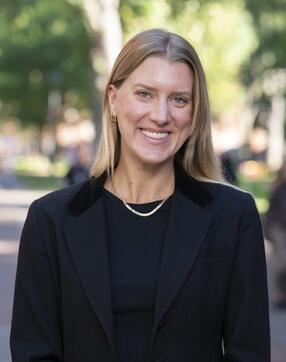
“The PAFS stipend is a supplemental award disbursed to Harvard Griffin GSAS PhD students upon the arrival of a new child,” explains Sarah Glessner, interim director of student success. “Growing a family is expensive, and this stipend is intended to ease the financial burden a bit and help with costs such as health insurance, travel, equipment, or other general family expenses.”
Childcare expenses don’t end at birth, of course. That’s why Harvard Griffin GSAS provided additional support this year for the ongoing costs of having a family through the new Child Subsidy Benefit for Student Parents. Now, when students have their first child—whether through birth or adoption—they can receive $3,250 in the fall and spring terms, for a maximum of $6,500 in an academic year. That amount rises to $7,500 if they have a second child and $8,500 if there’s a third.
“The new Child Subsidy Benefit is Harvard Griffin GSAS’s way of ensuring all eligible PhD student-parents are supported throughout their time at the University,” Glessner says. “While the PAFS stipend is disbursed following the birth or adoption of a child, the Child Subsidy Benefit is available yearly. It’s intended to help offset the costs associated with raising children while working toward the PhD, and the award amount is based on the number of children.”
Vanderpool says the subsidy has done a lot to help with expenses. “The yearly stipend helps offset the costs of care and raising children,” he says. “For us, it’s made a difference.”
Aside from the cost, it can be a challenge to find childcare in the first place, as Vanderpool and his wife discovered when she got sick. “We’re both from Texas, so this is essentially the Great North for us,” he says. “Having help with the kids is very difficult.”
The Parental Accommodation and Financial Support stipend is a supplemental award disbursed to Harvard Griffin GSAS PhD students upon the arrival of a new child. . . . The new Child Subsidy Benefit is Harvard Griffin GSAS’s way of ensuring all eligible PhD student-parents are supported throughout their time at the University.
—Sarah Glessner, Interim Director of Student Success
Through Care.com, however, student parents can find a pre-vetted caregiver who can step in when others aren’t available. PhD students receive a free premium membership, which usually costs $165 per year. When they select a caregiver, Harvard Griffin GSAS subsidizes the cost—$5 an hour per day for at-home care, $10 an hour per day for center-based care. Students are eligible for up to 10 days of backup care each year (October 1 through September 30).
“Care.com is a wonderful resource that can help fill in the gaps when regular care is unavailable,” Glessner notes. “The subsidized rate is far less than the local market rate for babysitters or daily center-based care. This resource can provide some peace of mind for students and assurance that they won’t have to spend a fortune when they need last-minute childcare.”
Advice and Support
Stephanie Clendenin, Harvard Griffin GSAS’s program officer for community support and nondiscrimination, says it’s most helpful for students to connect with her and Glessner at least four months before the anticipated birth or adoption of a child to take advantage of PAFS, the child subsidy, Care.com, and other benefits, as well as the direct support and advising she and Glessner offer.
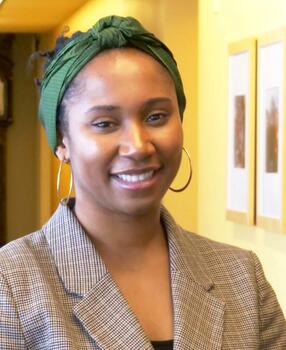
“As student-parent resource coordinators, Sarah and I are available to connect students with resources at Harvard and beyond,” Clendenin says. “A big misconception is that we can only help with some of the ‘startup’ questions, but we’re really here to help throughout the journey. You can meet with us as often as you like to help with concerns and strategies that support your success both as a student and a parent.”
One of the main concerns student parents bring to Clendenin and Glessner is how to manage their academic responsibilities and degree progress when starting or expanding their family. While participating in PAFS, students may request up to 12 weeks of accommodation for academic duties over the course of the 12 months following a birth or adoption. During that time, students may be able to postpone exams or other degree requirements while remaining fully enrolled.
Harvard Griffin GSAS Dean of Students Lakshmi Clark knows from personal experience how important the added flexibility can be. The parent of two, Clark had her first child while getting her master’s degree at New York University and her second during her doctoral program. “For me, I had to think very carefully about my expectations,” she says. “I was still passionate about my research and wanted to get it done, but I had to develop a much more realistic sense of what I could actually do when my time was more constrained, I was sleep-deprived, and I was juggling priorities. I had to recognize that I might not be able to do everything in exactly the same way or at exactly the same pace.”
Clark notes that the experience of becoming a parent requires students to reassess priorities and rely on support networks in new and different ways. “It’s not only extended family but also advisers, professors, mentors, and other people who are there for you,” she notes.
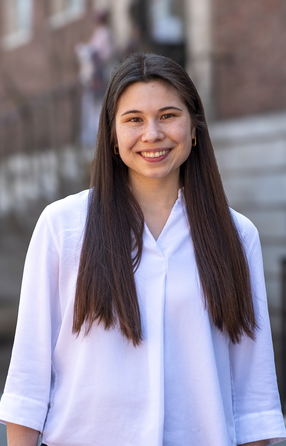
Support and encouragement from her faculty adviser in particular made McClain Gomez’s parenting and PhD work more joyful. “Professor Susanne Yelin was amazing,” she says. “In the summer of 2024, I was interning for IBM in New York. I came up to Harvard for a visit, and that’s when I had to tell her I was three months pregnant, due in January. She was so excited, over the moon, and happy for me. She also had lots of stories to share about her own experience of pregnancy, which helped me both as a young parent and a physicist.”
Clark says that the kind of support McClain Gomez received is crucial for student parents. For that reason, Clendenin and Glessner have stepped up communications with departments about resources and support—including presentations at administrative retreats. Beyond the practical information, the larger goal is to establish having children and raising a family as a normal part of student life. “Because we work in graduate education, we’re going to have more student parents than undergraduate institutions do,” she says. “We should think of parenthood as we do other milestones and life experiences, rather than as something that automatically puts a student outside the expected path.”
As Parents, as People
Having a child also requires a different approach to student self-care and well-being. Days begin early with feeding and changing the baby, then perhaps squeezing in some dissertation writing or preparing readings for class. After dashing to campus, student parents may spend the rest of the morning teaching. At midday, nonresident tutors may meet and eat with undergraduates at one of the College’s houses. Afternoons may be spent intensely researching and writing before heading home for more childcare, dinner, and cleaning, and then collapsing into bed. Even then, there’s little rest for the weary, given that infants often need to be fed and soothed at all hours of the night.
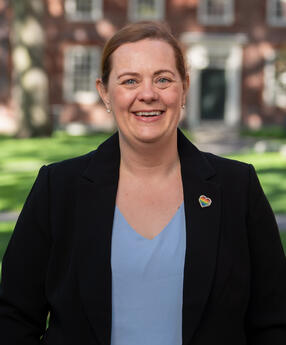
Given this schedule, it’s no wonder that critical components of well-being, such as connecting with others and finding low-cost opportunities for family fun, can be hard to come by. “Student parents are the busiest of all student populations,” says Janet Daniels, director of the Harvard Griffin GSAS Student Center. “If something goes wrong in their day, they’re less likely to show up at an event. It may start raining, there may be traffic, a child may be sick, or a nap may not happen. We get it and still love to program for those families.”
That’s why Daniels and her staff work closely with the Harvard Griffin GSAS Student Parents Group, co-led by Vanderpool, which “enriches the academic experience of parents in Harvard Griffin GSAS (and across Harvard) and provides visibility and support for them and their families.”
The Center’s core events include the Families Brunch, which takes place during orientation week each year. The Center also runs a family photo shoot in October, subsidizing photos taken by the School’s Photo Society for Harvard Griffin GSAS families to use on holiday or New Year’s cards. Daniels calls the Center’s holiday or winter craft party in early December “gleeful chaos.” The spring term features a family music program with a performer, instruments, games, and snacks—as well as a family pride party in June.
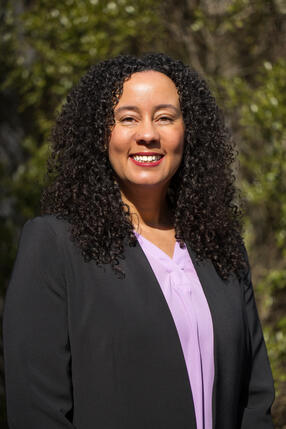
We should think of parenthood as we do other milestones and life experiences, rather than as something that automatically puts a student outside the expected path.
—Lakshmi Clark, Dean of Students
Daniels says her team takes great pleasure in providing activities for student parents in part because the work is greatly appreciated. “At these events, every parent will look a staff member in the eye and say thank you,” she says. “They’re a lovely population to serve, and the kids are adorable. At the photo event, there’s always a baby in a bow tie, and that’s a highlight of my fall. Being around toddlers is joyful, so it’s really fun to program for them.”
Holding events and inviting partners and families to celebrate with each other is a priority for Harvard Griffin GSAS because families are an important part of the School’s broader community, Clark says. “I think of student parents as part of the fabric of our community. Being a parent is part of many students’ identities; it’s part of who they are as people and as students.”
Looking ahead, Clark hopes to continue to improve the way her team communicates with student parents. “We’re making progress by identifying student-parent resource coordinators and by working with the Center to promote events,” she says. “I’d like to get more student input and involvement, and we’re working on that, although student parents are inherently busy, which can make it challenging. That is part of why it is important to make information accessible and to make clear what the resources are and who can answer a student’s questions.”
Clark says that, ultimately, the value student families bring to the Harvard Griffin GSAS experience extends far beyond the classroom, library, and lab: they help other students see the larger possibilities in life.
“I have talked to students who say, ‘School is so busy, and I’m not sure I can manage this,’” Clark says. “Then they see a friend who has a child and realize, ‘I can actually do this. The School is supportive, there are resources available, and there are other people like me.’ It demonstrates to all Harvard Griffin GSAS students that we value their lives and identities holistically. The resources and support we give to student parents signal that we understand that family is important and that we see them as students—and as people.”