Fresh Faces for Student Flourishing
Varela and Juers bring their passion for working with graduate students to Harvard Griffin GSAS’s Office of Student Services.

Visitors to the Office of Student Services in recent weeks and months have been greeted by two new assistant directors. Valentina Varela joined the office in May 2026, bringing experience in higher education at Boston College and the College of the Holy Cross, as well as a background in counseling psychology. Former immigration attorney Gabrielle Juers came to Harvard Griffin GSAS from Middlebury College where she served as residence director. They spoke recently with Harvard Griffin GSAS Communications about their backgrounds, their passion for student flourishing, and what they enjoy doing when they're not on campus.
Can you say a bit about your background? Where are you from? Where did you go to school? And what did you do immediately before coming to Harvard Griffin GSAS?
Valentina Varela: I was born and raised in Buenos Aires, Argentina, where attended college. I am a licensed psychologist in Argentina, and I moved to the US eight years ago after graduating, when I had the opportunity to teach Spanish at the College of the Holy Cross in Worcester, Massachusetts. I came here for a year and then earned two master’s degrees, one in school counseling from Boston University’s Wheelock College of Education and Human Development and another in higher education from Boston College. That is where I learned more about the educational system in the United States, which is completely different from the system back home. I needed that background.
Before coming to Harvard Griffin GSAS, I worked at Boston College’s School of Education as the assistant director of graduate student services. Combining higher education with my background in psychology is my passion.
Gabrielle Juers: I grew up in upstate New York, in the Albany area, near Schenectady. I attended SUNY Geneseo in western New York, where I majored in psychology and economics. After that, I attended Notre Dame for law school, and that is where I became involved in student affairs, working in residential life. After I graduated, I moved to Texas and practiced immigration law for a while. At a certain point, I wanted to make a change, so I returned to the residential life and student affairs work I had enjoyed during law school. I took a position as a residence director at Middlebury College, where I worked for almost four years before moving to Harvard Griffin GSAS.
Why student services? What about this work gets you up in the morning?
Valentina Varela: Student services is the perfect combination of supporting student well-being and working in a dynamic environment that changes constantly. I practiced clinical psychology for a couple of years. I liked it, but I found it repetitive and lonely. I worked by myself and saw the same clients regularly. In student services, I have a different dynamic every day, work with a team, and meet with different students.
My counseling skills are particularly useful in one-on-one conversations, crisis management, and complex situations. We work closely with Counseling and Mental Health Services, or CAMHS. Although we do not make mental health decisions, it’s helpful to share a similar perspective because of my clinical background.
Gabrielle Juers: I find student services to be extremely important work. Many of the people we meet are experiencing some kind of hardship, even if they are not in the middle of a crisis, and we are able to walk with them through it. As an immigration lawyer, people often came into my office and told me about some of the worst things that had happened to them. The student meetings we have are not the same, but students also come to us in very difficult circumstances. My experience prepared me to sit with people in those moments.
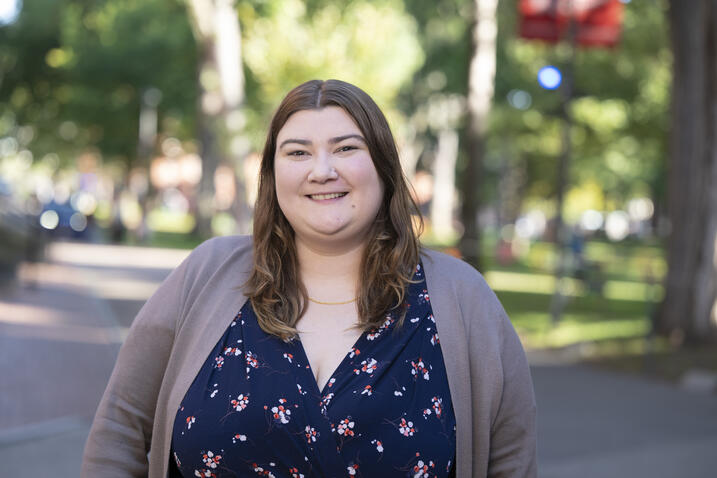
As an immigration lawyer, people often came into my office and told me about some of the worst things that had happened to them. The student meetings we have are not the same, but students also come to us in very difficult circumstances. My experience prepared me to sit with people in those moments.
–Gabrielle Juers
What made you want to work with graduate students in particular?
Gabrielle Juers: At Middlebury College, I primarily worked with undergraduate students. I found that I most enjoyed working with upperclassmen, the students who were at the older end of the undergraduate population. When I was looking to transition out of that role, graduate school seemed like a great place for me to work. The students are generally more grounded in what they want. They often have a trajectory for their lives and may have already made significant progress toward it. I enjoy helping them follow those plans or make new ones when the originals don’t work out.
Valentina Varela: I had been working with graduate students for a while, and I knew that they were an interesting group because their needs are very different from those of undergraduates. Harvard Griffin GSAS consists largely of doctoral students, which is different from my previous positions, where I worked mostly with those in master’s degree programs.
Because PhD students are here for so long, they experience major life events while they are in school: starting families, raising children, getting married, buying houses, moving. Those experiences are very different from what one might see in a one- or two-year master’s program. Harvard is also an Ivy League institution, which adds stress. Students may wonder whether they deserve to be here or whether a place like Harvard is what they really want. Those are conversations I did not have in my previous positions. Being at an Ivy League institution raises the stakes for my work and challenges me to continue improving for the students and the institution.
So, how do you work with students and each other at the Office of Student Services?
Valentina Varela: We have one-on-one meetings with students about physical or mental health crises, as well as academic questions, regardless of the program. Students may want help preparing for difficult conversations with their advisers. We practice those conversations, guide them, and support them through challenging circumstances. If a student needs time away from the University for physical health, mental health, or personal reasons, we guide them through the leave-of-absence process and connect them with the right resources.
We also meet frequently with faculty members and departments about students who may need support. We connect them with the appropriate resources, whether Counseling and Mental Health Services or an academic program.
We describe our approach as a “no wrong door” policy: If students have a question, they can come to us, and we will refer them to the person or office best equipped to help. Questions can range from “Where can I print in this building?” to requests for support or guidance on accessing the libraries. We receive all kinds of questions and try to help in the best way possible.
Gabrielle Juers: I am still new to the role and am learning its ins and outs. Since I started, though, we have helped students through mental health crises, major housing issues, and physical hospitalizations. We are not providing clinical care, but we can make referrals when needed and provide support that may not be available in a clinical setting. We help students with all the small pieces and logistics that can bring them to a place where they can get through whatever situation they are experiencing, focus on their health and studies, and return to a place where they are thriving.
We also coordinate logistics and help students navigate resources at Harvard Griffin GSAS and across the University. We work closely with other offices and professionals so that students can focus on their health and academics and return to their work. For example, yesterday we were looking into whether a student who had experienced a significant event and no longer had a laptop could rent one from the University on a limited basis.
It’s definitely a team effort. Everyone has their own specialties, but most often the work is done collaboratively.
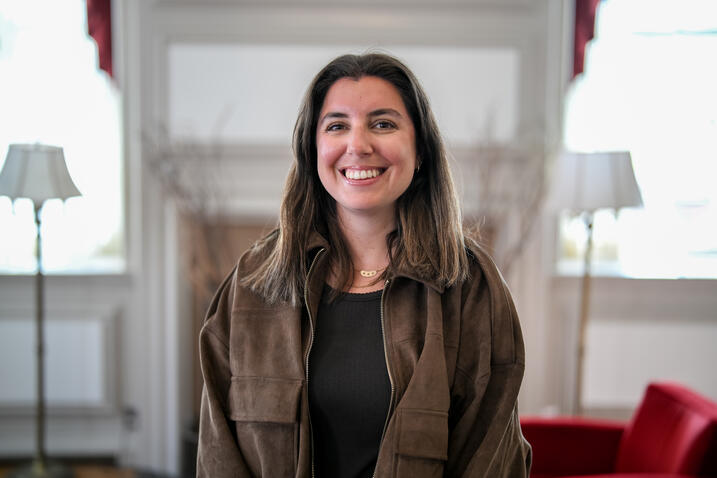
Being at an Ivy League institution raises the stakes for my work and challenges me to continue improving for the students and the institution.
–Valentina Varela
You’ve both given a good description of the work at the Office of Student Services. How do you hope to contribute personally to student flourishing at Harvard Griffin GSAS?
Valentina Varela: I hope my professional background will be a useful addition to the office, especially my clinical perspective and focus on holistic support. I was not born here and was once an international student. I am still not a US citizen, so my experience of immigrating and moving far away from family may help me understand what many of our students are experiencing. I hope that perspective will help me empathize with students, communicate with them, and build rapport. I want them to understand that they are not alone and that other people have gone through similar situations. My experience may also be useful when we are thinking about what students need and prioritizing what is important to them. Almost half of our students are international, so I hope that perspective will be relevant to many of them.
Gabrielle Juers: I think my experience with advocacy is helpful because I know how to articulate students’ needs in a way that’s clear and concise, and then lay out the relevant information for the people who can provide resources or assistance. I can also help students learn to advocate for themselves. They may come to us asking, “How can you help me?” without having taken any initial steps themselves. I enjoy walking them through that process, seeing how it can benefit them, and advocating for them when appropriate.
Finally, what do you like to do when you’re not busy supporting Harvard Griffin GSAS students?
Valentina Varela: I live near Revere Beach, so I enjoy walking along the water, especially in the summer. I love reading. My Kindle is a thousand years old and probably needs to be replaced, but as long as it works, I’m happy with it. I also love music and am a Taylor Swift superfan. For her final show during her last tour, I traveled all the way to Vancouver, Canada for one night. It was a fun adventure to be with a group of people who shared that passion
Gabrielle Juers: I also live near the beach—in Quincy—and I enjoy walking my dog there. And I’m also a big reader: romance, literary fiction, horror, and fantasy. If a book has an interesting premise, I will give it a try. I like moving around and traveling, too. I recently moved to this area, and it’s the fifth state in which I have lived. I am always trying to make plans to see somewhere new.
Since you’re both big readers, have you got any recommendations?
Valentina Varela: I am currently reading Firefly Lane by Kristen Hannah, which is historical fiction. I’m really enjoying it.
How about you, Gabrielle? You said you enjoyed the horror genre. Halloween is right around the corner.
Gabrielle Juers: It is. I recently read a horror novel called Play Nice by Rachel Harrison. I’m also reading an ongoing dark fantasy series called Ninth House. The third book was recently released. Both have put me in a spooky mood for fall!