From the Fireside to the Kindle: Telling Stories in a Digital World
Harvard professors Maria Tatar and Robert Darnton explore the intersection of traditional storytelling, printed books, and the digital revolution. Discover how fairy tales are flourishing in the internet age and why printed books remain vital alongside e-books.
If imitation is the sincerest form of flattery, as the adage goes, it should come as no surprise that e-book marketers are tapping into readers’ associations with the real thing.
“If you buy a Kindle,” observes Maria Tatar, chair of the Program in Folklore and Mythology and an expert on children’s literature, “it comes in a box with the words ‘Once upon a time . . .’ on the side. And I love that our other e-reader is called Nook, which must be an allusion to Longfellow’s words about ‘the love of learning, the sequestered nooks, and all the sweet serenity of books’”.
Five hundred years ago, early printed books sought the same kind of legitimacy from manuscripts, using Gothic scripts and ligatures between letters to mimic scribal practices. Such competition between old and new media is to be expected, says Tatar, the John L. Loeb Professor of Germanic Languages and Literatures.
“Each technology has its upside and its downside, and each technology brings in a shock wave, a panic—often, oddly, a moral panic, in this case a sense that e-books just aren’t good for you”.
Image
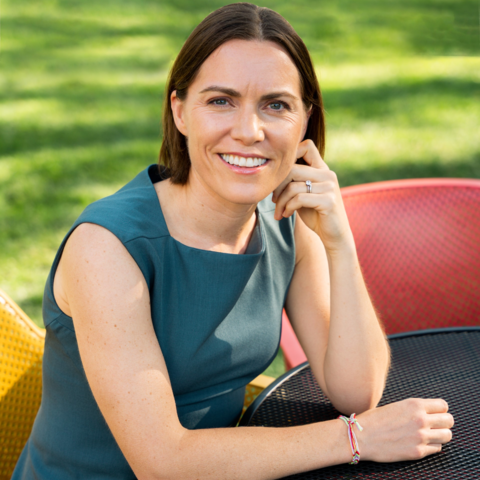
Maria Tatar, chair of the program in folklore and mythology and an expert on children’s literature.
Tatar admits to preferring physical books in all but two contexts—reading in bed and while traveling—and says that the very characteristics that make e-books so convenient lead to her “one anxiety” about the future of reading in an electronic age.
Call it the unbearable lightness of being digital. “The Kindle weighs almost nothing and gives you an endless supply of possibilities,” she says. “But when I read with a Kindle, I feel as if the text is moving right through me”.
That may be a result of habit or preference—in other words, something generations of readers to come won’t necessarily feel. Or it may lend credence to Nicholas Carr’s theory that the internet is diminishing our ability to read deeply.
“He sees us as becoming jet skiers, instead of deep sea divers,” Tatar says of Carr’s acclaimed book The Shallows. “I love that metaphor, because there is something about going down there and exploring those depths, or wonders... what happens to storytelling in an age of electronic entertainments?”
“What I’m finding is that fairy tales are flourishing,” Tatar says. “That is, in this new, media-rich environment, instead of the long novel we prefer the short, the sweet, and the bitty—something that is compressed”. And deep anxieties about the future often produce a throwback effect, nostalgia for what we once loved. The ascendency of Twitter, Facebook, and YouTube, for instance, has coincided with an increase in books and movies featuring supernatural heroes and heroines, and plots centered on magic and spells. And the over-the-top narratives of reality television seem to mint new fairy tales every week, abetted by a gossip industry that (often masterfully) creates the dramatic arcs.
Christina Phillips, a PhD student in comparative literature and teaching fellow for Tatar’s courses on fairy tales and children’s literature, enjoys watching undergraduates combine their memories of “visceral, somatic” childhood reading with “a rigorous academic experience”. Conversations deepen as even skeptics begin to take the material seriously, and the best essays are as likely to be about Peter Pan as Lolita. “One of my favorite papers ever was by a student in the visual arts who wrote about death imagery, color, and violence in Goodnight Moon,” she says. “It taps into children’s fear—namely, when the light goes off, when you go to sleep, are you ever going to wake up again? By repeatedly naming objects, it offers them reassurance and a sense of control”.
Phillips’s own scholarship focuses on the changing role of fictional child protagonists. In what will be the Department of Comparative Literature’s first dissertation on children’s literature, she argues that “as child protagonists in adult fiction started gaining more import in the mid nineteenth century, their counterparts in reality began meriting their own literature”. Pearl in The Scarlet Letter represents one such turning point. “The plot hinges on her,” says Phillips. “Pearl is betwixt and between, a really interesting character. She’s kind of a pre-Alice for me”.
Stories help us to navigate reality. They give us counterfactuals, so you can start to envision how the world should be, could be, or ought to be. These are questions that have an aesthetic and a moral dimension.
Tatar sees this second trend partly as a backlash against postmodernism's preoccupation with fragmentation, irony, and indeterminacy. “In the last two decades of the twentieth century, there was a way in which narrative had lost its punch. Everything was enigmatic and challenging to read, and you as the reader were the writer and had to construct the narrative,” she says. Little wonder that readers should want a return to grand narratives and the willing suspension of disbelief: “Books that—Nabokov puts it so wonderfully—books that you can read with the spine. That is, not just with the heart and the brain, but with something in between that gives you that little shiver of delight”.
She is quick to emphasize that the popularity of fairy tales now, at a moment of technological change and economic crisis, is not a sign of escapism or regression. Instead, Tatar interprets it as “a self-conscious way to make sense of what is coming up ahead”. “Stories help us to navigate reality,” she says. “They give us counterfactuals, so you can start to envision how the world should be, could be, or ought to be. These are questions that have an aesthetic and a moral dimension. The stories work in the optative mood, where everything has to do with a potential, a possibility”. What is more, serialization may help to counter the “jet ski” effect of the internet and e-readers. “It took me a while to enter the Harry Potter world, but by the seventh book you realize it has real depth and it’s constructed...”.
For millennia before that, story time had been a multigenerational, family affair. “The Latin term for fireside is focus,” says Tatar, “the place where everyone gathers and brings their attention”. Today our focus may be virtual, but it is no less unifying. And it is once again acceptable—for children and grownups alike—to read fairy tales, by the light of a Kindle Fire.
Digitization makes reading today an unprecedentedly global phenomenon.
Long Live the Book and the E-Book
Image
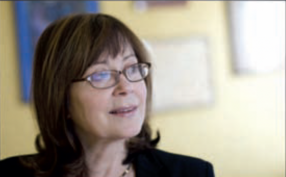
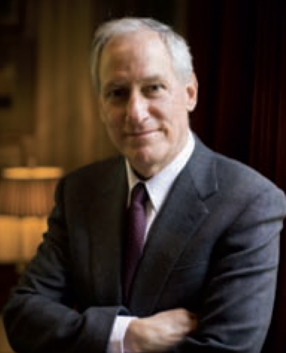
Robert Darnton
Robert Darnton is the Carl H. Pforzheimer University Professor and director of the University Library at Harvard. A cultural historian who specializes in the history of the book, Darnton rejects the hand-wringing that often accompanies discussions of how the digital era is affecting the way we read, learn, and share new knowledge. He sees a landscape full of scholarly opportunity, one in which old and new media will each have an important role. Darnton’s latest book is Poetry and the Police: Communication Networks in Eighteenth-Century Paris.
Books and e-books: must this be an either/or proposition? Can they coexist? Yes. People often think that printed books and e-books are at antagonistic extremes of the technological spectrum, that they are inimical and incompatible. But I’m convinced that the opposite is true: they are mutually supportive and can supplement one another. That doesn’t mean that everything right now is easy. I think that booksellers and publishers are very concerned about how they will find business plans and strategies to get through this period of transition, when all kinds of media are being mixed in creative ways.
What form might such a mixture of printed and electronic media take? I recently published a book with Harvard University Press—a traditional printed monograph with an electronic supplement—about the way songs operated as, in effect, newspapers in mid-eighteenth-century Paris. In this semi-literate society, everyone carried a repertory of tunes in... kind of immediate sensory experience, had not been available in the conventional printed codex.
But, just to be clear, the printed book remains alive and well today? Yes. One indication is the fact that so many books are being published. Last year, one million new titles were published worldwide, almost all of them in print. So the printed book is actually booming, especially in countries like China and Brazil, but really booming everywhere.
Given this immense output from publishers—and online—what advice would you give to readers as they navigate through an unprecedented wealth of texts? One piece of advice I would offer is that readers should be very critical about the accuracy and provenance of sources they consult on the internet. Critical reading is crucial, and I think that we especially need to develop it these days, when we tend to think of things that appear on the screens of our computers as solid information. Often it’s not solid at all. Beyond that, I would encourage students to spend time with complex texts, to read slowly, to pause, to let their imaginations wander as they read. It’s great to search through the web, jump from hyperlink to hyperlink, and come up with things that you couldn’t have found otherwise, but I hope that in doing so, students won’t... the archives knows that they extend forever. In Paris there are miles and miles of paper covered with scribbling that no one has ever seen. And it’s not nearly digitized. There is a kind of false consciousness that everything is on the internet. In fact, only a very tiny proportion of available documentation has made it online. So there are lots of discoveries still waiting to be made through archival research, and I think it is crucial for students who are beginning to do serious work in subjects like history to get to those primary sources.
Harvard Griffin GSAS Newsletter and Podcast
Get the Latest Updates
Join Our Newsletter
The latest research from PhD students and alumni
Subscribe to Colloquy Podcast
Conversations with scholars and thinkers from Harvard's PhD community
The Office of Alumni Relations encourages connections between alumni and the University, partnering with alumni leaders, students, and administrators to develop opportunities for engagement.



 Robert Darnton