What Are the US’s Goals in Venezuela?

In the aftermath of the January 3 capture of Venezuelan President Nicolás Maduro and his wife, Cilia Flores, the Trump administration cited four goals as justification for the incursion: expanding access to Venezuelan oil, stemming the flow of illegal drugs, mitigating immigration to the US, and democratizing the country. To these ends, President Trump asserted that the United States was “going to run the country” and that its involvement in Venezuela would last “much longer” than a year or more.
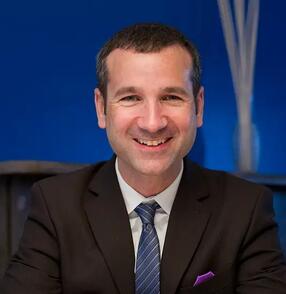
Javier Corrales, PhD ’96, is skeptical—both of the administration’s stated goals and its ability to bring about the transformation of Venezuela’s government. A professor of political science at Amherst College and an expert on Venezuela, Corrales says a sustained effort is required to transition the country from authoritarianism to democracy and that it’s vital for the United States to partner with opposition leaders such as 2025 Nobel Peace Prize-winner María Corina Machado. Nonetheless, he remains hopeful about the prospects for change in the wake of Maduro’s ouster.
Maybe the most frequently stated US goal in Venezuela is access to oil. You’ve written in a recent piece for Time that this is puzzling, since the United States is now a net energy exporter, and that oil companies, rather than consumers, would likely be the primary beneficiaries. But if US involvement increases oil production, wouldn’t prices fall for everyone?
Any time you increase the global supply of oil, prices tend to fall, regardless of where the oil is sold. Oil prices are determined by overall availability. It does not matter whether Venezuelan oil goes to China or somewhere else—greater supply lowers prices. But if supply expands too much, profits decline, so producers ultimately want to stabilize supply, not maximize it.
That said, the United States does not really need Venezuelan oil. However, US refineries near the Gulf are especially well equipped to process Venezuela’s heavy crude. Those refineries would make significant profits. So this would absolutely be a huge reward for certain oil companies, but it would not necessarily translate into broad economic benefits.
It is also important to remember that you do not simply arrive and start extracting oil immediately. Venezuela’s oil industry would need to be rebuilt, and that will take time and money.
You also write that, if oil is the goal, then the incursion was unnecessary because the Chavistas, who remain in power, would have happily accommodated US demands. Why would they have?
One of the biggest mistakes the Chavista movement made was allowing the oil industry to decline so badly. That decline hurt the regime enormously. Venezuela is essentially bankrupt; they killed the goose that laid the golden eggs.
Over time, they came to realize that reopening the oil sector could be a win-win. They had long complained about sanctions, and under Hugo Chávez—the founder of Chavismo—the economic model was based on selling as much oil as possible to the United States. This has never been incompatible with socialism in Venezuela. In fact, we know that Maduro was already offering to work with the US government to bring American companies back in.
Under Hugo Chávez—the founder of Chavismo—the economic model was based on selling as much oil as possible to the United States. This has never been incompatible with socialism in Venezuela.
Turning to drug trafficking, you’ve argued that removing Maduro will have, at best, marginal effects. Is Venezuela a major player in the drug trade affecting the United States?
Venezuela is not the dominant player globally, but that does not mean it's insignificant. Other trafficking networks are larger and more insidious, but Venezuela plays a meaningful role, even if much of the trafficking is not necessarily directed at US markets.
There is no question that the Maduro regime stayed in power by making deals with individuals inside the government who had illicit ties—not just to drug traffickers, but to smugglers more broadly. This was one mechanism the regime used to survive.
The mistake is to assume that removing the top leader collapses the entire organization. That idea comes from the Medellín cartel era, when authorities targeted Pablo Escobar. That is not how trafficking networks work today. You remove the leader, but the organization survives.
And many members of Maduro's government remain in place.
Exactly. This is the essential blunder that the administration is trying to turn into a triumph. It is as if, after World War II, we accepted Hitler’s death but chose to work with a Nazi ruling party to rebuild Germany.
Could the intervention reduce migration?
There are many cases in which US or international intervention has helped end wars, facilitate democratic transitions, and even produce prosperity. We do not talk about these cases enough, but they exist—Grenada, Panama, the Dominican Republic, and even Colombia under Plan Colombia, though that was a different kind of intervention.
To reduce migration, you need three things. First, security. Without basic order, nothing works. Second, institutions for prosperity. Third, institutions that protect human rights. These are the three fundamental pillars in political economy.
When those conditions exist, the primary drivers of mass migration diminish dramatically. There will always be migration driven by global inequality—people move toward more prosperous countries—but these pillars would have significantly reduced the massive Venezuelan exodus that began around 2017.
[Leaving most of the Maduro regime intact] is the essential blunder that the administration is trying to turn into a triumph. It is as if, after World War II, we accepted Hitler’s death but chose to work with a Nazi ruling party to rebuild Germany.
The administration has also said it aims to democratize Venezuela, but President Trump claims that opposition leader María Corina Machado lacks sufficient support or respect within the country to govern. Does she?
That is Trump’s most blatant misreading of María Corina Machado. Perhaps he meant that she lacks respect within the ruling party—on that point, he would be correct.
In a democratic transition, it is essential not to exclude the ancien régime entirely. You need to work with them, de-radicalize them, and give them incentives to participate in a new democratic system. You cannot repeat the mistake made in Iraq by completely punishing everyone associated with the old regime.
But what you also do not do is leave them in charge while excluding the opposition. It is fair to say that one particular leader may not be ideal, but the deeper problem is that no opposition leader is being asked to play a role.
In a conventional democratic transition, international actors would be facilitating negotiations between members of the old regime and representatives of the democratically elected opposition. We are not seeing that. And it is not because Machado lacks legitimacy. The 2024 election results, which showed overwhelming support for her movement, directly contradict that claim. Something else is going on.
If you reject the administration’s four stated goals, what do you think the real objectives were?
There appear to be at least three different currents within the administration. Trump himself seems genuinely excited about oil, but also about spectacle. Defense Secretary Pete Hegseth appears motivated by the desire to showcase an impressive military operation—demonstrating US competence and power. Trump was likely drawn to that as well, though probably more nervous about the risks.
Then there is the Marco Rubio line of thinking. He does not reject the other goals, but his motivation is more ideological: weakening Castroist communism by cutting off Venezuela as a source of support for Cuba, even if Venezuela is less important to Cuba now than it was a few years ago.
Each faction is pursuing a different “big prize,” even if they publicly endorse the same goals.
Some US presence during a transition period is essential—absolutely. But there is a profound difference between partnering and running a country. When there is no clear time horizon, no short-term achievable goals, and no explicit commitment to democratic elections and human rights, concern is inevitable.
When President Trump says the United States will be “running Venezuela” for a long time, what is your reaction? And do you think Cuba is next?
The administration has been remarkably transparent. When they say they are serious about Cuba, I see no reason to doubt them.
Some US presence during a transition period is essential—absolutely. But there is a profound difference between partnering and running a country. When there is no clear time horizon, no short-term achievable goals, and no explicit commitment to democratic elections and human rights, concern is inevitable.
At that point, people start to wonder whether this amounts to the worst form of expropriation—not just taking oil or territory, but taking democracy itself.
Finally, do you feel optimistic or pessimistic about Venezuela’s future?
The conditions for change are real. Removing Maduro was an extraordinarily bold action against a brutal dictatorship, and it creates enormous opportunities.
Do I trust the actors now in charge? That is a different question. But the Trump administration is famous for reversing course, for sudden about-faces. And oddly enough, that unpredictability gives me some hope.
Banner image: Renan Braz/Pexels