Exploring the Asymmetry of Life
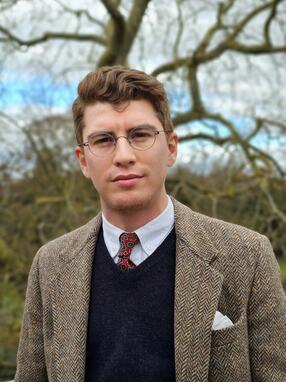
S. Furkan Ozturk, PhD ’24

S. Furkan Ozturk grew up in a small town in Turkey, the son of two doctors. Fascinated by the vastness of the universe, he gravitated not to the life sciences but to physics. Now an assistant professor at the California Institute of Technology (Caltech), he talks about a life-changing summer camp experience, going to college during a coup attempt and ISIS bombings, and searching for the origins of life through the physics of molecular symmetry-breaking.
Small Town, Big Universe
I was born and raised in Turkey. I spent the first 21 years of my life there, mostly in a small neighborhood of a coastal city called Trebizond, a former Byzantine city by the Black Sea. I’m an only child. My parents are both medical doctors, but they separated when I was young, and I grew up with my grandparents. There were no scientists in my family, and no one had studied abroad. Still, my family cared deeply about education, about books, languages, and reading.
I first got into science—specifically physics—through astronomy. When I was in eighth grade, I saw an ad for a summer camp at an observatory in the Western part of Turkey. My family let me go, and my mind was just blown. I learned how big the universe is, how far the stars are. I was fascinated by the scale of it all, and by how much we still don’t know. That camp changed my life.
After that, I started reading whatever I could find about space and science, first in Turkish, and then, when I started high school, in English. I joined a program for gifted students that let you explore either the arts or sciences in your free time outside of school. I chose science and was paired with a physics teacher. Around the same time, I was admitted to a science-focused high school in Trebizond . So my interest in physics kept growing.
“I Could See the Smoke from Campus”
In Turkey, we take a national university entrance exam once a year. You get a ranking out of the entire pool—millions of students. Based on that, you qualify for specific programs. I did well and got into a good physics program at Bilkent University in Ankara, the capital. I studied there from 2014 to 2018.
During my undergrad years in Ankara, 2016 was especially tense. A coup was attempted in Turkey by a fundamentalist group that infiltrated the army, and on another night, there were bombings, including one very close to my university. One night, I was planning to go downtown with friends, but stayed back. That same night, an ISIS suicide bombing happened at the spot we had planned to visit. I could see the smoke from campus.
After that, I decided to stay in. I didn’t leave campus for six months. I just studied. That time shaped me, too—focused me, showed me what it means to commit to your work even when the world around you feels uncertain.
During college, I also did summer research abroad to get more exposure to science and to make connections. Turkish universities are often not recognized internationally the same way as schools like MIT or Princeton. I wanted to show myself, learn new topics, and get recommendation letters. So I spent my freshman summer at Indiana University Bloomington, my sophomore summer at ETH Zurich, and my junior summer at Harvard.
That internship at Harvard changed everything. It went really well. My mentor told me I should apply for a PhD in his lab, so I did. I started the PhD program the next year.
Cracking Chirality
When I first came to Harvard, I planned to study optics and atomic physics—quantum mechanical effects in large atomic systems. I joined Harvard’s Center for Ultracold Atoms. But halfway through my PhD, I realized I was more interested in the question of how life began.
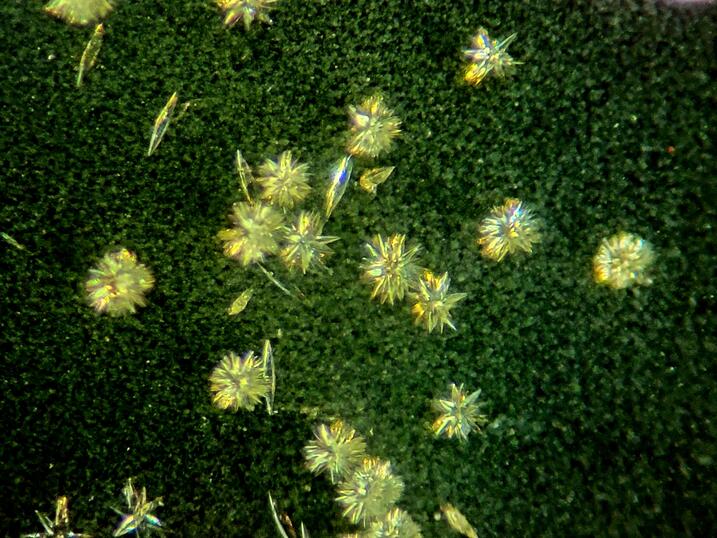
My dissertation focused on a problem called homochirality, which has been known since Louis Pasteur first identified it in 1848. The molecules in our bodies—DNA, RNA, amino acids, proteins—are chiral. That means they come in two mirror-image forms: left-handed and right-handed. But in living systems, you only ever see one. RNA and DNA are always right-handed. Proteins are always left-handed. That asymmetry is one of the most fundamental features of life—and we don’t fully understand how it came to be.
Life breaks a fundamental symmetry that you would otherwise expect in chemical systems. And physicists love symmetry-breaking problems.
So I started trying to understand how life could “choose” one chirality over the other. It’s a key to understanding the origin of life. Why does RNA always twist one way? Why do proteins twist the other? I think we’ve made progress on that question.
We found that one “handedness” of RNA can form more easily than the other on magnetized rocks. Earth’s magnetic field helps pick one-handedness of the primordial genome. And once that choice is made, it cascades: left-handed amino acids bind to right-handed RNA ten times more effectively compared to right-handed amino acids. That explains both the origins of first chiral selection and why RNA and proteins ended up with opposite handedness.
I like to explain it with a handshake. You reach out with your right hand. I respond with my right. If I tried to respond with my left hand, it wouldn’t work. It is the same thing in biology: handedness matters in molecular interactions.
Or think about driving. In the U.S., we drive on the right side of the road; in Britain, the left. Either system works, but you have to pick one, and all the cars and traffic rules have to be designed accordingly. Life is like that. Once the “traffic handedness” of chirality was established, everything had to follow it.
A Human Treasure
My time at Harvard was transformative in every way. I probably won’t ever have another period in my life when I grew so much intellectually.
I came here expecting to do atomic physics. I left doing the origins of life. And yet I was still working with the best people in the world. That’s what Harvard makes possible. You walk from one end of Oxford Street to the other, and you’re in a different field—but still surrounded by excellence.
Harvard is an enormous human treasure. It’s not the buildings. It’s not the money. It’s the people. That density of thinkers, the constant flow of ideas—it’s what enabled me to ask the questions I wanted to ask and pursue them all the way.
I went to science talks, book talks, and seminars. I was inspired by Nobel laureates and researchers from all over the world. I met visiting scientists who helped me solve key technical problems in my research. The opportunities were endless, and I think I used them well.
“The Best Decision of My Life”
The choice to go from atomic physics to the question of how life began was a big and risky shift. But it turned out to be the best decision of my life. I started working with Professor Dimitar Sasselov, a physicist and astronomer who was building a lab around exactly these questions. Dimitar gave me immense freedom. He told me, “This is your lab now. Go in. Explore anything you want.” And I did.
He also connected me with collaborators all over the world. During my PhD, I traveled to three different countries to learn experimental techniques and collect data. I wasn’t just a student in someone else’s project—I was building something from scratch. When we published, I was even listed as a corresponding author. That sense of ownership made all the difference.
Dimitar was always communicative, always supportive. I wanted something big. He let me go after it. He was the best mentor and collaborator.