Three from Harvard Griffin GSAS Named 2026 Schmidt Science Fellows
Trio join group of emerging leaders chosen to accelerate new discoveries

Two 2025 Harvard Griffin GSAS PhD graduates, Dawei Xi (engineering sciences) and Yan Hu (biological and biomedical sciences), along with current PhD student Joel Tan (biological and biomedical sciences) —have been named to the 2026 cohort of Schmidt Science Fellows. The three Harvard scientists join a select group of thirty-two emerging research leaders worldwide chosen to accelerate discovery through interdisciplinary work and collaboration.
"Science without interdisciplinary research is like using only one of your five senses to try and understand the world," said Wendy Schmidt, co-founder of Schmidt Sciences. By providing fellows with the support and community to make such a leap, the program aims to build a research culture where ambitious, boundary-crossing work can thrive.
The 2026 cohort joins a growing global community that now includes 241 fellows from more than 70 institutions worldwide. Alongside their research placements, the new fellows will participate in a bespoke 12-month Science Leadership Program that includes three week-long convenings in international hubs of innovation, providing fellows with access to world-leading thinkers and a network of interdisciplinary support.
Dr. Megan Kenna, the founding executive director of Schmidt Science Fellows, noted that the 2026 cohort is "united by their commitment to bold, boundary-crossing science." “As with each new cohort, they bring fresh perspectives, distinctive experiences, and a remarkable breadth of research ambition to strengthen our growing community.”
The three Harvard fellows represent the vanguard of this interdisciplinary approach, each shifting their focus to address some of the most complex challenges in medicine and energy.
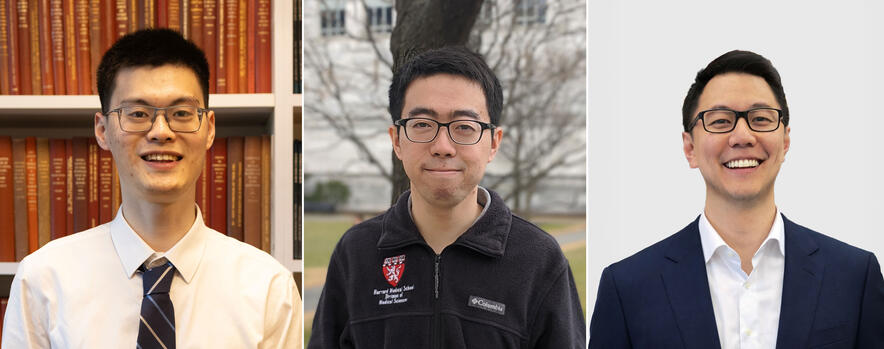
Dawei Xi, who received his PhD in biological and biomedical sciences from Harvard Griffin GSAS in 2025, will pivot from electrochemistry to nuclear chemistry to address critical needs in the nuclear industry. His research focuses on isotopes—variants of chemical elements with differing atomic masses that are essential for medical applications and fundamental chemistry. As a Schmidt Science Fellow, Xi will engineer new interfaces and reactors designed to separate isotopes with greater selectivity and energy efficiency. His work aims to enable a cheaper, cleaner method for providing materials vital to the nuclear fission and fusion industries.
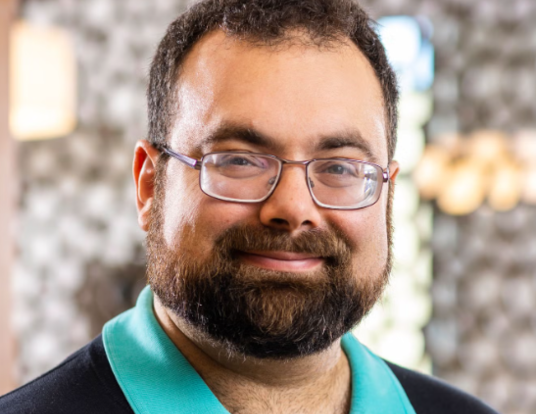
Another 2025 PhD graduate, Yan Hu (engineering sciences) will pivot from computational biology to biomedical sciences to find new ways to treat atherosclerosis, a leading cause of heart attacks and strokes. Current treatments like statins can lower blood cholesterol, but cannot effectively remove cholesterol and other lipids from existing plaques. Because the human body cannot naturally break down cholesterol, Hu is looking toward the microbial world for answers. He plans to identify cholesterol-degrading genes from bacteria and explore human genes that could boost cholesterol removal. By testing these mechanisms in mammalian cells, Hu hopes to pioneer therapies that can eliminate established plaques.
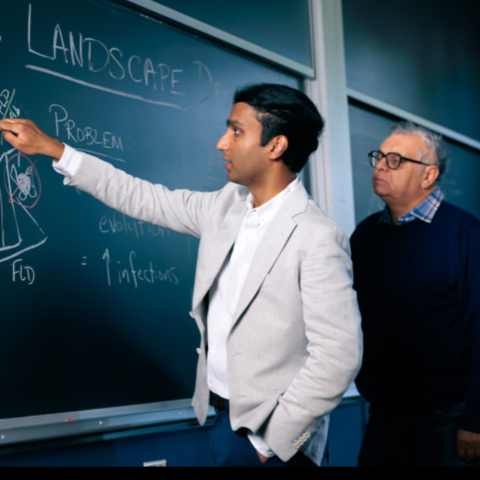
Current PhD student Joel Tan (biological and biomedical sciences) is transitioning from microbiology to computational biology to tackle the challenge of protein misfolding in diseases like Alzheimer’s. Many neurodegenerative conditions are linked to proteins containing "intrinsically disordered regions" (IDRs), which lack stable surfaces for traditional drugs to bind to. Tan intends to use machine learning to design synthetic proteins capable of binding to these IDRs to prevent or reverse harmful aggregation. Beyond therapeutic development, his research seeks to deepen the scientific community's understanding of IDR biology.
Established in 2018, Schmidt Science Fellows is an initiative of Schmidt Sciences, delivered in partnership with the Rhodes Trust. The program was founded by Eric and Wendy Schmidt with the mission of changing how science is conducted by breaking down traditional disciplinary boundaries. The fellowship encourages "interdisciplinary pivots," supporting early-career researchers as they embark on postdoctoral research in a field significantly different from their PhD.
This article was engineered and edited by Paul Massari with draft copy generated by Google Gemini from materials provided by Schmidt Sciences.