Are You Listening?
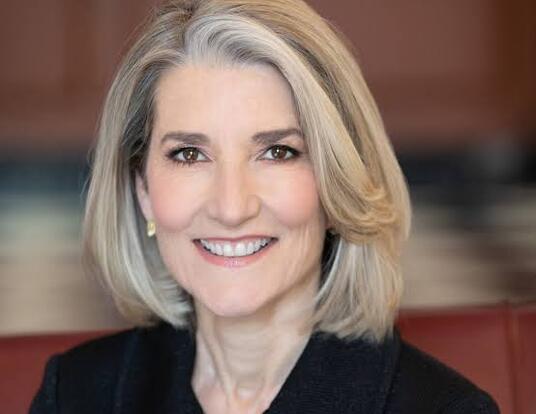
Hanne Collins, PhD ’24

Hanne Collins is an assistant professor at the University of California, Los Angeles, where she studies interpersonal connections and conversations. She discusses her journey from psychology to behavioral science, how her mentors at Harvard powered her through graduate school, and a fond memory of her dissertation defense.
Building Blocks of Communication
I studied psychology in undergrad and had the opportunity to work in multiple research labs. Those experiences nurtured my interest in understanding the foundations of happiness and well-being. In particular, I became interested in what aspects of our social lives drive these factors, and I knew I wanted to try to get some answers through research. After graduating from college, I worked as a research associate at Harvard Business School (HBS) and Harvard Kennedy School (HKS) for a couple years. I loved doing research that was more applied than what I had been doing previously. From there I applied to graduate school at Harvard and it was a great fit for me.

My research focuses on conversations, which I think of as the building blocks of our social lives. Until relatively recently, there has not been a lot of research on the discrete behaviors that we engage in when we’re talking to each other—but recent advances in technology have allowed us to capture, quantify, and empirically study live interactions at scale. So, we observe and transcribe people’s conversations, and then use machine learning and big data techniques, combined with survey measures, to understand the mechanics of what specific behaviors drive outcomes.
Even though it’s something we do all the time, conversation is really hard. It’s such a complicated and dynamic process where we are making a rapid series of tiny decisions. What do I say next? How should I phrase it? What do I do with my face? All the while we’re trying to understand what the other person or people are thinking, feeling, and saying. Some of this happens automatically, but some of it requires making quick and active choices in the moment. The more I think about this, the more I am shocked both at how poorly and at how well conversations can go. We make blunders all the time—misunderstandings, miscommunications, misperceptions—but there is a kind of beauty in how well we carry on with our conversations given how difficult they actually are.
My work has definitely changed how I approach conversations. I am much more direct now, which is sometimes good and sometimes bad. I am also much more forthcoming about mistakes and issues during a conversation. If I wasn’t listening, I’ll ask someone to repeat themselves. If I feel like I misspoke, I try to pause and repair my blunder in the moment. It can be embarrassing but I have found that people are grateful that you are trying, and it leads to better conversations and relationships overall. Just being aware of what can go wrong in a conversation—and being willing to try to correct these mistakes—can make our communication so much better.
Hitting the Wall
I had two main advisors at Harvard: Alison Wood Brooks at HBS, and Julia Minson at HKS. I am very lucky to be close with both of them. I had consistent weekly meetings with each of them, even through the chaos of the pandemic, and they always made time for me. It was really beneficial for me to have two extremely engaged advisors with different approaches. It made my work better and taught me different ways to think through research problems and designs. They challenged me and supported me, which made my experience so much better.
There is this kind of wall in the middle of graduate school that I think a lot of people experience, where you’re done with classes and you’ve transitioned to full-time research. I faced this wall during the pandemic. I had lost the structure of classes, and I was just swimming in big questions and failed studies and scary news stories. I felt very lost and confused and was questioning what mattered. I just kept asking myself, “What am I doing?” And during that time, I always felt like I could go up to my advisors and talk about those feelings, and they would (and did) help me figure it out. They were extremely supportive, and I will always be grateful for that.
Community Conversation
One thing I remember the most about my time at Harvard is the amount of effort people made to connect with each other during the pandemic. It was both sad and also amazing. People worked so hard to make lab meetings and journal clubs and informal social gatherings happen. When we came back to campus, it felt like we had preserved that sense of community.
My dissertation defense was one of my favorite memories because of that community. I was nervous and terrified, but as soon as it began, I had a great time because so many people attended my defense. I sent a mass invite, and people showed up for me. Everyone came together and asked great questions, and it just felt like one massive conversation I got to lead with people I really care about.
To me, that day represents that community I found here at Harvard—all these people with so many different perspectives and thoughts sitting down and having one long group conversation.