Studying How the Nazis Sacrilized the Sinister
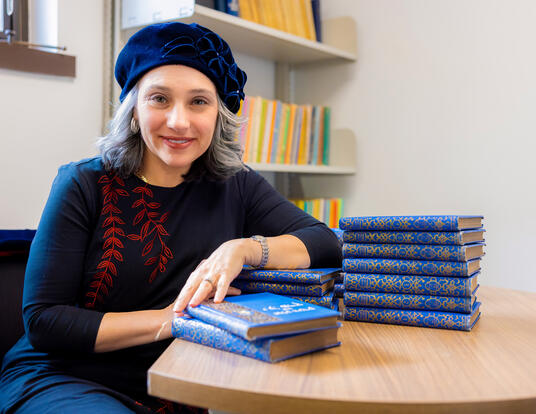
Madeline Levy, PhD Student
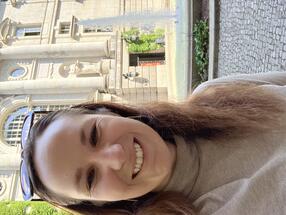
Madeline Levy is a PhD candidate in the study of religion at Harvard Griffin GSAS. Her research explores how the Nazi regime used religious language and imagery to shape the identities of young people in Germany—and what that legacy can teach us today about nationalism, education, and collective life. Below, she reflects on her winding path to doctoral study, the formative influence of opera, and how a course on forgiveness helped her think differently about how we relate to each other in an imperfect world.
Ethics by Way of Opera
I grew up in Port Townsend, Washington, a small town on the north central coast of the Olympic Peninsula. I’m an only child, and while my parents weren’t academics, both pursued multiple degrees and encouraged a wide range of interests. My father practiced medicine but also played music and built boats. My mother studied history, danced professionally, and became a physical therapist. Looking back, I think they modeled for me a kind of joyful multiplicity—an embrace of both the intellectual and the artistic.
That openness was important. As a kid, I bounced between wanting to be a playwright, a psychologist, a translator, an actor—and most improbably, an Olympic ice skater. When I finally decided to major in religious studies as an undergraduate, they supported me, even though it probably came out of left field.
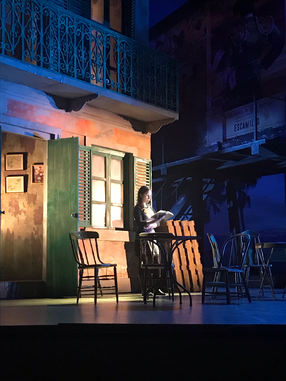
After college, I didn’t go straight into academia. I pursued a career in opera stage management, working at Seattle Opera, Wolf Trap Opera in Virginia, Opera Colorado, Hawaii Opera Theatre, and the Lyric Opera of Kansas City. I loved the work. There’s something magical about standing just offstage, score in hand, cueing singers and set changes while a full orchestra and world-class performers create this rich, resonant sound just a few feet away. It’s like having your own private concert every day.
But even as I thrived backstage, I kept returning to questions I had started asking in college—questions about peace and conflict, ethical leadership, and the role of communal storytelling in shaping our moral imagination. Eventually, that pull led me to pursue a master’s in theological studies at Harvard Divinity School (HDS), and from there, to begin my PhD in the study of religion at Harvard Griffin GSAS.
Moral Magnetism
As an undergraduate at Whitman College in Walla Walla, Washington, I was drawn to big ethical questions—especially the tension between good and evil, and what compels people to act, or fail to act, in moments of mass harm. That led me to the work of Dietrich Bonhoeffer, a German theologian who resisted the Nazi regime. I wrote my senior thesis on him. His life and writing have a moral magnetism, and I was fascinated by how deeply he integrated theology and action.
Over time, my focus shifted. I found myself wanting to understand not just those who resisted, but the structures they resisted against. What was the draw of fascism? What made it compelling? What kinds of meaning did it offer?
As I explored these questions, I became especially interested in the role religion played in the Nazi regime—not in the churches, per se, but in the way the regime used religious language and imagery to sacralize politics. In particular, I’m examining how these ideas were deployed in the Hitler Youth, where many young people first encountered and internalized them.
The Sacred in Service of the Sinister
My dissertation, currently in development, is tentatively titled “Sacred Subjects: Religious Discourses and the Formation of the Self in the Hitler Youth.” It asks how the Nazi regime mobilized the concept of the sacred in its youth literature, and what effect that had on the formation of identity and belief among young Germans.
These materials—magazines, booklets, and other publications—often framed German land, history, and people as holy. December issues would speak of the “eternal sacred German forest” or describe a “divine spark” animating the soul of the nation. The rhetoric may not have aligned with any specific religious tradition, but it borrowed heavily from religious forms: rituals, symbols, language. Hitler was referred to as a prophet. Youth were called to sacred duty.
Scholars have debated how to characterize this. Was it idolatry? Was it a form of political religion—a sacralization of nationalism? And what effect did it have on those who encountered it as children and teenagers?
My work builds on this conversation by asking what this religious language actually did—how it shaped the subjectivities of young people, how it fostered a sense of meaning and belonging, and how it functioned as a tool of ideological formation. I hope this research can illuminate the mechanisms of nationalism and help us reflect on the ethical stakes of education and collective life today.
A Community of Mentors
Throughout this journey, I’ve been fortunate to have incredible mentors. HDS Professors Kevin Madigan and Michelle Sanchez, a Harvard Griffin GSAS alumna, were instrumental in encouraging me to pursue a PhD. They took the time, when I was a master’s degree student, to talk with me about what this path would require—intellectually, emotionally, and professionally.
During a yearlong reading and research seminar with Professor Madigan, I was introduced to the historiographical debates surrounding the Holocaust. That experience helped me see myself not just as a student with questions, but as someone who could contribute to an ongoing scholarly conversation.
Both Professor Madigan and Professor Sanchez have an extraordinary capacity to listen deeply—to hear what I’m curious about, and then to recommend books or directions that stretch and strengthen my thinking. More than once, they’ve suggested a text I’d never heard of, only for it to become exactly what I needed.
Formed by Forgiveness
One of the most formative experiences I’ve had at Harvard was serving as a teaching fellow for a course called Forgiveness, taught by Professor Matthew Ichihashi Potts, PhD ’13, who is also the Pusey Minister at Memorial Church. Through philosophical, literary, and theological texts, we examined how forgiveness can be understood and practiced in all its ethical complexity.
That class changed me—not just as a teacher, but as a person. It helped me think more deeply about how we relate to one another in a world where harm and imperfection are inevitable. It challenged me to consider what it means to be accountable, to offer forgiveness, and to live with complexity. I know those lessons will stay with me long after I leave Harvard.
I’ve also been shaped by experiences outside the classroom—especially through my involvement with Harvard’s Center for European Studies and as a pedagogy fellow with the Derek Bok Center for Teaching and Learning. In both roles, I’ve had the chance to engage with students and scholars from other disciplines and countries. Those conversations have helped me recognize some of the unspoken assumptions embedded in my own training and worldview. They’ve pushed me to think more critically and more expansively.
And that, ultimately, is what I hope to offer in my work: a more precise understanding of how religious language and symbolism operate in political contexts, and how those operations shape who we are—and who we might become.