Advancing Knowledge, Improving Society
Alumni change the academy—and society—through groundbreaking research and ideas

At first glance, the 2021 Centennial Medalists—a social psychologist, an engineer, a journalist and political scientist, and a scholar-activist—seem to have little in common other than their Harvard diplomas. According to David Staines, a professor of English at the University of Ottawa and chair of the Graduate School Alumni Association Council’s Medals Committee, however, the group is connected by something more than their status as Harvard Griffin GSAS alumni. “The people who receive these awards have had exemplary careers both in academics and in the worlds beyond the academy,” he says. “Whether by reimagining the way businesses look at work-life balance, changing the way engineers understand the structure and strength of the materials they work with, shaping the civic dialogue for nearly two generations, or challenging the way we think about gender, race, and inclusivity, this year’s Centennial Medalists have all made their mark. In so doing, they have not only advanced knowledge but also made important contributions to society.”
“For over 30 years, the Centennial Medals have honored some of Harvard Griffin GSAS’s most accomplished graduates,” says Dean Emma Dench. “This year’s cohort continues that distinguished tradition. Throughout their careers, each of the 2021 medalists has exemplified the School’s mission by creating new knowledge and advancing understanding in a range of fields. Congratulations to all!”
Lotte Bailyn, PhD ’56
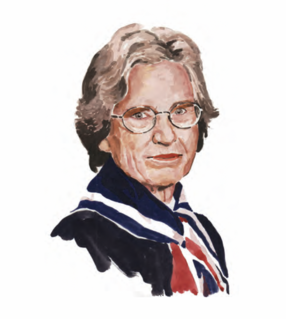
When Lotte Bailyn graduated from Radcliffe in 1956 with a PhD in social psychology, she assumed she would immediately begin an academic career. Her parents were both social scientists and her husband, Bernard Bailyn, was a Harvard historian who would go on to win two Pulitzer prizes. She didn’t think it would be 16 years before she secured a tenure-track appointment. Bailyn used the time to raise her two boys and contribute to scholarship through temporary research and teaching positions. The experience of having no serious career options, and seeing her friends in similar situations, helped her understand the link between the personal and the professional spheres of life. That link would define her nearly 50 years at the MIT Sloan School of Management, where she would eventually rise to become the T Wilson (1953) Professor of Management, Emerita.
“Bailyn lived through extreme versions of the biases women still have to put up with,” says Maury Peiperl, dean of the George Mason University School of Business and a long-time colleague of Bailyn’s. “Her insights have helped to make the whole organizational and career space better for everyone.”
Bailyn was a leader in the then-nascent field of work-life integration. Her book Breaking the Mold, originally published in 1993, urged American businesses to radically rethink some of the hidden assumptions that set work and personal life at odds, especially for women. “Back then, the book was ignored,” Bailyn says. “The revised edition came out in 2006 and by then everybody was talking about these things, but the issues were still the same that organizations didn’t consider anything about their employees except their attitudes toward work.” Moving away from “uniform and monolithic expectations toward multiplicity, pluralism, and change,” Bailyn writes in the new edition, will help companies discover “unexpectedly more effective ways of reaching their goals” and will impact the very “well-being of the nation.”
Bailyn practiced what she preached, says Kate Kellogg, the David J. McGrath Jr (1959) Professor of Management and Innovation at MIT, who recalls being encouraged by Bailyn as a young mother working on her doctorate. “She’s been a tremendous mentor to many PhD students but especially female ones,” Kellogg says, “encouraging them to find their voice. I can’t say enough wonderful things about her, and this award is just further validation that she has made such a huge difference to multiple generations of scholars.”
Ask Bailyn what the award means to her personally, and she’ll admit that the symmetry of it gives her a certain satisfaction. Her husband, who died in 2020, was a Centennial Medalist in 2001. Twenty years later, Bailyn has joined him in that august company. “I was totally surprised and very pleased to receive this award,” Bailyn says. “I’m only sad that my husband is not around. He would have enjoyed it so much.”
John Hutchinson, PhD ’63
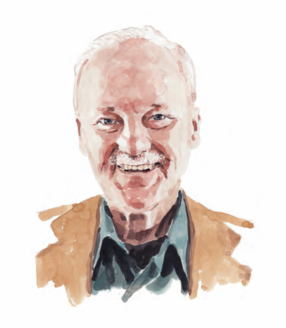
John Hutchinson claims to have been an indifferent student and a lackluster careerist. “I just bumbled along,” he says. “I consider myself lucky to have found, almost by chance, a good niche.”
Good niche indeed. During his five decades at Harvard, starting as an assistant professor and leaving as the Abbott and James Lawrence Research Professor of Engineering, Hutchinson did groundbreaking work in the field of materials engineering and solid mechanics, particularly fracture and failure mechanics. He has written or contributed to hundreds of research papers, been cited more than any other researcher in his field, and won numerous international awards and honors, including honorary doctoral degrees from three US and two international universities, in addition to his Harvard PhD in mechanical engineering.
As an undergraduate at Lehigh University, where he received a BS in engineering and mechanics, Hutchinson did well enough in the subjects he liked—math, physics, and chemistry—to graduate first in his class. Accepted by Harvard, MIT, Stanford, and Brown for graduate school, he decided on Harvard at the urging of his department head and because his father thought it was “the highest quality of his four choices.” In the mid-1950s, when Hutchinson started college, few people were studying structural mechanics, but the proliferation of computers and the advent of the space race soon changed that. “Thanks to Sputnik,” he recalls, “the US really started pumping money into universities for research in science and technology. Getting funding simply wasn’t an issue for me.”
Though he made his professional name as a researcher, Hutchinson says he values his time teaching at Harvard just as much. “It doesn’t matter whether it’s a graduate or an undergraduate class,” he says, “there’s always a little feeling of excitement at the beginning of a class. Every time. You want to hold the students’ attention and get them to care about the subject. And, of course, I’ve had fabulous students as well as fabulous colleagues at Harvard.”
“John’s generation of graduate students have done exceedingly well,” says Venkatesh (Venky) Narayanamurti, Benjamin Peirce Research Professor of Technology and Public Policy, Engineering and Applied Sciences, and Physics, Emeritus. “He’s not just a great scholar, but at the same time a great teacher and the finest person to work with.” Narayanamurti calls Hutchinson a “great support” to him as associate dean in Narayanamurti’s first years at Harvard and remembers going into Hutchinson’s office in the mornings because “I knew I would get good cheer,” he says. “John is absolutely outstanding at research and a dedicated teacher who really cares about others.”
Hutchinson says, despite his long list of achievements, the Centennial Medal is a truly special distinction. “It means I’m being recognized as Harvard quality by Harvard,” he says, harking back to his father’s words. “I really feel honored.”
Marvin Kalb, AM ’53
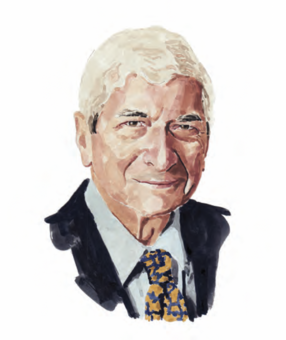
One Monday morning in 1957, Marvin Kalb was in Widener Library working on his nearly completed PhD dissertation when a librarian approached. “There’s a man on the phone who wants to speak with you,” she said. “He says he’s Edward R. Murrow.” “I said, ‘Hang up on him; it’s probably some quack,’” Kalb recalls. Luckily, the legendary newsman did not give up so easily, and when he called back later that afternoon Kalb took the call. “The minute I heard his voice,” he says, “I knew I had made a horrendous blunder.”
Murrow had seen a story that Kalb, now the Edward R. Murrow Professor of Practice, Emeritus, at the Harvard Kennedy School, had written on Soviet youth for that Sunday’s New York Times Magazine. The next day Kalb was in New York sitting in front of Murrow and “a half-hour meeting turned into three hours,” he says. “At the end, he put his arm on my shoulder and said, ‘How would you like to join CBS?’” “I said yes, and that was it.”
Kalb, whose older brother Bernard was then a reporter at the New York Times, knew a once-in-a-lifetime opportunity when he saw one. He suspended his doctoral studies—temporarily, he thought at the time—and became the network’s Moscow correspondent. Over the next 30 years, journalism would take him all over the world. He has won numerous awards and written or co-authored 14 nonfiction books and two best-selling novels. He just published his 17th book, Assignment Russia, a memoir of his years as a foreign correspondent during the Cold War.
Kalb returned to Harvard in the mid-1980s when he was again recruited, this time by former HKS dean Graham Allison, to become the founding director of the Shorenstein Center on Media, Politics and Public Policy. “That was like heaven knocking on my door,” Kalb says. “I had always thought of my time at Harvard as among the happiest, most fulfilling, richest years of my life.”
Harvard has clearly returned the affection. “Marvin has both benefited from Harvard and enriched it,” says Fiona Hill, PhD ’98, a senior fellow at the Brookings Institute who met Kalb as a grad student in the early 1990s. “He’s just extremely engaged with the Harvard community, looking out for younger scholars, taking them under his wing, and forging incredibly close cross-generational relationships. He makes you feel like you’re his friend, not just a mentee.”
For Kalb, the award itself is a link of sorts. “Yes, I’ve gotten many awards and I’m very grateful for them,” he says. “But this is the wrap-around award. It wraps up all corners of my life—the teaching, the journalism, the education, the inspiration. All of those are wrapped up in this award because it represents who I am. It’s the way that this University recognized that there was a talent, a skill, an interest, a passion that it could stimulate and turn into something worthwhile.”
Peggy McIntosh, PhD ’67
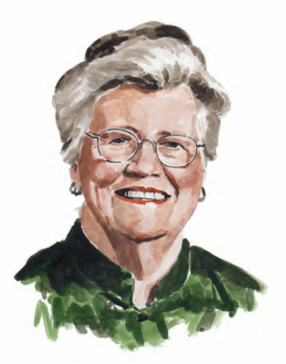
Last year, a long-needed conversation on race in America finally began in earnest, and as a result, the phrase “white privilege” has become an important part of the daily lexicon. But in 1988, when Peggy McIntosh wrote the seminal paper “White Privilege and Male Privilege: A Personal Account of Coming to See Correspondences through Work in Women’s Studies,” the idea was far from commonly understood.
“My paper wasn’t the first to use the phrase, but it got attention because it was written from an autobiographical perspective,” says McIntosh, a senior research scientist and former associate director at the Wellesley Centers for Women, who got her PhD in English and American language and literature. “It contains 46 examples of how I have unearned power because of being born white in a culture that favors whites. At first the Centers’ Working Papers Committee didn’t want to publish it. They said it was anecdotal and had no footnotes. Finally, my subconscious shouted, Freud didn’t have footnotes! So I took that to the committee and they said, ‘Okay, we’ll publish it.’”
It was a key moment in what had until then been a wide-ranging and peripatetic career: McIntosh has taught English, American studies, and women’s studies at five universities, moving around as her husband, Harvard Medical School Professor of Pediatrics Ken McIntosh, took various positions in the US and the UK. Along the way she co-founded the Rocky Mountain Women’s Institute, helped inspire women’s studies courses in 22 universities in Asia, picked up four honorary degrees, and in 2019 published her collected essays in the book On Privilege, Fraudulence, and Teaching as Learning, which includes the widely celebrated “White Privilege: Unpacking the Invisible Knapsack.”
In 1986, McIntosh founded the National SEED Project on Inclusive Curriculum. (The acronym stands for Seeking Educational Equity and Diversity, a topic McIntosh has long championed.) SEED immerses teachers and others in self- and systemic knowledge by preparing them to facilitate yearlong seminars in their institutions with the aim of working toward social justice. McIntosh calls it “deeply personal group work.”
McIntosh says that she’s grateful to Harvard, both for the Centennial Medal and for teaching her the skill of close reading that made possible her career and the impact she has had on our culture. “The close reading method encouraged me to read between the lines,” she says. “Reading between the lines in words and in cultures carried me into women’s studies, multicultural studies, and my work on systems of privilege during the following six decades. For this, I am most thankful to Harvard, and especially to Professor Reuben Brower, whose courses in the Department of English emphasized this skill when I was a graduate student in the 1960s. He taught me to take my own thoughts seriously.”
Illustrations by Sam Kerr