June 24, 2026
How to Build a Revolutionary Hero
Harvard alumnus Artemas Ward had a fairly undistinguished military career during the War of Independence. So why is there a statue of him in Washington?

At the intersection of Massachusetts and Nebraska avenues in Washington, DC, also known as Ward Circle, stands a bronze 10-foot statue of a tall, forward-looking man in Colonial Army uniform. On its granite base, an inscription reads:
ARTEMAS WARD
1727–1800
SON OF MASSACHUSETTS
GRADUATE OF HARVARD COLLEGE
JUDGE AND LEGISLATOR
DELEGATE 1780–1781 TO THE CONTINENTAL CONGRESS
SOLDIER OF THREE WARS
FIRST COMMANDER OF THE PATRIOT FORCES
Despite the impressive accomplishments listed on the plaque, most Americans don’t recognize Artemas Ward as they do George Washington, John Adams, or John Hancock. The historian Rebecca Anne Goetz, PhD ’06, wanted to know why. Why does the monument (and the circle) exist? Why is Ward not well-known? Her research revealed that the memorialization of figures from our country’s founding often has much to do with a concerted effort to build both memory and myth.
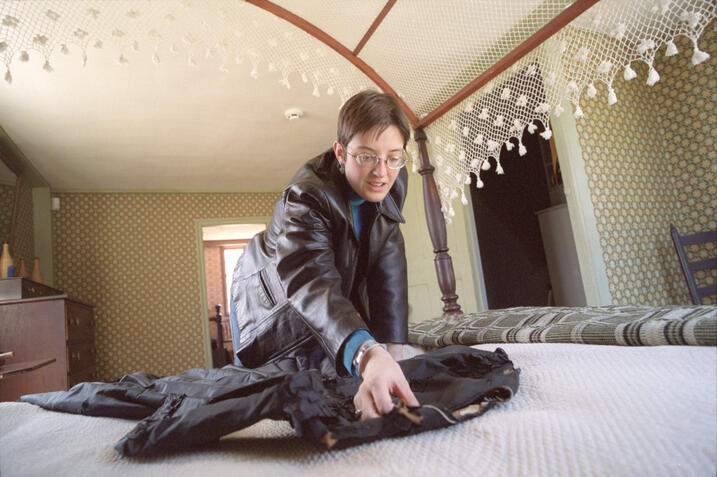
The Man Behind the Monument
When British regulars engaged patriots at Lexington and Concord on April 19, 1775, Ward, a gentleman farmer and magistrate in Shrewsbury, Massachusetts, served as second in command of the Colonial militia. Despite agonizing bladder stones, he rode to Cambridge to participate in the gathering of militiamen there. When his superior failed to show up, Ward took charge for about 11 weeks, until relieved by George Washington, who commanded the fledgling Continental Army through the war’s end in 1783.
Afterward, Ward served for a time as a judge, notably facing down angry farmers during Shays’s Rebellion, and as a member of both the Continental and US congresses. However, as Goetz discovered in her research, Ward himself did not claim to be the first commander of the Continental Army.
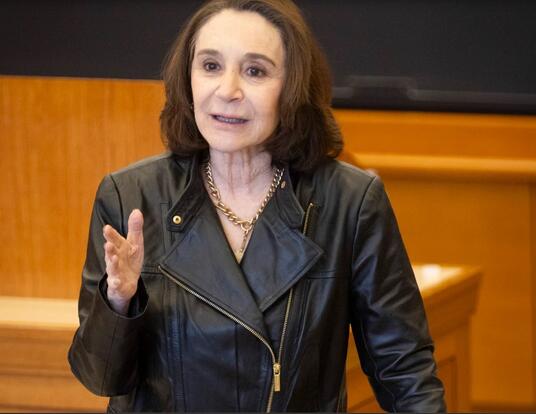
“He was kind of an ordinary [person], who found himself caught up in a few extraordinary moments,” says the New York University professor, who began researching Ward as a graduate student at Harvard Griffin GSAS. “It's also fairly clear that he was not a military genius by any imagination. He's nominally in charge for the Battle of Bunker Hill, but he did not have the strategic or tactical experience that British commanders did, nor did he have the kind of disciplined soldiers that the British did. And so to expect those things from him is also kind of strange.”
[Ward] was kind of an ordinary [person], who found himself caught up in a few extraordinary moments.
—New York University Professor Rebecca Anne Goetz
A historian of religion, race, slavery, colonialism, and empire in the Atlantic world and Indigenous North America, Goetz found that, for more than a century, Ward’s descendants worked diligently to curate his reputation, portraying the opulent man in the best possible light; over the course of 150 years, a portly provincial militia officer converted into a tall, thin, magisterial figure resting on a cannon.
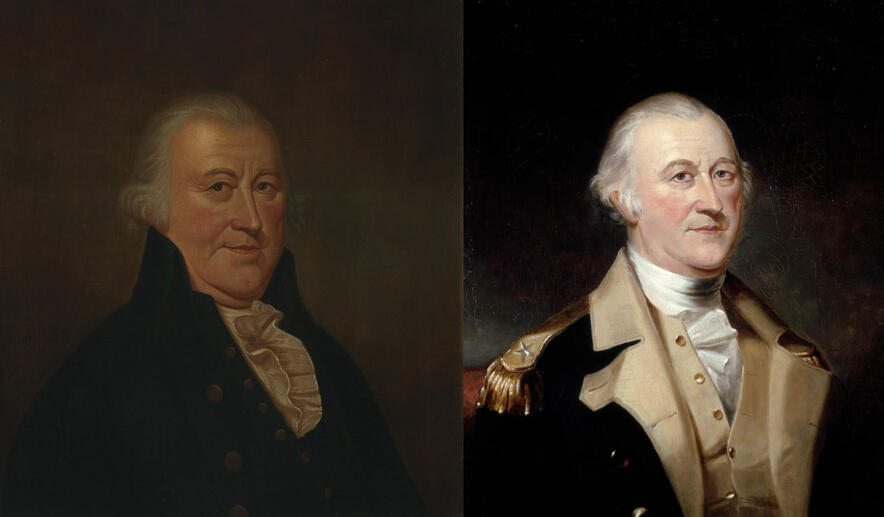
A Family Project
Ward’s transformation began in the 1820s, when grandson Andrew Henshaw Ward embarked on a mission to uncover his family lore. A genealogy enthusiast, Henshaw Ward wrote letters to relatives, collected family documents, and organized pieces of information to construct a more complete image of his grandfather. Andrew Henshaw Ward’s zeal largely aligned with a broader regional and cultural interest in ancestry.
“Part of what's happening is this moment in the first half of the 19th century where New Englanders became very interested in their ancestry,” Goetz says, noting that the surge in fascination with local history resulted in institutionalized forms of knowledge like the New England Genealogical Society and the Massachusetts Historical Society. “Andrew Henshaw Ward is very much plugged into that movement, and he sees it in Boston when he's living there. He’s very much part of that zeitgeist, in terms of how we understand our family histories and how we connect them to these town histories that allow us to prove our ancient presence here.”
Henshaw Ward’s fervent attention to records was not only about documenting his family’s history. For him, reconstructing his grandfather’s life offered an opportunity to connect Ward history to the larger story of the American Revolution, as well as uphold a favorable image.
“There's a manuscript in the American Antiquarian Society in which he traces the ancestry of the Wards back to Edward I, the King of England in the 13th century, which is hilarious,” Goetz says. “And then from there, he takes it all the way back to Adam and Eve, connects the family to biblical genealogies in order to get back to Adam and Eve. Well, that's funny.”
Later, Ward’s great-grandson, Artemas Ward of the seventh generation, a wealthy advertising executive in New York City caught up in the Colonial Revival, aimed to advance his own prospects by glorifying his Revolutionary War ancestor. In addition to commissioning a biography of his great-grandfather, Ward bequeathed the Artemas Ward homestead to Harvard as a “public patriotic museum,” along with an endowment of $5M, “the income to be applied, among other things, to establish his reputation, too long neglected as a devoted and faithful friend of his country.” In 1938, at a cost of nearly $50,000, the University erected the statue in Washington, DC, presenting General Ward as the “FIRST COMMANDER OF THE PATRIOT FORCES.”
As a result, his relatively obscure ancestor and Revolutionary figure became a widely recognized symbol of patriotic service. Ward’s story stands out, Goetz notes, because of the way his descendants selectively preserved his memory, emphasizing Artemas Ward’s heroic Revolutionary moments, downplaying his role in Shays’s Rebellion, underlining stories that overstated his stature, and ignoring less flattering elements of his past. “It's absolutely a constructed reputation,” Goetz says.
In 1938, at a cost of nearly $50,000, Harvard erected a statue of Ward in Washington, DC.
The most interesting part of Ward’s story, Goetz says, is not ultimately whether he was the first commander of the Continental forces; it’s why generations of descendants felt compelled to depict him as such in the first place, and how that effort reflects the way history is often made more than once. Artemas Ward lived his life from 1727 through 1800, and he lives once again in the accounts that pepper history books and preserve memory. Through letters, biographies, monuments, and museums, Ward’s family ensured he would be remembered fondly and positively, turning him from a member of the local Massachusetts elite into a national Revolutionary figure. These efforts, documented across years and generations, demonstrate the fluid and changing essence of both public knowledge and memory. Historians, institutions, and families seek meaning in the past and superimpose their lens on what is known.
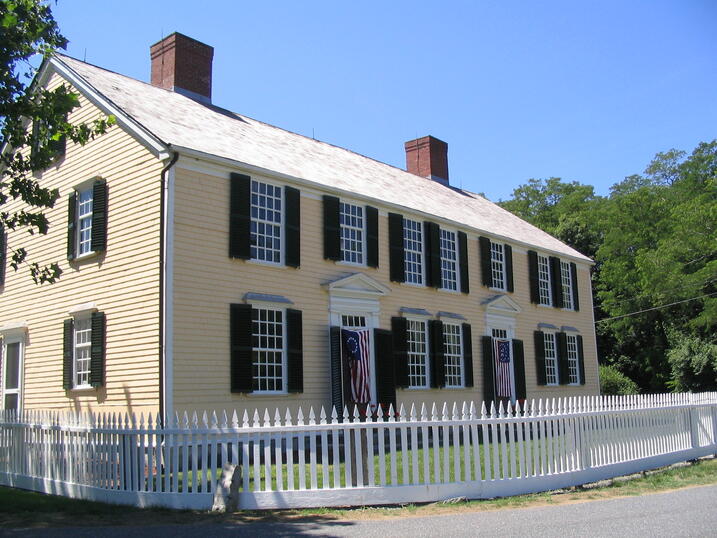
The Maintenance of Memory
The reconstruction of Ward’s legacy is not unique. Goetz notes that, throughout the 19th century, Americans grew more and more interested in lesser-known participants of the American Revolution, from distinguished leaders to ordinary soldiers. Professor Goetz points to figures such as George Robert Twelves Hewes, a shoemaker celebrated as one of the last remaining participants of the Boston Tea Party, despite the anonymous nature of the event. Similarly, abolitionists recovered stories of Black Revolutionary figures, publishing accounts that challenge traditional narratives about white political leaders at the time.
“There's a kind of sea change that happens over the first part of the 19th century over who you can consider important,” Goetz says. “So I would say that historians who are working on the American Revolution now have become very interested in lesser-known aspects of the American Revolution.”
Today, historians continue to revisit the Revolution with new perspectives and an increased attention to both detail and context. Instead of solely focusing on famous founders, scholars increasingly seek stories of enslaved people, Native communities, women, and ordinary soldiers. More than two decades after her initial research, Goetz herself says she would approach Ward’s story differently.
"The presence and absence of Native people, I think, is something that I would pay more attention to," she says, adding that descendants like Andrew Henshaw Ward were "enacting a kind of settler colonial violence" and making "a claim to whiteness and power" through the family histories they created. These efforts helped shape not only Ward's reputation but broader ideas about who belonged in the nation's founding story.
Goetz notes that every generation receives stories about the Revolution—and also participates in shaping them. The Ward family’s efforts exemplify how memory can be morphed and maintained. By deciding what to highlight and what to omit, later generations become participants in the historical process themselves.
More than two centuries after the American Revolution, Artemas Ward’s statue remains prominently featured in Washington, DC. While some Americans may recognize his name and others may not, Goetz says that the monument serves as a powerful reminder in the country’s 250th year that historical reputations are not solely inherited, but rather built. While she acknowledges that he wasn’t a major player in the Revolution and that historians and the public are more interested in other stories, she says that the construction of Artemas Ward’s myth remains a topic of fascination. “I still find it really interesting what his family managed to do.”