March 23, 2026
Talking Points: Winter/Spring 2026
From $100 million in new research funding to FDA-approved breakthroughs in lung cancer, see how the Harvard Griffin GSAS community is shaping the future of global health and academic freedom.
Alumni Support Next Generation of Researchers
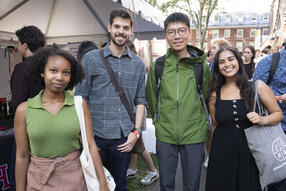
With the future of traditional research funding uncertain, a group of Faculty of Arts and Sciences (FAS) alumni has stepped forward to support graduate students—and to inspire others to do the same. The Research Accelerator Challenge seeks to raise 50 new endowed fellowships by June 30, securing a total of $100 million in funding for PhD students. "I am thankful for the partnership of our alumni to help ensure that Harvard remains a magnet for exceptional scholars," said Dean Hopi Hoekstra. New gifts to establish named fellowships will be matched through the fundraising challenge, made possible by a $50 million commitment from a group of dedicated donors. The funds will provide comprehensive student support, including tuition, health insurance, and a stipend. "Giving our PhD students the freedom to advance the boundaries of knowledge is where truly transformative discoveries happen," said Dean Emma Dench. "We want to do all we can to make sure our students remain supported so that they can continue to do extraordinary work ." Read the full announcement.
Healthier Minds

In findings released in fall 2025, Harvard students scored better than the national average on measures related to mental health, belonging on campus, and awareness and utilization of resources and support services. The data, gathered through the Healthy Minds Survey conducted at Harvard in spring 2025, analyzed feedback on a variety of measures including anxiety, depression, disordered eating, suicidality, and binge drinking. With a response rate of 25 percent, more than 5,900 students across the University—including Harvard Griffin GSAS—completed the 25-minute survey. Harvard officials acknowledged the positive findings while citing opportunities to increase awareness of specific mental health resources and build stronger connections among students on campus. "We need to continue our outreach to remind students of the services that are offered and to emphasize that they can get the care that they need in a timely manner," said Robin Glover, associate provost for student affairs. "We may need to do some work about emphasizing specific services and consider different forms of outreach."
A Victory for Academic Freedom
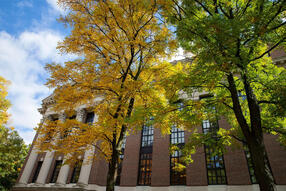
Last September, US District Court Judge Allison Burroughs ruled the federal government's freeze of $2.2 billion in research funding to Harvard was unlawful. "The ruling affirms Harvard's First Amendment and procedural rights, and validates our arguments in defense of the University's academic freedom, critical scientific research, and the core principles of American higher education," wrote President Alan Garber, PhD '82, in a note to the University community. In the wake of the summary judgment, over 900 direct awards to Harvard faculty were restored, providing vital funding for research. While Harvard's administration welcomed the action, Executive Vice President Meredith Weenick cautioned that "the relationship between research universities and the federal government is changing in fundamental ways ." In the future, Weenick said, Harvard must be prepared for this partnership to be less stable. "We've encouraged investigators to resume activity necessary to fulfill our commitments under the grants," she said, "but we're also advising prudence, particularly in making new long-term or multiyear commitments. Our goal is to sustain the pace of discovery while planning responsibly amid uncertainty."
Alumni Recognized for Cancer Breakthroughs
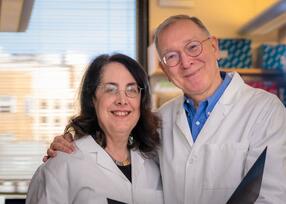
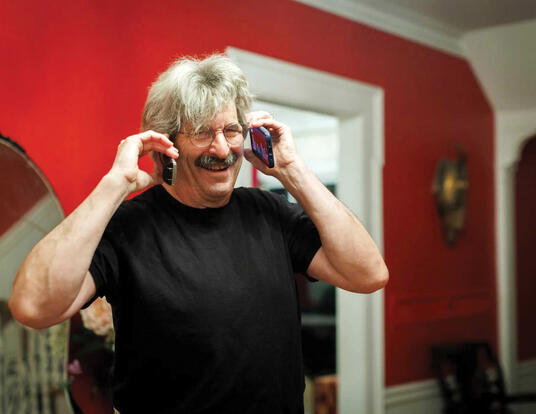
Harvard Medical School professors Gordon Freeman, PhD '79, and Arlene Sharpe, PhD '81, were awarded the inaugural Gretener-Thürlemann Prize in December 2025 by the University of Zurich. The prize, worth approximately $625,000, recognizes outstanding researchers in medicine, chemistry, and physics for foundational and pioneering research of societal benefit. Freeman and Sharpe were honored for decades of discoveries that proved pivotal for the development of immune checkpoint inhibitors, which have transformed cancer treatment for millions of patients worldwide and infused newfound energy into the field. Find out more.
Of Time, the Moon, and Memory
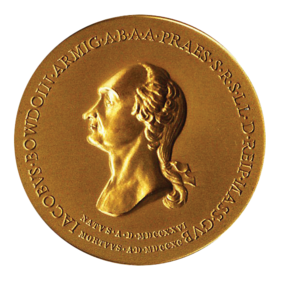
Three Harvard Griffin GSAS PhD students have been awarded the 2025–2026 Bowdoin Prize, one of the University's top honors for essays of high literary merit. Jing Hwan Khoo (philosophy) and Byron Otis (history of art and architecture) were recognized in the English-language category for their respective works on temporal ritual and early modern lunar imagery. In the Natural Sciences category, neuroscience student Elisa Pavarino was honored for her exploration of the "spacetime of memory ." Established in 1791, the Bowdoin Prize includes a cash award of $5,000, in addition to a medal and a certificate, to scholars who bridge the gap between technical expertise and public engagement. The names of this year's winners will be printed in the annual Commencement program this May.
FDA Approves First Cancer Drug Based on Broad Institute Science
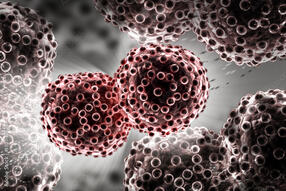
In November 2025, the US Food and Drug Administration approved a new cancer drug based on discoveries by a team at Harvard/MIT's Broad Institute that included lead scientist Matthew Meyerson, PhD '96. The drug, sevabertinib, is a pill approved for a type of lung cancer that previously had few treatment options, a product of the longstanding oncology research alliance between the Broad and Bayer Healthcare Pharmaceuticals. The drug's approval is based on data from Bayer's Phase I/II clinical trial, which found that over 70 percent of the patients studied in one cohort saw their tumors shrink or disappear. Many patients experienced profound and durable responses. Read more about the new medicine.
Photos courtesy of Harvard University, Dana Farber, Shutterstock