March 17, 2025
Talking Points: Winter/Spring 2025
Latest news on The Advising Project, Harvard Horizons scholars, indigenous traditions in engineering, science communication awards, and a Nobel Prize win for a Harvard medical scientist.
TAP Rejuvenated
The 2023 Report of the GSAS Admissions and Graduate Education (GAGE) Working Group affirmed the importance of advising for graduate student success and well-being. While students often express satisfaction with their advisors on annual exit surveys, the report noted that providing more structure and consistency in advising could make the relationship more effective and reduce student stress. Improving advising might also help lower the time to degree and increase students' satisfaction with the PhD program.
To address these concerns, Dean Emma Dench launched The Advising Project (TAP) in 2019, which puts student success and well-being at the center of the advising relationship. Five years on, TAP is poised to increase its impact under the guidance of new assistant directors Katie Callam, PhD '20, and Dr. Rogers Walker.
One goal for TAP in the coming year is to encourage the use of "advising agreements" by advisors and advisees across disciplines—written documents that lay out the parameters for an advising relationship, covering topics such as communication, feedback, professional development, and authorship. "As someone who was both a doctoral student and a faculty member, I know that it can feel harrowing for students when they don't know if their advisor will respond in time for them to apply for a job or fellowship," Dench says. TAP's other core offerings include workshops designed to enhance advising experience and practice.
Callam and Walker portray The Advising Project as a living, evolving initiative. They are committed to soliciting feedback, adapting their approaches, and continually finding new ways to improve the advising experience and make real Dean Dench's vision of a culture of advising. "Graduate education is dynamic, particularly at Harvard Griffin GSAS," says Walker. "Through all the changes, advising remains a pillar of support, guidance, and growth. Like Dean Dench, Katie and I are devoted to creating an environment where faculty advisers and students both thrive."
New Horizons
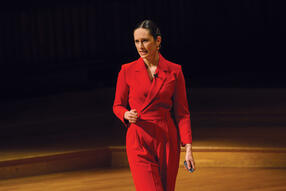
In December, Harvard Griffin GSAS announced the 2025 Harvard Horizons Scholars, selected as representatives of the extraordinary researchers who make up Harvard's PhD community. The eight students, whose topics of study include photochemistry, youth psychotherapies, and artificial intelligence, form the 12th class of the Society of Horizons Scholars, a fellowship cohort that offers opportunities for long-lasting community, mentorship, and professional and academic growth. The scholars will receive in-depth mentoring on the art of effective presentation, preparing them for a campus-wide symposium in Sanders Theatre on April 8, 2025.
Find out more about the scholars and their research.
Expanding the Horizon of Science Communication
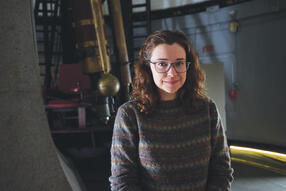
As a 2024 Harvard Horizons Scholar, astronomy PhD student Clare Lamman received expert coaching on presenting her groundbreaking work mapping the universe to a wide audience. Last fall, her skills were recognized with the Eric and Wendy Schmidt Award for Excellence in Science Communications. Given annually by the National Academies of Sciences, Engineering, and Medicine in partnership with Schmidt Sciences, the award recognizes individuals "who can demonstrate the potential or ability to develop high-quality, engaging science communications or reporting." Lamman received a share of $640,000 divided among the award's 24 recipients.
Exploring Indigenous Traditions in Engineering
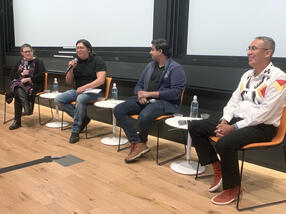
For centuries, indigenous peoples have had their own system of research, education, and the transmission of knowledge—including the fields of science and engineering. Last October, the Harvard John A. Paulson School of Engineering and Applied Sciences explored these traditions at "Beyond Western Approaches: Recognizing Indigenous Traditions in Engineering," a symposium that included panels on advancing Indigenous engagement in engineering, exploring gold mining's environmental impact, and culturally grounded research.
"One of the big messages from our government and elders is to go to school, get an education, climb that ladder, then come back and do good stuff," said panel participant Robinson Tom, a third-year PhD student in bioengineering at Harvard. "One of the strongest things about engineering is that it can produce laboratories that can bring native scientists, doctors and engineers back to the reservation to actually give back to the people."
Find full coverage of the symposium.
A Nobel for Ruvkun
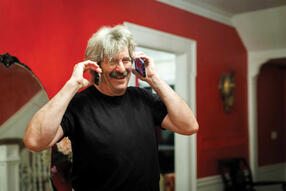
Gary Ruvkun, PhD '82, professor of genetics at Harvard Medical School was awarded the 2024 Nobel Prize in Physiology or Medicine last October for the discovery of microRNA, a class of tiny RNA molecules that regulate the activities of thousands of genes in plants and animals, including humans. Harvard President Alan M. Garber extended his congratulations to Ruvkun and his longtime collaborator Victor Ambros, with whom he shared the prize, praising their pioneering research.
"The implications of discoveries like Gary's and Victor's aren't always obvious at the outset," Garber said. "With promising medical applications of microRNA research on the horizon, we are reminded—again—that basic research can lead to dramatic progress in addressing human diseases."
Learn more about Ruvkun's research.
Engaging Essays
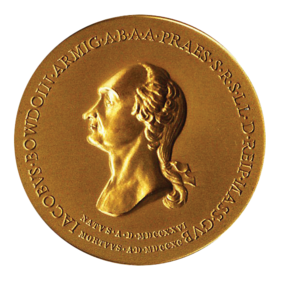
PhD students Elinor Hitt (English), Lucy Liu (mathematics), and Adam Lowet (medical sciences) were last fall's Bowdoin Prize winners. Hitt's essay, "On Beauty, Balanchine, and Farrell: Platonic Modernism on the New York Dance Stage," took the award for Graduate Essay in the English Language. Liu and Lowet both won prizes for Graduate Essay in the Natural Sciences, Liu for "The Most Mysterious Thing That Ever Happened to Me," Lowet for "Risky Business: How the Brain Learns from Uncertainty." Established in 1791, the Bowdoin Prizes, now $3,500 each, have been awarded to philosopher Ralph Waldo Emerson; former Harvard presidents Charles Eliot and Nathan Pusey, PhD '37; the novelist John Updike; and the writer and philosopher Alain LeRoy Locke, PhD '18.
Photos by David Salafia, Tony Rinaldo, and Stephanie Mitchell