September 16, 2026
Beyond Boundaries
Illustrations by Matt Cook
Celebrating standard-setting alumni who cross disciplines to expand knowledge and transform human endeavor.

Every year, the Harvard Kenneth C. Griffin Graduate School of Arts and Sciences celebrates some of its most distinguished alumni with the Centennial Medal. This year's honorees—a Pulitzer Prize-winning poet; a biologist adept at solving mysteries of how genes and cells function; the director of leading institutions for conservation, biology, and natural history; and a historian who partners with scientists to improve research through innovative perspectives on gender—are all renowned for pushing past traditional limits and working across disciplines to advance knowledge and human endeavor.
"The 2026 Centennial Medalists are superlative in every respect," says Dean Emma Dench. "Through their work, they exemplify the power of thinking beyond boundaries to expand what's possible."
"These Centennial Medalists are among the foremost figures in their fields, with above-and-beyond achievements," observes David Staines, PhD ’73, chair of the Graduate School Alumni Association Council's Medals Committee. "That is what this program is about: shining a light on extraordinary individuals whose work means so much to so many."
Frank Bidart, AM ’67, English and American Literature and Language
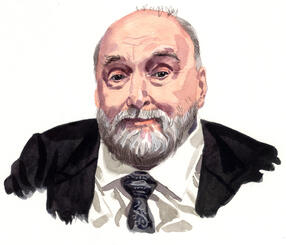
Frank Bidart, who won the Pulitzer Prize and the National Book Award for Half-Light: Collected Poems, 1965–2016, is known for raw, powerful poetry—works that not only speak to his deepest personal experiences, including growing up gay in the 1940s and 50s in Bakersfield, California, but that also channel the voices of a wide-ranging, often envelope-pushing cast of characters.
Bidart studied poetry at the University of California, Riverside, and met Robert Lowell as a graduate student at Harvard; he would go on to advise Lowell on his last four books of poetry and to edit Lowell's Collected Poems. "Much before I met him, I had known his work extremely well—I had admired it, and learned from it, in the way that I admired and learned from Eliot and Pound," Bidart said in a 1983 interview. "The fact that later I could be useful, both as a reader of his poems and a friend, to someone I so much revered, was a profound event in my life."
The author of 11 poetry collections, Bidart made a striking debut in 1973 with Golden State, which opens with a poem in the voice of a serial killer—where Bidart explored, as he put it in 2015, the Yeatsian idea of the "anti-self," "in which someone like you but unlike you in profound ways is embodied, and you can see yourself and discover yourself in the difference." Bidart quickly gained renown as a master of the dramatic monologue, with celebrated works from the perspectives of tortured historical figures—Ellen West, a pseudonymous patient of the Swiss psychiatrist Ludwig Binswanger who suffered from anorexia; the ballet dancer Vaslav Nijinsky—reflecting Bidart's abiding fascination with character and narrative.
"I was very much formed by Shakespeare as a kind of model of the artist," Bidart said in 2021. "He was not an Egyptian, and he was not a Danish prince, or any of these things, literally. And he could inhabit the minds, sensibilities, perspectives, and worlds of these characters." Bidart added, "An artist is not someone who simply transcribes his or her experience. An artist is someone with a sympathetic imagination—sympathetic meaning identifying with ways of being that are not literally one's own."
One of Bidart's most ambitious projects is "The Hours of the Night," an ongoing series of poems inspired by the ancient Egyptian Book of Gates, which traces the passage of the sun through 12 underworld territories. These poems bring Bidart's vast knowledge of history and culture to bear in exploring some of the most harrowing aspects of human existence: desire, grief, war, death. The latest installment, "The Fifth Hour of the Night," appeared in Bidart's most recent collection, Against Silence, in 2021.
"Each poem in the series is an hour we must pass through before the sun can rise again," Bidart said in 2005. "I don't know what will make moral and intellectual clarity and coherence rise again: I could never write 12 'hours.'" He added, "I like the idea that I'm involved in a project that can't be completed: the project corresponds to how things are."
You're just waiting for that deep insight, that powerful sense of beauty, and the dignity that he brings to people in love, people in grief.
—Dan Chiasson, PhD ’02
Colleague, Poet, and Professor of English, Wellesley College
The poet Dan Chiasson, PhD ’02, first met Bidart as a graduate student; the two subsequently became readers of each other's work, and both taught for many years at Wellesley College, where Chiasson is a professor of English. "I've always looked forward to the latest Bidart book as a kind of clarification of life: what Matthew Arnold says poetry should be," Chiasson says. "You're just waiting for that deep insight, that powerful sense of beauty, and the dignity that he brings to people in love, people in grief."
Often, Bidart's work grapples with opposing forces in tension—exploring, for example, the connection between hate and love, as in Bidart's interpretations of the Roman poet Catullus's two-line lyric "Odi et Amo." The third interpretation, completed in 2008, reads: "What I hate I love. Ask the crucified hand that holds / the nail that now is driven into itself, why."
"The minute, as a graduate student, I read 'Odi et Amo,' I felt that it was the quintessential thing I had ever read: that in two lines, Catullus crystallized this utterly fundamental thing, that we love and hate at the same time, that we love and hate the same thing at the same time," Bidart said in 2021. "And in a way, I've spent my life trying to excavate that."
Anjana Rao, PhD ’78, Biophysics
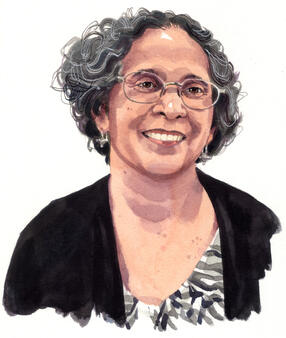
Anjana Rao has found answers to some of the most challenging and consequential puzzles in human cell biology—often working out the solutions by making unexpected connections and developing new approaches needed to solve them.
Rao spent 30 years on the Harvard Medical School faculty before joining the La Jolla Institute for Immunology. She established the Institute's Division of Signaling and Gene Expression in 2010 and is also an adjunct professor at the University of California, San Diego, and an elected member of the American Academy of Arts and Sciences and the National Academy of Sciences.
Born in Washington, DC, Rao grew up in India and earned bachelor's and master's degrees at Osmania University before coming to Harvard for her PhD. As a graduate student, she chose to complete substantial coursework in nonrequired fields, which helped lay the foundation for the depth and breadth of research that she would go on to do throughout her career.
"I took or audited courses in neurobiology and immunology, and I sat in on many of the preclinical physiology modules for medical students, which taught me about physiology and pathology in many of the organ systems in the human body," Rao recalls. "It was the heyday of molecular biology and recombinant DNA, and I learned—partly by taking classes taught by the many famous molecular biologists who were then at Harvard—about nucleic acids, plasmids, early sequencing technologies, gene expression mechanisms, gene regulatory regions, and tumor viruses. These were all pertinent to my future research."
A key turning point for Rao came when she chose to complete postdoctoral work in immunology rather than neurobiology, with a focus on T cells, a type of white blood cell critical to the immune system. "I realized that T cells were a remarkable model system for studying signaling—from T cell receptors, for instance to gene expression," she explains.
Rao's initial goal was simply to determine how genes are expressed in T cells. Together with Patrick Hogan, a long-term collaborator whom she met when they were both graduate students at Harvard, she began by investigating an important pathway of gene expression that begins when calcium enters T cells. "We became interested in a postulated—but unidentified—transcription factor that was the target of a remarkably effective immunosuppressive drug that had revolutionized transplant medicine," Rao says. They showed that this transcription factor, known as NFAT, was in fact a complex of two unrelated transcription factors: a major revelation.
For Rao, this was the first in what would become a series of momentous collaborative discoveries, including her identification of the elusive CRAC calcium channel, which allows calcium to enter T cells and prompts NFAT to move to the nucleus; groundbreaking work on DNA methylation, an epigenetic process that modulates gene expression; and her discovery of a small family of proteins known as TET proteins that reverse this process. "This led me to investigate the repressed region of the genome known as heterochromatin, which is still poorly studied, despite the growing realization that it plays a role in aging, cancers, and neurodevelopmental disorders," Rao says. "There are many more problems to solve in this field!"
She's able to point herself at really important scientific questions and then develop ways to study them and make seminal advances.
— Fred Alt
Charles A. Janeway Professor of Pediatrics and Genetics, Harvard Medical School
For years, Fred Alt, Charles A. Janeway Professor of Pediatrics and Genetics at Harvard Medical School, led a lab neighboring Rao's at what was then known as the Center for Blood Research/Immune Disease Institute, now the Program in Cellular and Molecular Medicine at Boston Children's Hospital. "There are several whole fields that Anjana opened up, and she has then worked out a lot of the details," Alt says. "She's able to point herself at really important scientific questions and then develop ways to study them and make seminal advances."
Reflecting on what motivates her work, Rao cites the opportunity to solve longstanding problems. "Discovery research—discovering new pathways and mechanisms no one knew before—is always fascinating and rewarding," she says. "Every field comes with one or more 'holy grail' questions: things people have wondered about, often for decades, that have finally come within reach of experimental analysis. I was lucky to find and work on three of them—NFAT, the CRAC channel, and TET proteins—and I am still working on the third. And I could not have tackled any of them without the many insightful collaborators and lab members who provided new reagents, new technologies, and sustained intellectual support."
Cristián Samper, PhD ’92, Organismic and Evolutionary Biology
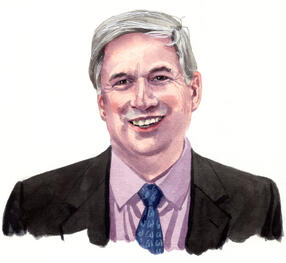
Cristián Samper has helped lay the foundations for international climate policy and has stood at the helm of some of the world's leading organizations in conservation and biology. But he remains a scientist at heart.
"A scientist is a kid who never really grows up," Samper says. "We're always asking questions."
Born in Costa Rica and raised in Colombia, Samper first came to Harvard in 1985 as a visiting undergraduate from the Universidad de los Andes; he returned two years later as a PhD student in tropical biology. "I went from reading books by Harvard scientists—people like Stephen Jay Gould and E. O. Wilson—to taking classes with them," Samper says. Just as formative were the connections he made with his fellow graduate students. "Many of us were interested in environmental issues," he recounts. "It wasn't just the science: it was what we could do with the science."
Soon after he finished his PhD, Samper helped create Colombia's Ministry of the Environment and became founding director of his country's Alexander von Humboldt Biodiversity Institute. He also became a leader in environmental policy on a global scale: he chaired the science advisory body of the United Nations Convention on Biological Diversity and launched the Millennium Ecosystem Assessment, a landmark study that involved more than 1,300 scientists.
Even though he never planned to leave Colombia, he soon had an opportunity too good to pass up: the chance to lead the Smithsonian Tropical Research Institute in Panama, which Samper describes as "the best place for tropical biology in the world." Just two years later, he was named director of the Smithsonian National Museum of Natural History in Washington, DC—which he led for a decade, including a year as acting secretary of the Smithsonian Institution as a whole—before becoming president and CEO of the Wildlife Conservation Society, which not only runs four zoos and an aquarium in New York but also manages field research and conservation programs in more than 60 countries: work that brought Samper around the world, from the Congo Basin to Myanmar.
Today, Samper is managing director and leader for nature solutions at the Bezos Earth Fund, founded in 2020 with the largest-ever philanthropic commitment to fight climate change and protect nature. "Everything we do is about three key goals," Samper explains. "We have to protect what we have, we have to transform the way we live, and we have to restore and heal the planet. And we're investing $10 billion in that idea."
Cristián is an exemplary University citizen. He deserves a great deal of credit for his role in spurring the University-wide review of the life sciences.
—Alan Garber
President, Harvard University
Samper also served as a member of the Harvard Board of Overseers from 2009 to 2015. "Being an overseer completed my Harvard education," he says. "It was an incredible opportunity to see the whole University." Samper chaired the overseers' committee on science and engineering with then-provost Alan Garber, now president of Harvard. They found, among other things, that when you look at the 14 different biology departments across Schools, Harvard has the largest biology faculty of any university in the world.
"Cristián is an exemplary University citizen," Garber says. "He deserves a great deal of credit for his role in spurring the University-wide review of the life sciences, an ambitious undertaking that led to consequential advances in one of Harvard's most prominent areas of research and teaching. He is endlessly curious, tenacious, unfailingly diplomatic, and a powerful advocate for the environment and for institutions that contribute to knowledge and its dissemination worldwide."
For Samper, Harvard's landscape offers students an invaluable opportunity to learn about different fields. "Today, the world needs people that can work across disciplines," Samper explains. "You need to have depth in your area of expertise, but you also have to be able to speak with experts from many other backgrounds and disciplines, because the magnitude and the types of problems we have to deal with require systems thinking. That's what the world needs right now."
Londa Schiebinger, PhD ’84, History

As the world's leading authority on sex and gender in the history of science, Londa Schiebinger not only pioneered the study of women in science in the 18th century but also created an international platform that helps scientists use insights and methodologies from the humanities to innovate and improve the practice of scientific discovery today.
Schiebinger, the John L. Hinds Professor of History of Science at Stanford University and director of the ambitious and highly influential Gendered Innovations in Science, Health, & Medicine, Engineering, and Environment project, is producing trailblazing scholarship on the past as well as toolkits for more rigorous scientific practice in the present.
Schiebinger grew up in Lincoln, Nebraska, where she trained as a classical pianist and studied English at the University of Nebraska. She first came to Harvard as a staff member, serving as a typist for the economist John Kenneth Galbraith. "I'm a terrible typist," she confesses. But seeing the opportunities, she quickly enrolled at Harvard to pursue graduate work in intellectual history. "I became interested in gender," Schiebinger recalls, "but Harvard had no one teaching women's history, and gender history had not yet been developed."
A series of lectures at MIT in 1981 on women in science led her to realize that historians had failed to account for women in the history of science. "Historians studied participation in science from many important vantage points—religious affiliation, class, age, vocation—but ignored entirely questions of gender," she says.
Schiebinger's dissertation took up these neglected questions and gave rise to two books that would prove foundational to the field: The Mind Has No Sex? Women in the Origins of Modern Science, in 1989, and Nature's Body: Gender in the Making of Modern Science, in 1993. Through a series of revelatory case studies, these books distill key insights into the history of the Scientific Revolution—including, for example, why the Swedish naturalist Carl Linnaeus decided to use the highly gendered term "Mammalia" in his taxonomy and the cultural struggles embedded in that nomenclature. Schiebinger has also been a leader in examining the circulation of knowledge—and barriers to knowledge—in science, including in her prize-winning 2004 book Plants and Empire: Colonial Bioprospecting in the Atlantic World.
Schiebinger joined the Stanford faculty in 2004 to direct the Clayman Institute for Gender Research. "My job was to promote work on gender in science across the university, including in engineering, medicine, and computer science," she says. "The big question for me became: Can methodological insights from the humanities contribute to discovery in science and technology?"
Gendered Innovations made this ambition a reality. Through a longstanding series of collaborative workshops, the project has brought scientists and humanists together to create pathways for incorporating sex, gender, and intersectional analysis into the design of science and engineering efforts. The Gendered Innovations website supports the work of 2.5 million unique users in 185 countries, and Schiebinger has brought the project's insights to the United Nations, the European Commission, and the National Science Foundation—improving policy decisions, research outcomes, and countless lives in the process. This work also has strong footholds in Asia, where institutes for gendered innovations were founded in the Republic of Korea in 2016 and Japan in 2022.
[Schiebinger's work] has produced an enormous number of new cases that are teachable, translatable, and travel across different disciplines.
— Sarah Richardson
Aramont Professor of the History of Science & Studies of Women, Gender, and Sexuality
Harvard University
"It was an 'If you build it, they will come' scenario," says Sarah Richardson, Harvard's Aramont Professor of the History of Science & Studies of Women, Gender, and Sexuality, who completed her PhD with Schiebinger at Stanford. "Londa believed in it, and she was right. It has produced not only an enormous number of new cases that are teachable, translatable, and travel across different disciplines, but also relationships among people who otherwise would have never met each other or read each other's work."
For Schiebinger, the concept of translation is key. "Languages are entire universes," she explains. "In academia, each discipline is a language, a way of thinking, a way of knowing—and if you speak plainly, without jargon, you can translate and communicate to other disciplines. That's what Gendered Innovations is about: making a shared language, and bringing our way of analyzing society and science into how researchers actually do science."
Schiebinger encourages today's students to take inspiration from this approach, no matter their field. "I really think it's important that people look beyond their disciplines," she says. "Grasp the larger view, the long-term view. What world would you like to see, and what's the next step you can take to create that world for yourself and for others?" And she emphasizes the core learning of Gendered Innovations: if you see a problem, find a solution.